How to Choose a Sacred Aromatic — And How It Might Choose You
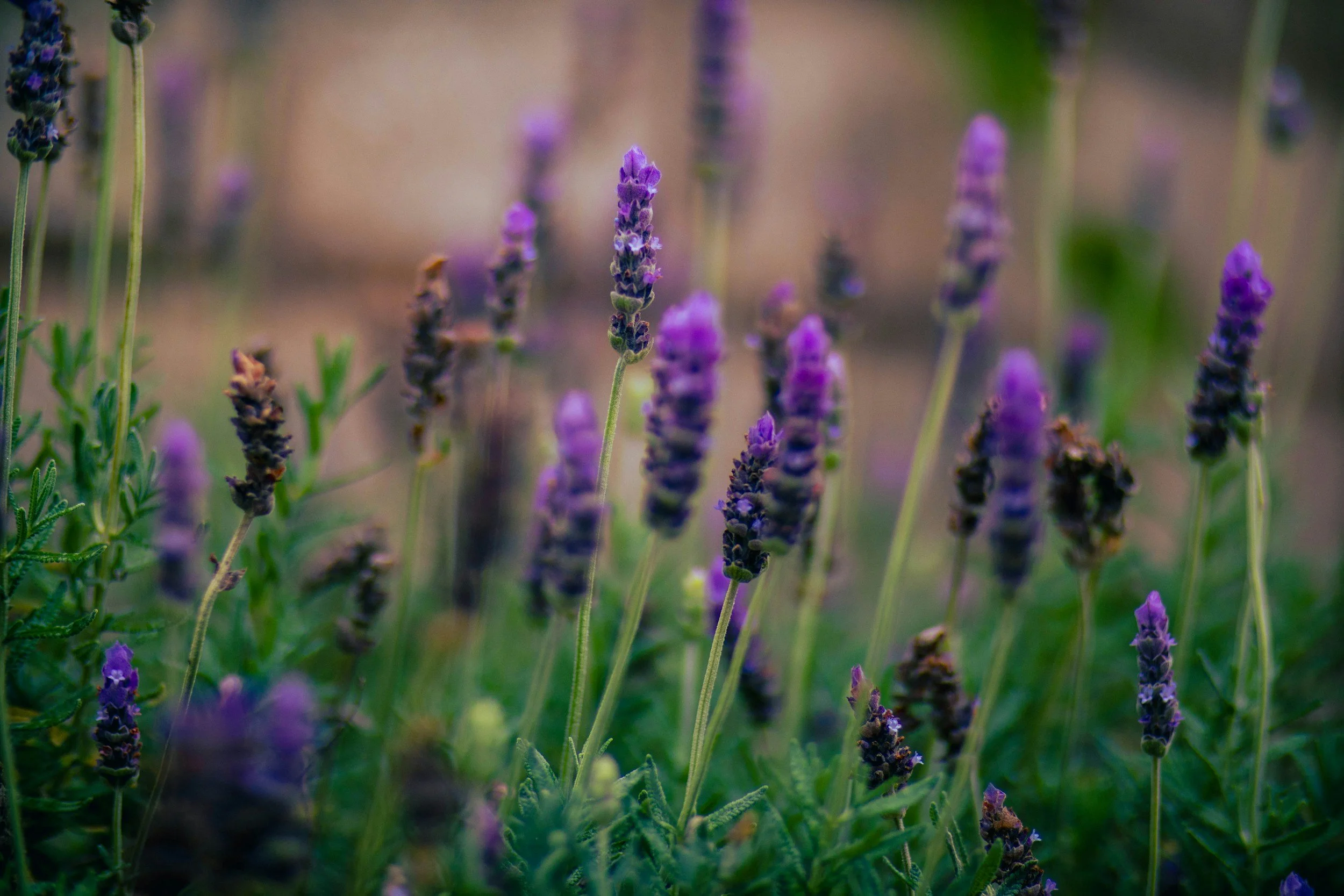
The most common question I get from people new to sacred aromatics:
How do I know which one to use?
And the most honest answer I can give is: You probably already know. You just don't trust it yet.
Here's why that is, and how to start trusting it.
The Problem with the Reference Chart Approach
Open most aromatherapy books. You'll find charts.
Lavender: calming, good for sleep, anxiety, skin healing. Frankincense: grounding, spiritual connection, anti-inflammatory. Peppermint: stimulating, good for headaches, nausea, focus.
This is genuinely useful information, and I don't want to dismiss it.
But it creates a dynamic I see constantly in students: they come to aromatics like they're filling a prescription. I have anxiety, so I'll use lavender. I want spiritual depth, so frankincense. I need focus, so peppermint.
The plant becomes a vending machine. You identify the output you want and select accordingly.
The problem is that this bypasses the most important part: your actual relationship with the plant. Which might be totally different from what the chart suggests.
I've worked with people who feel deeply activated by lavender — the opposite of calm. People for whom frankincense feels heavy rather than grounding. People who have a profound, wordless love for vetiver that defies any simple categorization.
Your relationship with an aromatic is yours. It's not wrong because it doesn't match the chart.
The chart is a starting point. Your direct experience is the real data.
What Astrology and Elemental Frameworks Actually Offer
I'm an astrologer, and I work with planetary and elemental correspondences in my aromatic practice. I want to explain why — because I think it's often misunderstood.
The Western magical tradition assigns aromatics to planets: frankincense to the Sun, rose to Venus, myrrh to the Moon, benzoin to Mercury, and so on. Ayurveda works with the elements and doshas. Chinese medicine works with the five elements and their corresponding organs and seasons.
These aren't arbitrary. They are systems for understanding the nature of a plant — its qualities, its affinities, its typical arc of action — in relationship to a larger cosmological map.
When I know that someone has a lot of Saturnine energy in their chart — or is moving through a Saturn transit — I have a framework for thinking about which aromatics might support what's being asked of them. Which qualities need amplifying, which need balancing.
But this is relational information. It's a map, not the territory.
What it gives you as a beginner: a set of lenses for exploration. A reason to try frankincense when you're working on solar themes — identity, vitality, visibility. A reason to reach for rose when Venus is activated — love, value, beauty, the heart.
What it doesn't do: replace your direct encounter with the plant.
Start with the map. End with the territory.
The Practice of Listening
Here's the practice I give people who are just beginning:
Stand in front of your aromatics — or a single one you're drawn to. Before you open anything, before you smell anything, just notice. Which one catches your attention? Which one do you feel yourself leaning toward?
That lean is information.
Then open the bottle and simply smell it. Not research it. Not look it up. Not decide anything. Just smell it.
Give it a minute or two.
Notice what happens in your body. Does something soften? Tighten? Open? Do images arise — places, memories, colors, textures? Does a part of you feel recognized or comforted or disrupted?
There are no wrong responses. The disruption is as interesting as the comfort.
Now notice your mind. What stories does it tell you? I don't like this. This is too sweet. This reminds me of something bad. This is exactly right. Don't argue with the stories. Just note them as part of the data.
What you are doing, in this very simple practice, is beginning to build a direct relationship with the plant's intelligence. You are practicing receiving what it has to offer rather than deciding in advance what it should give you.
Over time, this practice becomes extraordinarily refined. You develop a felt sense of each plant. You begin to recognize their textures and qualities — the particular kind of stillness that oud brings, the way neroli seems to carry grief and joy simultaneously, the quality of presence in aged resins that fresh ones don't yet have.
This is what perfumers call a palette. And it develops the same way any perceptual skill develops: through attention, over time.
Letting the Plant Choose You
Here is the other side of this, which I find endlessly fascinating.
Sometimes a plant shows up.
You're walking outside and a particular shrub stops you cold. You're browsing the shop and one bottle pulls your eye every time. A friend gifts you something you never would have chosen. You wake up with a plant name in your mind for no clear reason.
In an animist framework, these are not coincidences.
They are moments of contact — the plant signaling availability, interest, relevance. Plants communicate through volatile compounds designed for exactly this kind of cross-species signaling. We are wired to receive those signals. When you walk past a blooming rose and feel something open in your chest — that is the plant reaching across the species barrier and touching something in you.
Learning to notice these moments and take them seriously is part of developing your aromatic practice.
The tree you walk past every day and have never quite managed to identify. The scent that you keep seeking without knowing why. The oil that makes you feel something you don't have words for.
Pay attention to those. They usually have something to teach.
A Simple Way to Begin
If you're at the beginning and feeling overwhelmed by the vastness of the aromatic world — here's my honest advice:
Start with one plant. One. Not a collection. Not a starter kit.
One plant that already lives in your world — rosemary in the garden, pine in the nearby woods, cedar in your house, a single essential oil that's been sitting on your shelf.
Spend a month with just that one. Smell it every day. Use it in small ways — a drop on your wrist, a few leaves crushed in your fingers. Notice everything you can about how it changes — how your perception of it changes, what it surfaces different days, what mood it seems to carry.
At the end of a month, you will know something real about that plant.
That knowledge is worth more than a cabinet full of oils and a reference chart.
You can always add more. But you can't shortcut the relationship.
In the Introduction to Sacred Aromatics course, we slow down in exactly this way — building a real relationship with plants as the foundation for everything else.
Beginner or advanced, this approach will deepen your practice:
And if you want to begin the relationship right now — the Botanica has aromatic perfumes and botanical preparations I've made with exactly this kind of care and attention. Each one is a doorway.
Juniper Stokes is a botanical perfumer, soul alchemist, intuitive astrologer, and rewilding guide through mythic landscapes of nature, spirit, and the cosmos. For over 25 years, she has been guiding soulful humans back to the heart of who they are and why they're here.


Enjoyed this article? The absolute most wonderful way to say thank you is by sharing it!
ASTROLOGY | RECIPES | REWILDING | SACRED AROMATICS | SHAMANISM | SPIRITUALITY | WELLNESS

A FREE 45-page guide to awaken your inner magic!
Juniper Stokes is a certified depth coach, mythoanimist guide, alchemist, astrologer, and artist.