The Alchemy of Spiritual Perfume: A Complete Guide to Sacred Aromatics
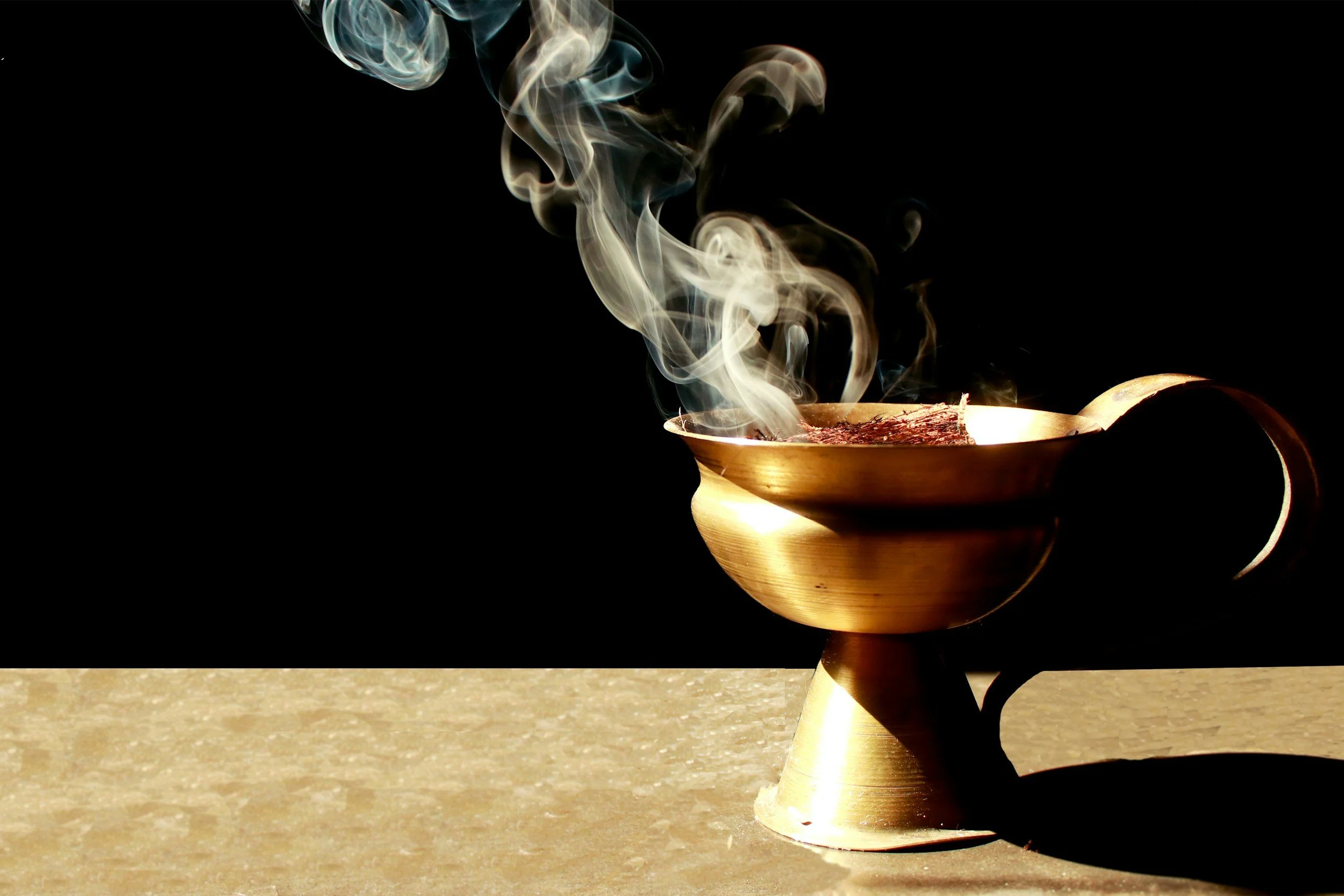
In the realm of our senses, perhaps none is more etheric, more innately connected to spirit, than our sense of smell.
Fragrance has the unique ability to bypass our conscious minds, permeating not only into our subconscious, but into the spiritual core of our psyches.
The presence of aromatic fragrances has always signaled the presence of divine beings — pleasing aromas preceding the arrival of gods and goddesses in traditions throughout the world. And of course, humans in every culture, on every continent, have used aroma to call in spiritual support and connection.
It's no coincidence that the most sacred plants from around the world are also the most fragrant ones.
Plants have been central to medicine and spiritual practice as far back as we can trace human origins. And for most of our history, there wasn't a difference between the two. Healing with plants, communing with plant spirits, and tending to the sacred were not separate disciplines — they were one way of life. Sacred aromatics return us to that time. They return the power of healing to the people, to our hands and our homes and our altars, where it has always belonged.
This is a guide for those who feel the pull of that ancient relationship. Whether you're drawn to incense and smoke, ritual anointing oils, natural perfume, or the medicine of aromatherapy, you'll find the threads of one continuous lineage running through all of it.
What Are Spiritual Aromatics? A Guide to Types and Terminology
Spiritual fragrances have taken many forms throughout history, most commonly through smoke and oil. Here is a map of the landscape — the common forms you'll encounter on this journey and what makes each one distinct.
Perfume
Perfume can be a bit of a confusing word because of its dual meaning. It can refer to both a pleasing fragrance in general, as well as a specific fragrance in liquid form. It can be a noun, is in I ❤️ perfume, an adjective, as in a perfumed ointment, or a verb, as in the incense perfumes the room.
Here, I mostly use the word perfume in its more general sense — but I do want to highlight what makes an actual perfume, as in a pleasing fragrance liquid, different from other spiritual aromatics.
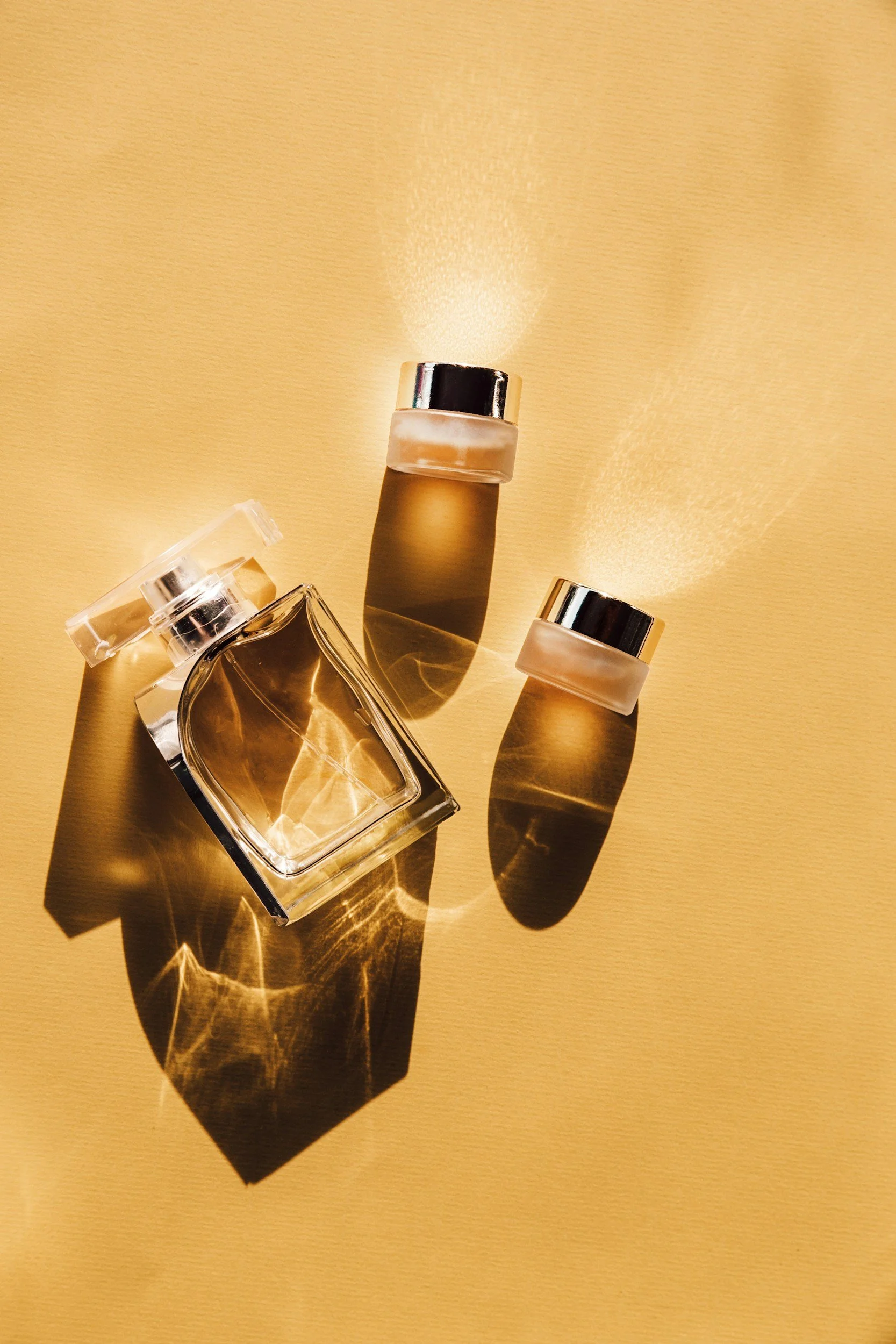
True perfumes differ from other types of aromatics in their composition and intention. They are primarily created and used for aesthetics — made to bring beauty into our world — and they are formulated with special attention to longevity (or sillage in perfume language), with top, middle, and base notes that unfold over time. True perfumes may come in alcohol, oil, or occasional solid form, and they tend to be more complex than aromatherapy blends, though this isn't always the case.
But don’t be fooled by the aesthetic nature of true perfumes: beauty is not frivolous. The creation of something beautiful is itself a sacred act — an offering, a devotion, an act of creative love. True perfume, at its highest expression, participates in this lineage.
There's a whole linguistic world within perfumery — from understanding the difference between an eau de parfum and an eau de toilette, to learning about the fragrance families used in natural perfumery.
Attars
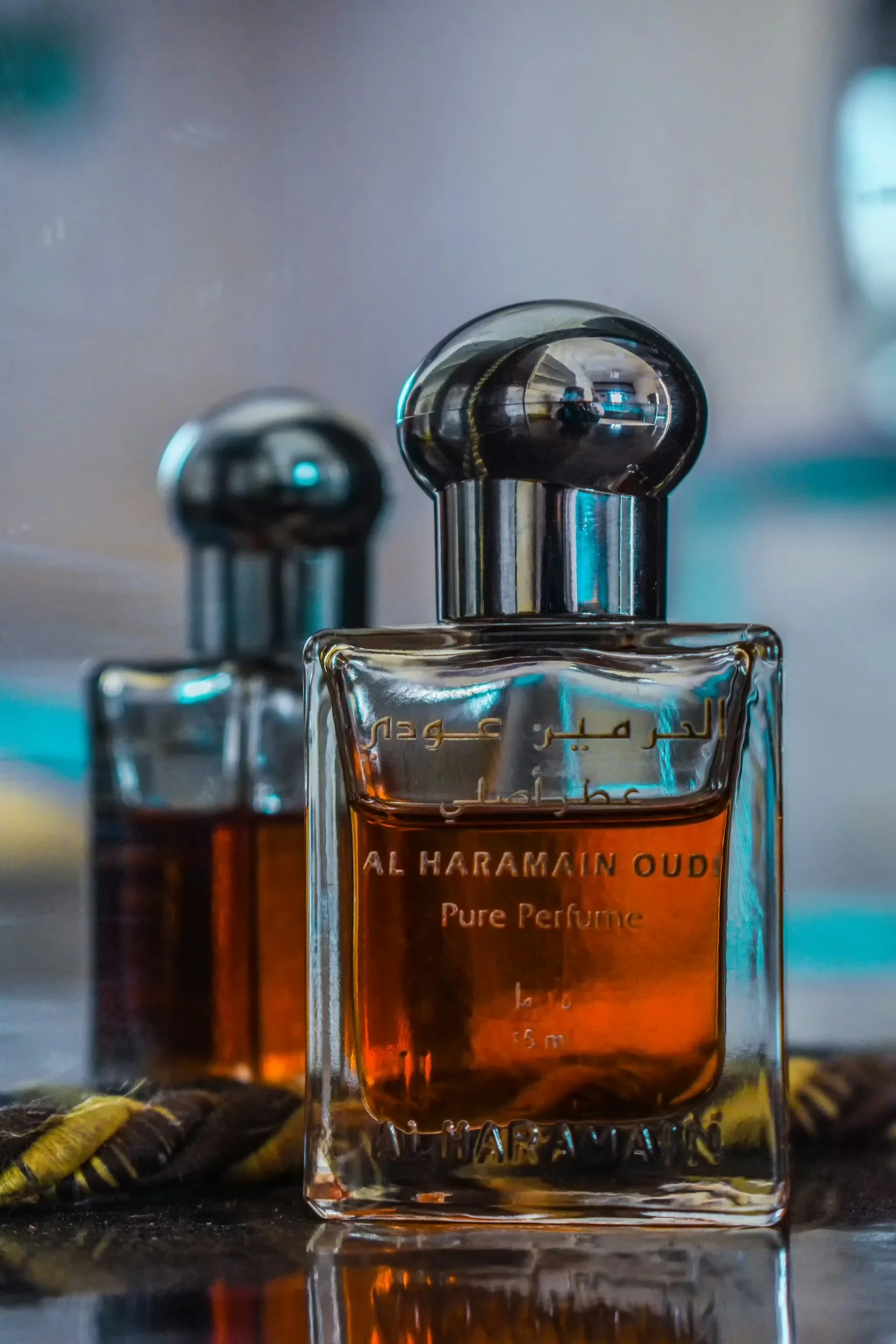
Attars are traditional perfumed oils, most closely associated with South Asian and Middle Eastern traditions, though their roots span across the ancient world. Classically, attars are created through a process of steam or hydro distillation of botanical materials directly into a sandalwood base oil, which absorbs and fixes the aromatic compounds. The result is a richly layered, skin-warming fragrance of extraordinary depth. Attars are oil-based and alcohol-free, making them particularly beloved in Islamic tradition, where alcohol-based perfumes are traditionally avoided. The word itself comes from the Arabic 'itr, meaning fragrance or essence.
Aromatherapy
Aromatherapy is a vast and multifaceted field, with many approaches and applications — salves and balms, diffuser blends, sprays, oils, gels, and baths, to name a few. These products are blended primarily with essential oils, though herbal infusions are commonly incorporated into finished products.
The primary distinction between aromatherapy and true perfumery is intention: aromatherapy blends are created for wellness, while perfume blends are created for beauty — though of course there is significant and beautiful overlap.
And I believe, without reservation, that aromatherapy is inherently a spiritual practice.
In an attempt to legitimize this field, many modern aromatherapy practitioners have shifted toward a focus on the chemistry of the oils, investing in a growing body of scientific studies on their efficacy. While it's wonderful to have proof of the healing power of these plants, we risk losing the true gift of aromatic healing in the process. Healing with fragrant plants has always been a medicinal and spiritual art. Ignoring the plant spirit medicine of essential oils doesn't mean it ceases to exist.
Anointing Oils
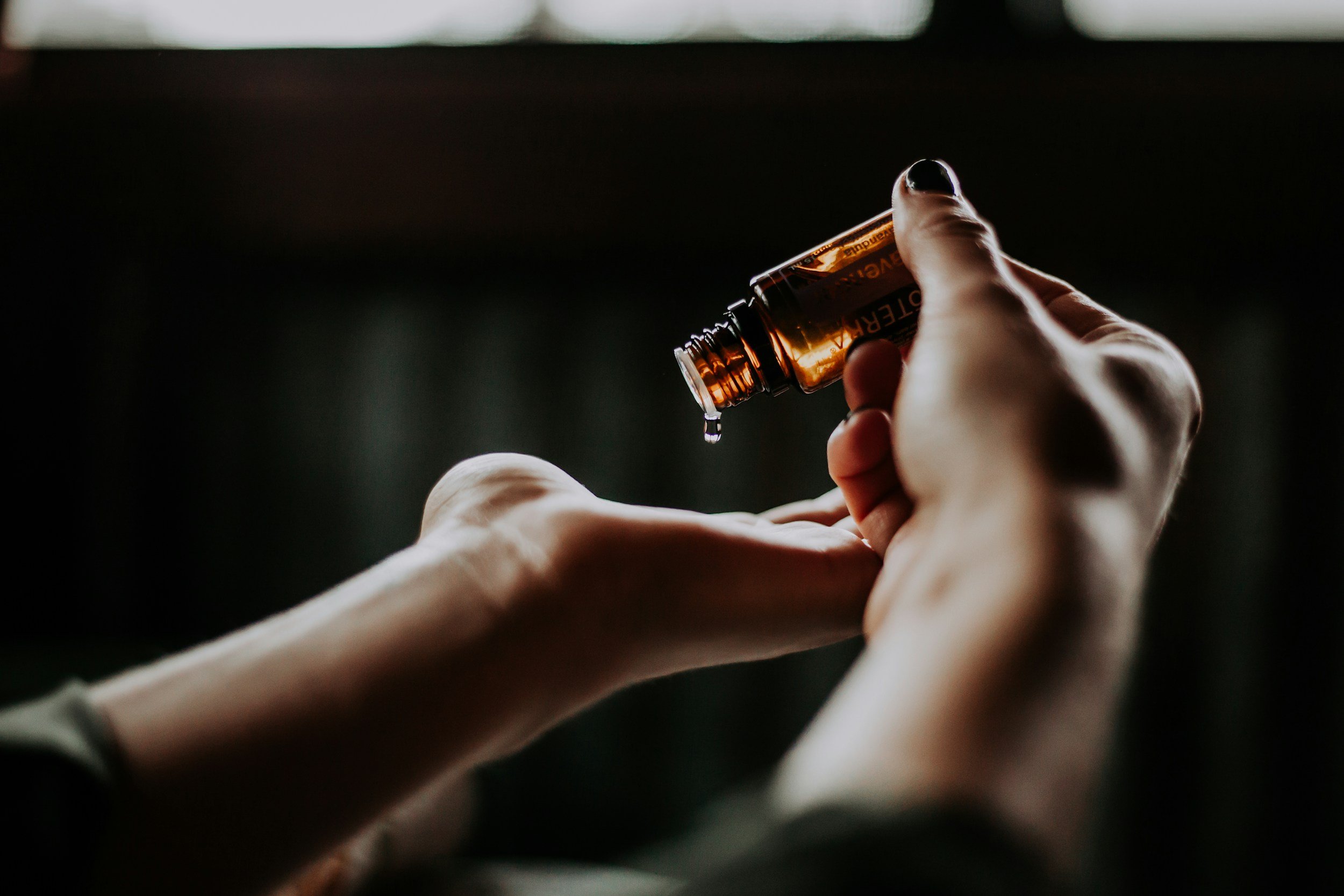
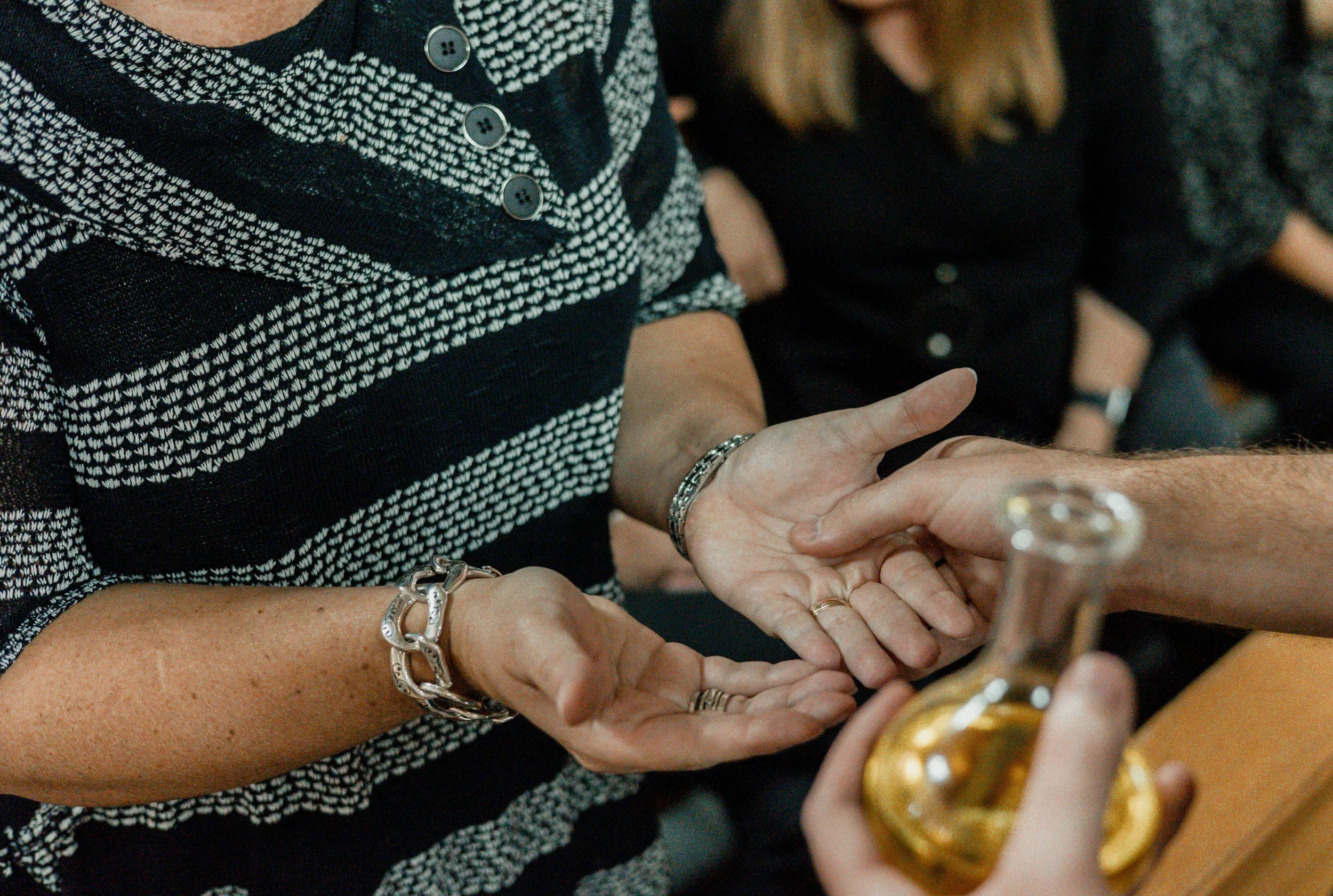
One of the oldest forms of spiritual fragrance, anointing oils — also called ritual oils — are usually composed of essential oils or infused herbal oils that hold symbolic and spiritual significance. They are used to bless, consecrate, or protect individuals, objects, or spaces. Anointing with oils has been practiced in countless religious and spiritual contexts to signify sacred or chosen status — and the practice stretches back at least as far as written history.
Anointing oils are a major part of my personal spiritual practice, and many of the anointing oils I create are so divinely fragrant, they could easily be called perfumes.
Unguents
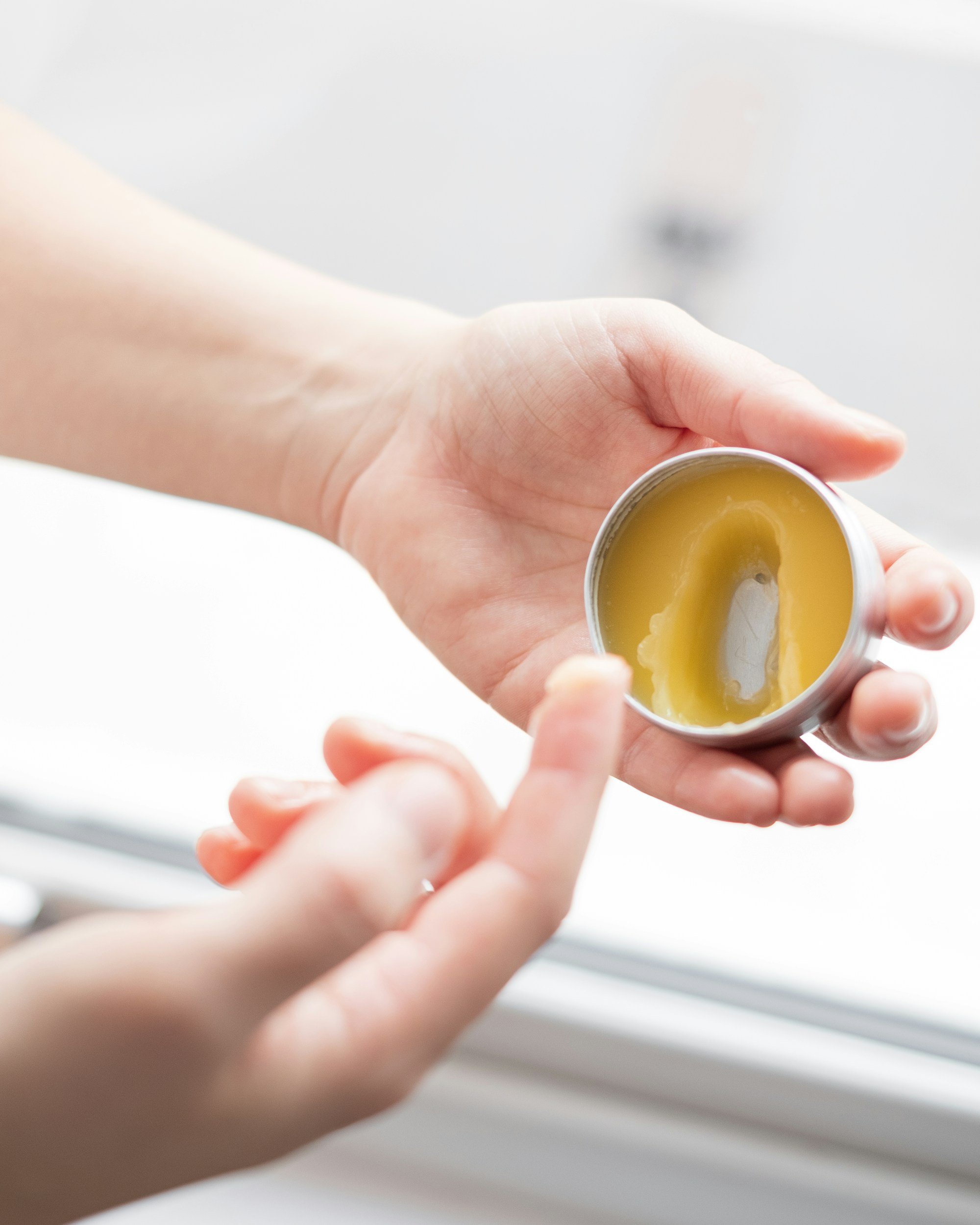
Unguents are similar to anointing oils but tend to be thicker in consistency, often taking the form of a salve or balm. Historically, they were used for anointing the body or for special ceremonial occasions. In many traditions, unguents were prized for their aromatic and medicinal properties as much as their spiritual significance. Some of the most famous unguents in history — like the Egyptian kyphi and the sacred anointing oil described in Exodus — were elaborate, multi-ingredient formulas that required great skill and intention to prepare.
Smoke Bundles and Smudge Sticks
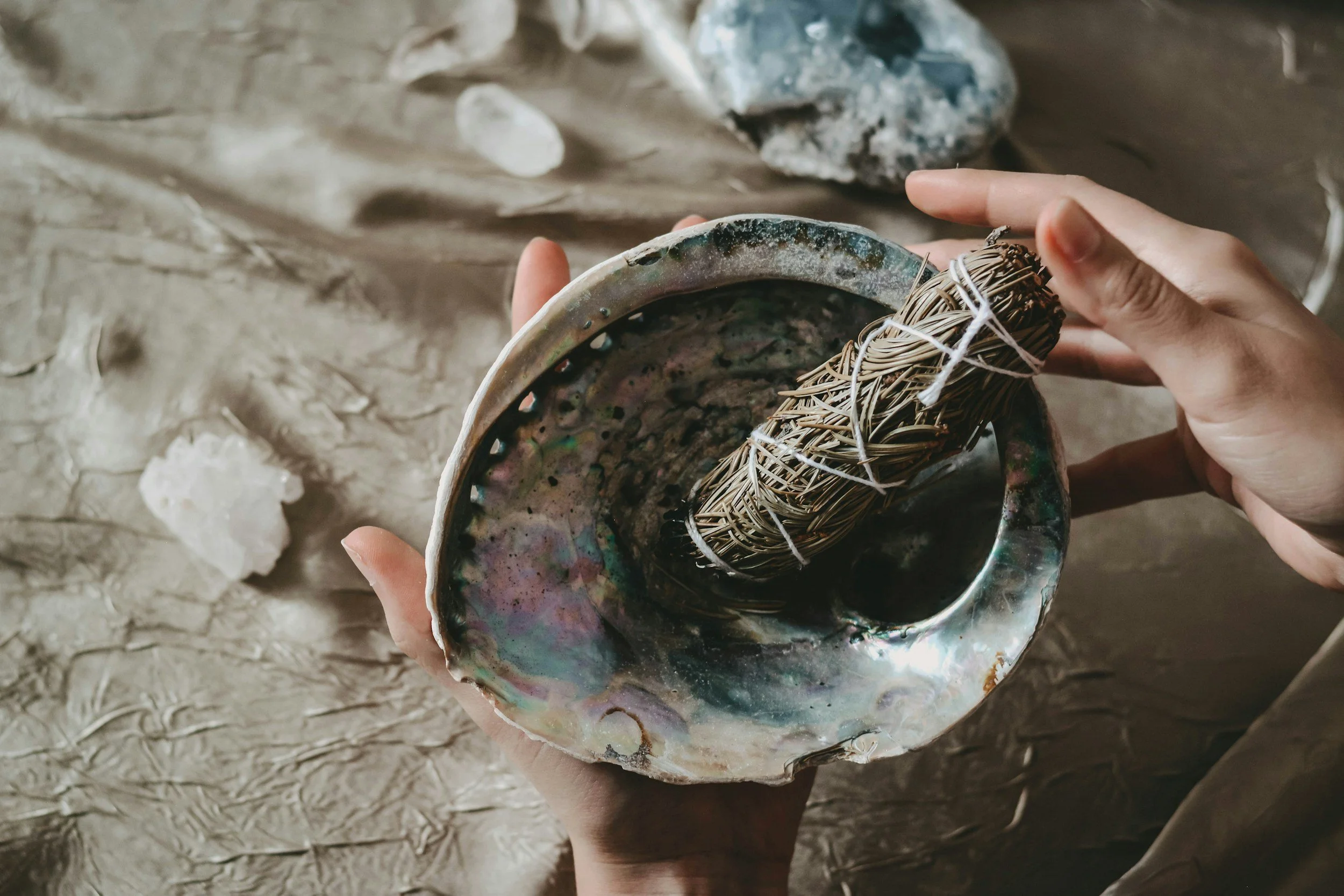
Smoke bundles and smudge sticks are bundles of dried herbs that are burned to create a fragrant, purifying smoke. While smudging is a term specific to certain Native American traditions, the practice of binding and burning aromatic plant material exists in cultures throughout the world. Most often, this practice is used to cleanse and purify spaces, objects, and individuals — dispersing stagnant or negative energy and inviting in clarity and positive presence.
Incense
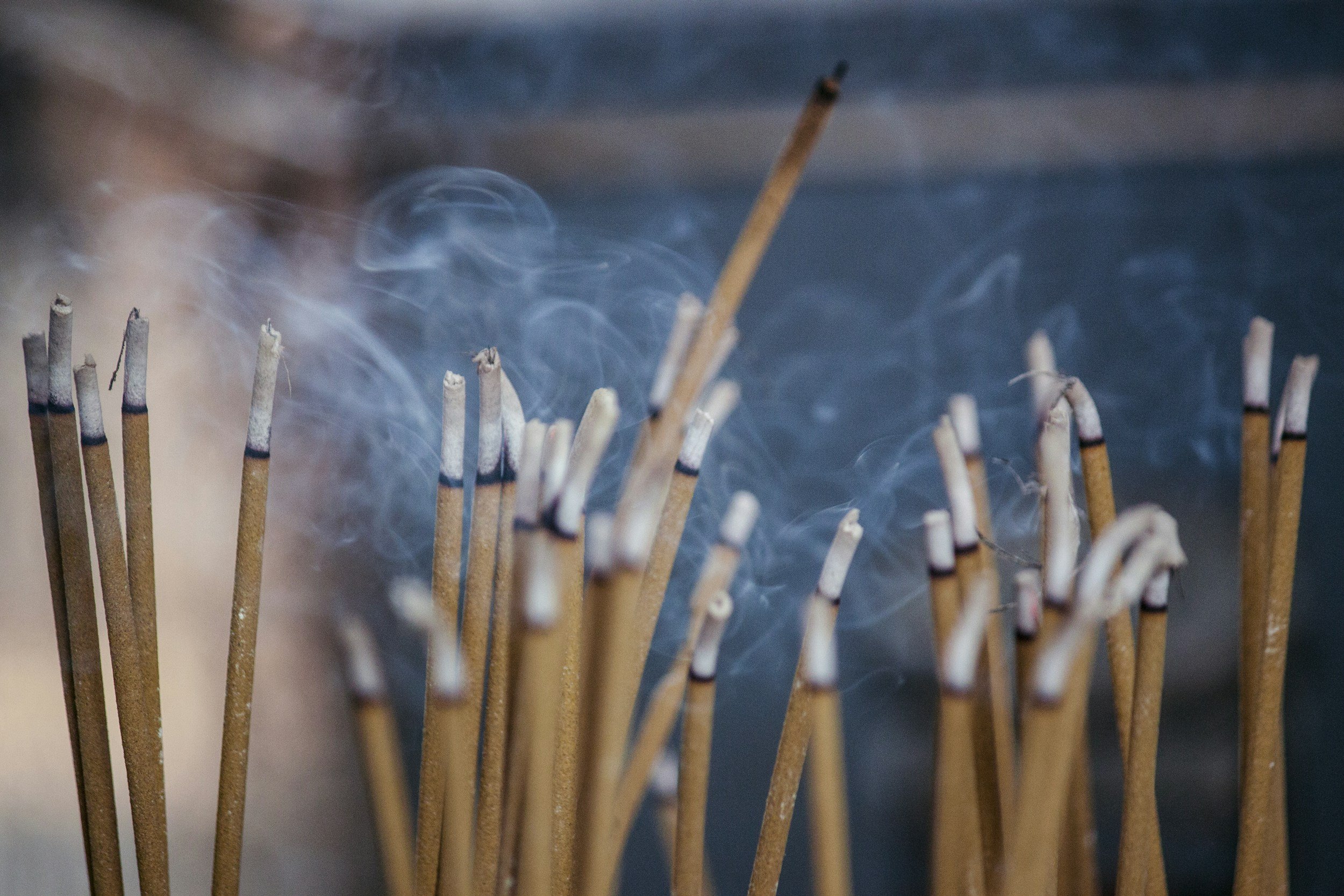
Incense is a mixture of aromatic plant materials — resins, herbs, and woods — burned to release fragrant smoke. It can be used as a loose blend of raw materials, or formed into pellets, sticks, or cones.
In modern times, incense is often burned for purely aesthetic purposes — pleasure, atmosphere, and mood-setting. Yet traditionally, its use was always spiritual in nature. Like smoke bundles, incense is burned to cleanse and purify the air and to call in benevolent spirits. What truly sets incense apart, however, is how it symbolizes the ascent of prayers and offerings to the divine — the smoke as a living bridge between the human and the sacred.
Hydrosols
Hydrosols, also called hydrolates or floral waters, are created from the same steam distillation process as essential oils — but a different part of the process is preserved. Hydrosols are made from the botanically-infused steam, recondensed into a gentle, aromatic, and long-lasting water.
Hydrosols were likely what was primarily used in ancient Taoist anointing practices and they are one of the most accessible aromatic medicines available today.
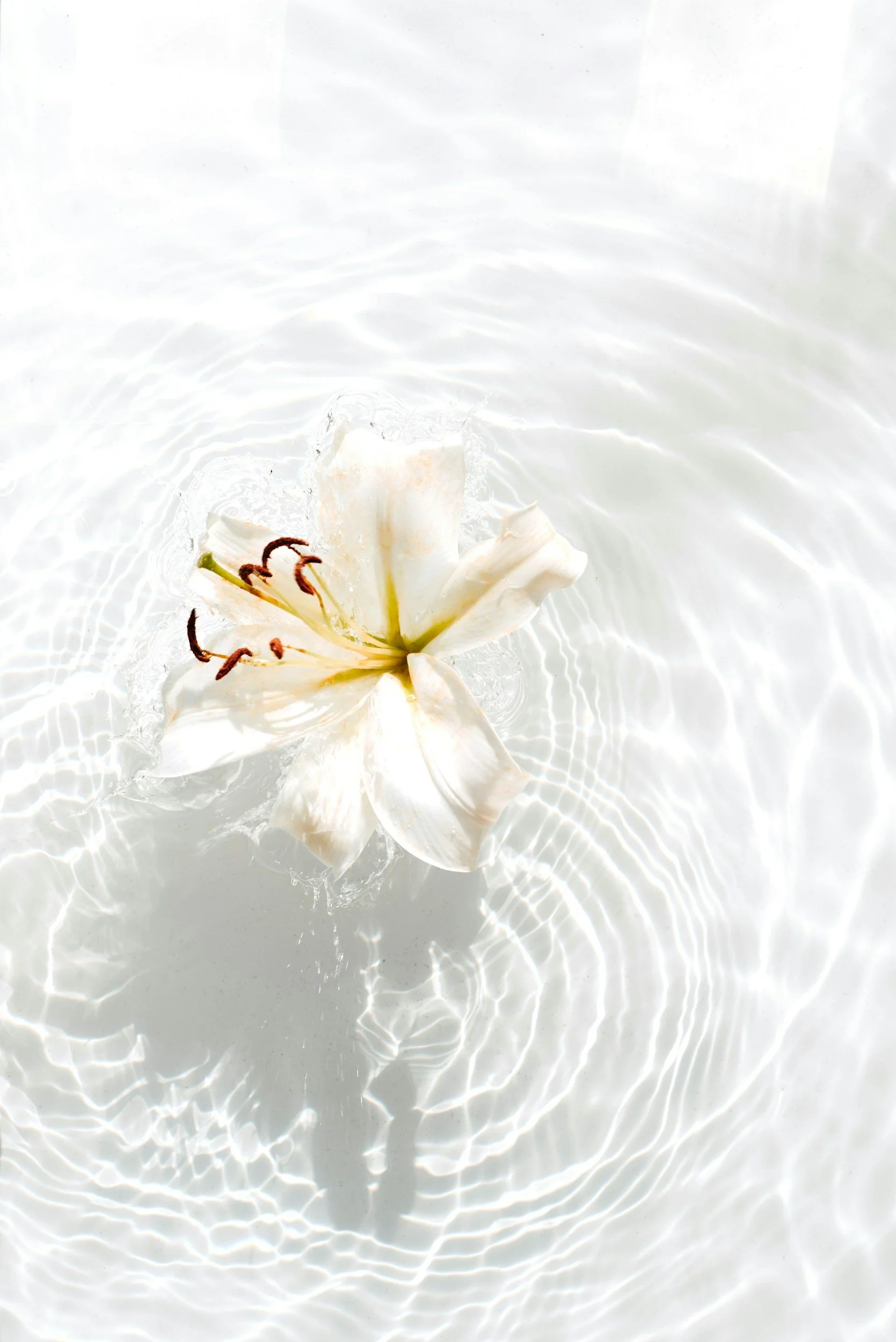
A History Written in Smoke and Oil: The Cultural Significance of Sacred Scent
The connection between scent and the divine is one of the most enduring threads in human history — present in every culture, on every continent, across every era we can trace. Long before temples were built or texts were written, humans were offering aromatic smoke to the sky and anointing one another with fragrant oils.
Many deities across traditions have been recognized by the presence of their scent alone — a perfumed wind, a sudden sweetness in the air, the inexplicable fragrance of roses in a room where no flowers are present. Scent arrives before language. It speaks directly to something older than thought.
Ancient Egypt, Greece, and Rome
In ancient Egypt, the creation of sacred fragrance was priestly work. The word perfume itself comes from the Latin per fumum — "through smoke" — a testament to how central burning aromatic materials were to early spiritual life. Egyptian temple rituals involved elaborate incense formulas, the most famous being kyphi, a complex blend of resins, wine, honey, and botanicals burned as evening offerings and believed to induce visionary states.
In Greece and Rome, fragrant oils and botanical extracts were woven into religious ceremonies. The rising smoke from incense was believed to carry prayers and offerings directly to the gods. Scent was a bridge between worlds — a medium of divine communication.
Eastern Traditions
In Hinduism and Buddhism, incense creates sacred atmosphere and purifies the space for prayer and meditation. The aromatic smoke is both an offering to divine beings and a practical aid to spiritual practice — its scent quieting the restless mind, preparing the inner landscape for stillness. In Buddhism particularly, the impermanence of incense smoke — beautiful, present, then gone — is itself a teaching.
In Shinto, the native spiritual tradition of Japan, nature is understood to be infused with spiritual presence, and scents are associated with kami, the nature spirits that animate the world. Offerings of scented oils and incense honor these spirits and enhance the sacredness of shrines and ceremonies.
Indigenous Wisdom
Indigenous cultures around the world have long incorporated aromatic plants into their most sacred practices — from the smudging ceremonies of Native American traditions using sage, cedar, tobacco, and sweetgrass, to the copal offerings of Mesoamerican traditions, to the use of palo santo by Amazonian peoples, to the frankincense traditions of East Africa and the Arabian Peninsula. Each tradition carries its own understanding of the relationship between fragrant plants, the spirit world, and human wellbeing.
These practices were not isolated curiosities — they were sophisticated systems of healing and spiritual technology, developed over thousands of years in deep relationship with specific landscapes and plant communities.
Abrahamic Traditions
In Judaism, Christianity, and Islam, anointing with fragrant oils carries profound spiritual weight. In the Hebrew Bible, the formula for the sacred anointing oil used to consecrate the Ark of the Covenant and the high priests is given in striking detail — myrrh, cinnamon, cane, and cassia in olive oil — a recipe so sacred its unauthorized use was considered a serious transgression. In the Christian tradition, anointing with oil remains a sacrament. In Islam, the use of attar — perfumed oil — is connected to the practices of the Prophet and carries associations with paradise. Fragrant oils were, across all three traditions, understood as gifts fit for the divine.
Perhaps most relevant to those embracing the art of sacred aromatics today is the path of the myrrhophore, a sacred anointing art most famously practiced by Mary Magdalene.
Shamanic Practices
Shamans and healers across many traditions have used scents derived from plants, resins, and woods to facilitate altered states of consciousness and communication with the spirit world. The strong aromatic compounds of plants like blue lotus, copal, frankincense, and various sacred mushrooms were understood not simply as chemicals but as the living intelligence of the plant — a form of medicine that worked simultaneously on the body, mind, and spirit.
The Science of Scent and Spirit
The spiritual understanding of fragrance is ancient. The science is catching up.
Of all our senses, smell is uniquely wired for depth. While most sensory information travels through the thalamus — the brain's central relay station — scent travels directly to the olfactory bulb, which has immediate connections to the limbic system: the brain's emotional center and the seat of memory. This is why a particular scent can transport you instantly and completely — not just remembering a moment, but inhabiting it again. It bypasses the analytical mind entirely. This direct pathway also helps explain why fragrance has always been understood as a spiritual tool.
Research has confirmed what ancient traditions always knew: specific aromas measurably affect heart rate, blood pressure, cortisol levels, and neurological activity. Frankincense, for example — one of the most sacred resins in human history — contains compounds that activate ion channels in the brain associated with the reduction of anxiety and depression. Lavender has been shown to produce measurable changes in brain wave activity consistent with relaxed, meditative states. Sandalwood influences the nervous system in ways that support stillness and inner focus. Rose activates heart healing on multiple levels.
But chemistry is only part of the story. The full intelligence of aromatic plants — what older traditions called their spirit or medicine — cannot be reduced to their constituent molecules. The plants are more than their parts. And the human beings who work with them are more than their neurons.
Creating Spiritual Perfumes: Intention, Ingredient, and Ritual
Making a spiritual aromatic is not simply a matter of combining materials. It is, at its best, a ritual act — an alchemical process in which the maker's intention is woven into the fragrance itself.
Choosing Your Ingredients
The aromatic world offers an extraordinary palette: flowers, leaves, roots, barks, resins, woods, seeds, and their distilled essences. Each botanical carries its own character and traditional significance — rose for love and the heart, frankincense for purification and divine connection, myrrh for protection and ancestral wisdom, sandalwood for grounding and meditation, lavender for calm and clarity, jasmine for joy and spiritual opening.
When I choose ingredients for a spiritual blend, I'm listening on multiple levels simultaneously. I'm considering the traditional and symbolic significance of each material. I'm listening to the materials themselves — their individual characters, how they relate to one another, what they seem to want to become together. And I'm holding the intention of the person who will ultimately receive and use the blend.
Natural materials — whole plant materials, steam-distilled essential oils, and traditional absolutes — carry a depth and complexity that synthetic aromatic molecules simply cannot replicate. This matters for spiritual work. The full spectrum of a plant's aromatic intelligence is present in a well-crafted natural extract in a way that a synthetic approximation cannot reproduce.
Blending with Intention
Infusing a perfume with spiritual purpose begins before the first drop is measured. It begins in stillness — with a clear intention, an open question, or a prayer. What is this blend for? Who does it serve? What quality of consciousness does it want to evoke?
In the classical perfumer's vocabulary, a well-crafted fragrance has three distinct phases that unfold over time: top notes (the first impression, bright and volatile), heart notes (the body of the fragrance, emerging as the top notes fade), and base notes (the deep, anchoring materials that persist on the skin and carry the fragrance's resonance). In spiritual perfumery, this temporal unfolding mirrors the arc of a ritual — opening, deepening, settling.
Harmonizing scents for energetic alignment means listening not just to how materials smell in combination, but to how they feel together. Does this blend open or close? Does it ground or elevate? Does it warm or clarify? These are as much energetic questions as they are aesthetic ones.
Ritual in the Making
Many perfumers and healers I respect approach the creation of spiritual fragrances as a ritual in itself — working at particular times (lunar cycles, astrological alignments, or simply times of personal clarity and peace), blessing the materials before blending, speaking prayers or intentions aloud as they work, or working in meditative silence.
I believe this matters. The maker's state of consciousness during creation is not separate from the product. It is part of it.
How to Use Spiritual Aromatics
Anointing and Blessing
Anointing — applying fragrant oil to the body as a sacred act — is one of the oldest spiritual practices we know of. The specific placement of anointing oils on the body varies by tradition: the forehead or third eye for spiritual opening and intuition; the crown for connection to the divine; the heart for love, compassion, and emotional healing; the throat for truth and voice; the wrists and pulse points for intention-setting.
Anointing transforms the everyday act of getting dressed into a moment of sacred attention. It says: this is intentional. I am here. I am stepping into this.
Meditation and Spiritual Journeying
Fragrance is one of the most reliable tools available for shifting consciousness. Certain scents — frankincense, sandalwood, blue lotus, oud — have been used for thousands of years specifically to facilitate meditative and visionary states. Used consistently in meditation practice, a particular scent can become a reliable anchor — a sensory cue that signals to the nervous system and the deeper mind: we are entering sacred space now.
This is why temples and churches smell the way they do. It's not incidental. It's intentional, cumulative, and profound.
Cleansing and Purification
Aromatic smoke — whether incense, smoke bundles, or resins burned on charcoal — has been used across cultures for energetic clearing. The fragrant smoke is understood to break up stagnant energy, neutralize negative influences, and create a fresh, protected field in a space or around a person.
Beyond smoke, aromatic baths are one of the most deeply nourishing forms of purification available. Adding essential oils, herbal infusions, salts, and sacred botanicals to bathwater creates an immersive full-body experience that works simultaneously on the physical, emotional, and energetic bodies.
Space cleansing sprays — hydrosols or water-based blends with protective and clarifying essential oils — offer a smokeless alternative for environments where burning materials isn't practical.
Sacred Aromatics and the Question of Ethics
Working with sacred plants is a privilege. It asks something of us.
Sourcing and Sustainability
Many of the world's most cherished aromatic plants are under significant pressure. Sandalwood, oud (agarwood), frankincense, rosewood, and wild-harvested palo santo are among the species facing overharvesting, habitat destruction, and compromised wild populations. As people drawn to working with these plants — not just using them but honoring them — we have a responsibility to understand where our materials come from and how they were obtained.
Sustainable sourcing means supporting producers who harvest responsibly, cultivate where possible, and maintain the health of plant populations and the ecosystems that support them. It means being willing to pay fair prices for genuine, ethically sourced materials. And sometimes, it means accepting a substitute or going without.
Cultural Respect
Many aromatic practices carry the fingerprints of specific cultures and lineages — the smudging traditions of Native peoples, the attar traditions of South Asian and Middle Eastern communities, the temple incense formulas of Egypt, India, and Japan. As these practices travel across the world and enter mainstream wellness culture, the question of cultural respect becomes important and nuanced.
There is a meaningful difference between sincere learning from and deep engagement with another tradition — approached with humility, proper attribution, and ideally, relationship with living members of that tradition — and the casual extraction of spiritual aesthetics without regard for their origins or continued significance to the people who hold them.
We can be inspired by the full breadth of human aromatic wisdom. We owe it to the traditions that inspire us to carry that inspiration with integrity.
Spiritual Aromatics as a Personal Practice
The most powerful thing I can tell you about working with sacred aromatics is this: your own relationship with these plants and fragrances is irreplaceable.
No article, no product, no tradition can substitute for direct experience — for sitting with frankincense smoke in the early morning and noticing what shifts in you, for finding the anointing oil that makes you feel most like yourself, for discovering that a particular blend quiets your anxious mind in a way nothing else does.
The plants meet us where we are. They are extraordinarily patient. They have been waiting a long time for us to remember that they are here.
The practice of working with spiritual aromatics is, at its heart, a practice of attentiveness — to the plants, to our own inner states, to the relationship between them. It is a form of prayer that works through the body and the senses, grounding the spiritual in the most physical and intimate of experiences: a scent that moves through you, changes you, opens something that had been closed.
This is the alchemy of spiritual perfume. Not the transformation of base metals into gold, but the transformation available to us every day — through fragrance, through intention, through our willingness to work with the living intelligence of the plant world.
Welcome to the practice.
Explore Further
5 Essential Oils for Mercury Retrograde (and how to use them)
The Art of Elemental Anointing: Restoring Balance Through Sacred Aromatics
Why Hydrosols Are the Missing Piece in Your Wellness Practice
A Short & Sweet Guide to Understanding Flower Essence Dilutions
A Guide to Perfume Types: Dilutions & Ratios in Natural Perfumes
All About Flower Essences: How to Partner with Plants for Whole-Self Healing
All of my aromatic products are made with sustainably sourced, natural botanical materials and infused with intention. If you feel called to explore sacred aromatics in your own practice, I invite you to explore the collection.

Juniper Stokes is a botanical perfumer, soul alchemist, intuitive astrologer, and rewilding guide through mythic landscapes of the nature, spirit, and the cosmos. For over 25 years, she has been guiding soulful humans back to the heart of who they are and why they’re here.
🌿 Explore workshops & trainings.
💠 Find alchemical aromatics in The Botanica.
Enjoyed this article? The absolute most wonderful way to say thank you is by sharing it!
ASTROLOGY | RECIPES | REWILDING | SACRED AROMATICS | SHAMANISM | SPIRITUALITY | WELLNESS

A FREE 45-page guide to awaken your inner magic!
Juniper Stokes is a certified depth coach, mythoanimist guide, alchemist, astrologer, and artist.