Why Wild, Why Alchemy
The Wild Alchemy Practitioner Program begins May 16!
A brief share on why my Wild Alchemy Practitioner Program is names as it is :)
On "wild"
"Wild" gets used a lot in spiritual marketing to mean roughly "barefoot." Or to suggest someone with unbrushed hair and feelings about the moon. (No shade. I have unbrushed hair and feelings about the moon.)
But that isn't what I mean by it.
Wild, in this work, points to the actual intelligence that runs through living systems. The way a forest after a fire doesn't need to be told how to come back. The way a body knows what to do with a wound if you don't interrupt it. The way grief moves through someone in waves, on its own schedule, not according to a five-step framework.
That kind of intelligence isn't manufactured. You can't control it all the way down. You can listen to it, partner with it, get out of its way — but you can't replace it with a sufficiently clever protocol.
A lot of contemporary healing has tried to replace it with a sufficiently clever protocol.
And the results are, predictably, a little dry.
Wild means: this work is alive. The intelligence underneath your transformation is older than your therapist, your astrologer, and anything I'll teach you. We're going to be in relationship with it, not in charge of it.
On "alchemy"
Alchemy has the opposite problem. The word has been so romanticized it almost feels embarrassing to use — like showing up to dinner in a velvet cape.
But the actual alchemical traditions — both the European hermetic streams and their Daoist counterparts in the East — were never really about turning lead into gold. That was the cover story. The underneath story was about the transformation of consciousness. The practitioner working on the matter in the crucible was, at every step, also the matter in the crucible.
What they mapped, in elaborate symbolic detail, was the human process of becoming.
The places we get stuck. The pressure required to soften old material. The descent before integration. The dissolution before something new can crystallize. The cycles, repeating — because no one moves through this once and exits enlightened.
When I say alchemy, I mean this. The slow, structured, repeating transformation of consciousness through everything life puts you in contact with.
Alchemy isn't self-improvement, isn't optimization, isn't collecting modalities until you feel impressive at parties. It's a real change in the substance of who you are.
Why both words, together
The work in this program needs both.
You need the structure — the maps, the alchemical phases, the lineages of people who have walked this and left tracks. Without that, you're just having experiences and hoping they amount to something coherent.
And you need the wildness — the living relationship with mystery, with the body, with nature, with whatever moves through you when you sit down to do this work and find yourself led somewhere you didn't plan.
A practitioner with only the structure is a technician. A practitioner with only the wildness is a leaf in the wind.
The training is for people who want to be neither.
Wild alchemists, as it turns out, do exist. Most of them have been quietly doing this work for a long time, and they're some of the most useful people on earth right now.
We're going to make more of them.
The Forgetting
There's an idea that runs through almost every spiritual tradition I've come across, and it's one of the strangest and most useful ideas I know.
The idea is that we arrive here forgetting.
The Greeks had Lethe, the river you drink from before reincarnating. The Tibetan traditions describe the bardos and the dissolution of memory between lives. Indigenous traditions worldwide describe the soul crossing through a veil to enter this world. Even certain readings of Christianity hint at it — the "fall" can be read this way, if you squint.
When the same image keeps surfacing across unrelated cultures, I take it seriously. Not as literal cosmology — I'm not asking you to picture an actual river — but as a description of a true thing about human existence.
We arrive in a body, in a family, in a particular century and country and economic situation, with our continuity obscured. The full picture of who we are — across lifetimes, in relationship to spirit, with our gifts and patterns and unfinished material — isn't accessible to us most of the time. We get pieces. Hints. The occasional uncanny sense of having known something before. Mostly we get the surface, and the surface gets noisier as we grow up.
Then life starts pressing.
A pattern repeats. A grief surfaces and doesn't quite belong to this lifetime. We have a longing we can't trace. We meet someone and an older part of us recognizes them. We feel pulled toward work that, on paper, makes no economic sense.
These are the cracks in the forgetting.
The work — call it alchemical work, soul work, whatever language you like — is the slow process of paying attention to those cracks. Of letting them widen. Of beginning to remember.
(This is also why I'm a little allergic to spiritual content that promises you'll "become your highest self" in six weeks. Becoming yourself isn't a project, exactly. It's a remembering. And remembering happens on its own timeline, regardless of anyone's launch calendar.)
What this has to do with practitioners
If you work with other people in any healing capacity — coach, therapist, energy worker, doula, ritualist, teacher, anything — your own relationship to forgetting shapes what you can hold for them.
Practitioners who haven't done the remembering work themselves tend to fall into one of two ditches.
The first ditch: overfilling the room with technique. Technique is a way to stay in control and not actually meet anything mysterious. Lots of modality stacking, lots of vocabulary, very little space for what wants to happen.
The second ditch: spiritually bypassing everything. They've adopted a vocabulary of light and love without going through any of the underworld parts of their own material. Everything is "such a beautiful invitation." Everything is held in love. Nothing has weight.
Both are ways of staying forgotten.
The practitioners I trust most — the ones I learn from, refer my own people to, sit at the feet of when I get the chance — have done the work of remembering in some serious way. They've been into the underworld pieces of their own lineage and come back changed. They know what it's like to lose the thread and find it again. They have texture.
Texture is what people can feel in a session. You can't fake it, and no certification confers it.
Wild Alchemy as a remembering container
This is part of what I mean when I describe the apprenticeship as an initiation, not a training.
A training is built around information and skills. An initiation is built around your own transformation — and you don't fully get to choose which parts of you get transformed. The agenda is set by something larger than the curriculum.
The apprenticeship is designed to be the second thing. We use the maps of alchemy, the maps of the natural world, ritual, peer container, and direct soul work to support the remembering process. There are skills, yes. There's information. But the skills sit on top of something that's actually changing in you.
Which is what makes the work — yours, eventually, with the people you'll serve — real.
The forgetting is part of how we arrive here. The remembering is part of why some of us, somewhere along the way, decide we want to help.

Enjoyed this article? The absolute most wonderful way to say thank you is by sharing it!
ASTROLOGY | RECIPES | REWILDING | SACRED AROMATICS | SHAMANISM | SPIRITUALITY | WELLNESS

A FREE 45-page guide to awaken your inner magic!
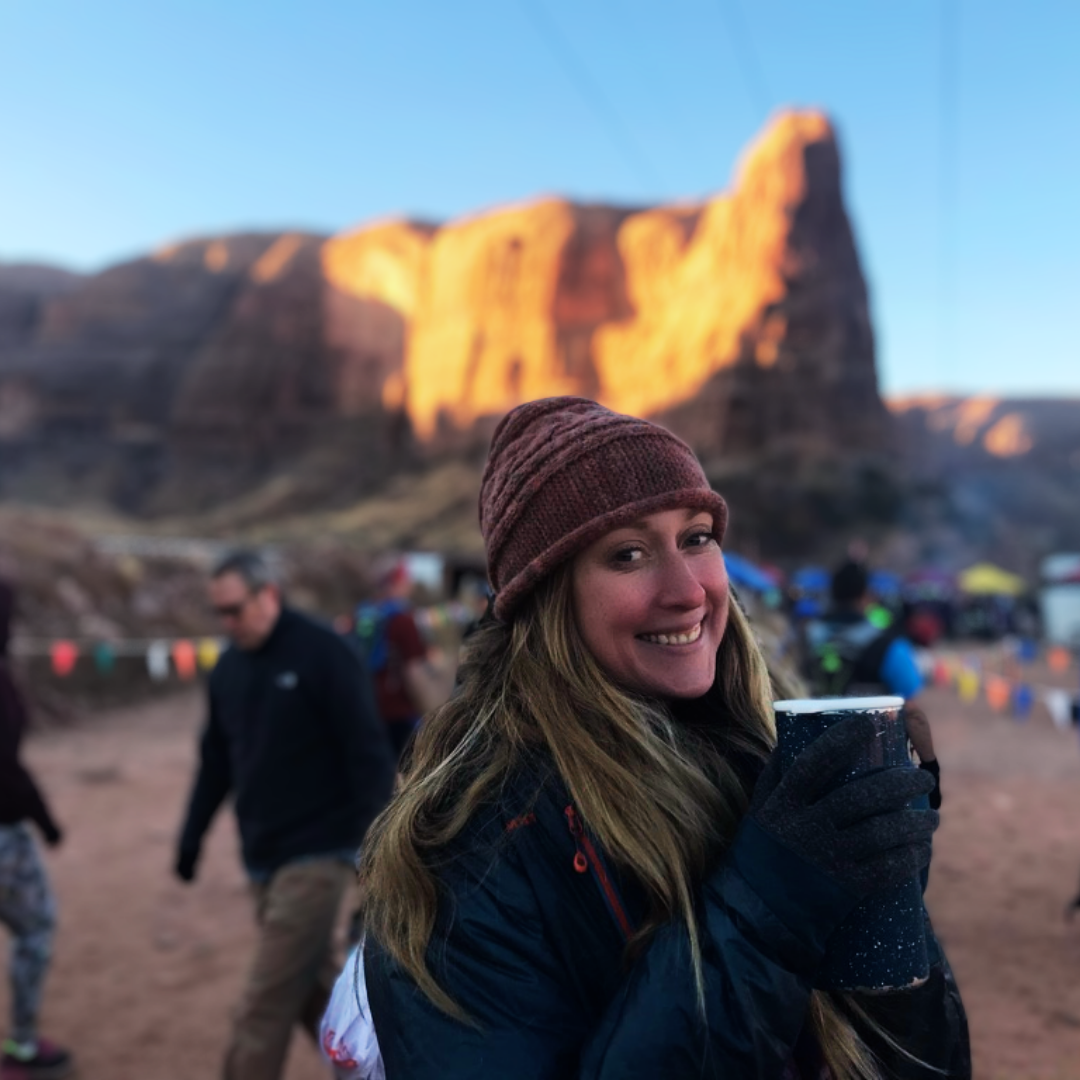
Juniper Stokes is a certified depth coach, mythoanimist guide, alchemist, astrologer, and artist.