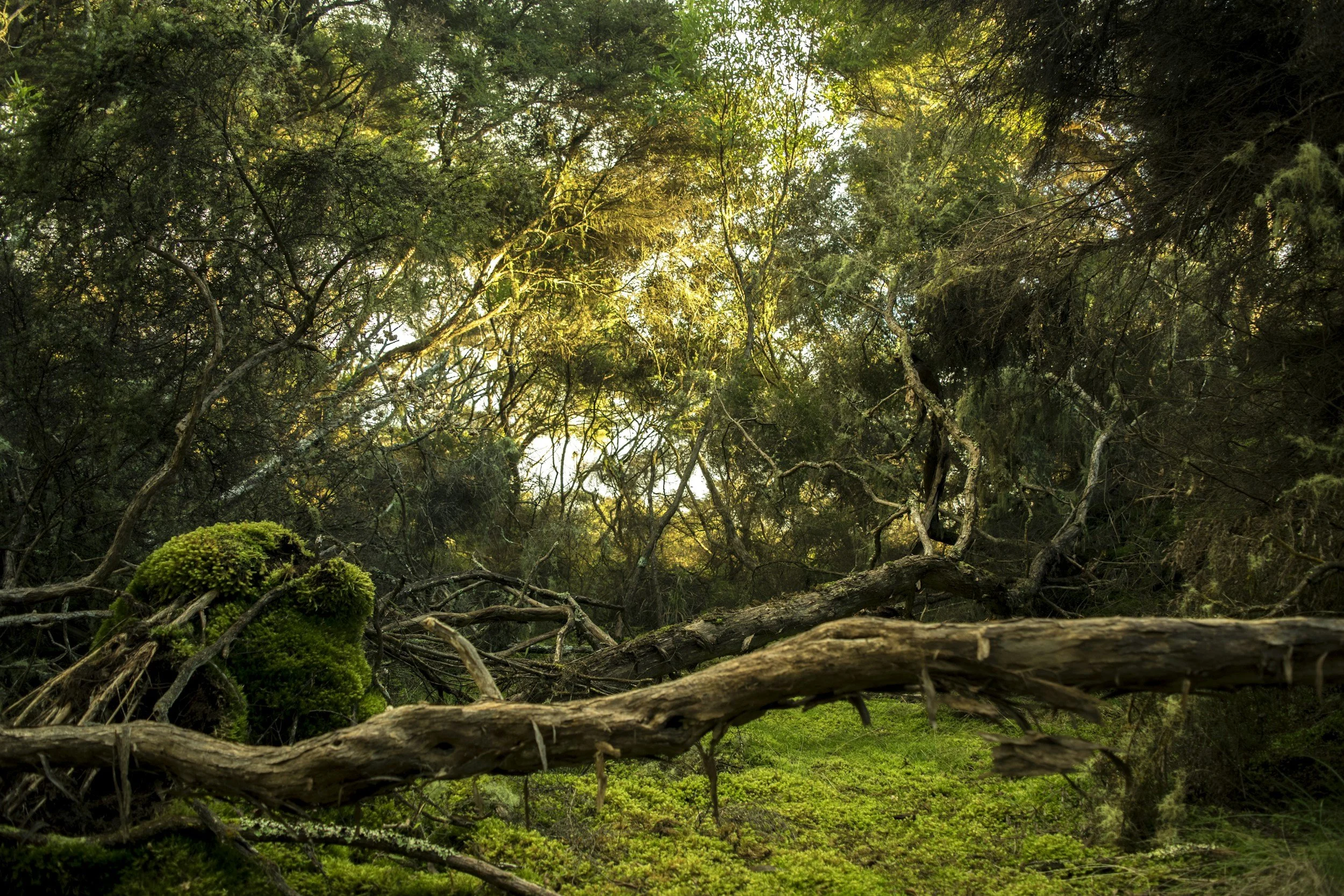
What if fragrance were an encounter with otherness?
A glimpse into the relationships between plants, pollinators, fungi, soil, weather, fire, time — and us?
A lot of aromatherapy, and even perfumery, tends to approach aromatic plants through a usefulness lens: Lavender helps us sleep. Jasmine is a heart note. Rosemary supports the brain. Sandalwood softens and extends a perfume.
Of course there’s truth in these statements.
But to respond to the call of sacred aromatics is to move beyond the extractive consciousness that keeps looping in the “this for that” world.
Plants are sacred beings in their own right. They have their own relationships, strategies, rhythms, and ways of responding to the world around them.
And scent gives us an extraordinary doorway into that world.
The volatile organic compounds plants release into the atmosphere are both their aroma and their ecological language: A flower may produce particular aromatic molecules when its pollinators are active. A wounded leaf can release green leaf volatiles that signal distress. Roots exchange chemical information with fungal partners underground.
The scent of a plant is therefore not simply a sensory characteristic — it is part of the plant’s language and life.
And when we breathe in those molecules, the chemistry of another living being enters our bodies.
We participate in a collective atmosphere of exchange.
This is the ecology of scent.
A plant’s fragrance becomes an invitation to consider pollination, reproduction, seasonality, and the relationships that make life itself possible.
And then there is time.
Plants don’t release their aromatic compounds at the same rate all day long. Their chemistry follows rhythms orchestrated by light, temperature, pollinator activity, season, and each plant’s own circadian clock.
Our own sensitivity to smell changes according to biological rhythms, too. We perceive the same aromatic molecules differently at different times of day.
In this way, the ecological fragrances we encounter are meetings between two living systems. Invitations into the dynamic, ever-changing cycle of life that we participate within.
I’m guessing that all of you reading this feel the chaotic upswelling of our changing earth, climates, and ecosystems.
When we engage with these changes on the surface, or without intention, they can feel overwhelming, knock us off balance, and send us into prepping or despair (Actually those responses are pretty normal even when you do engage with intention and depth! These times are legit wild!)
There is something that shifts with aromatic plant communication...
We start to sense into the balance, or imbalance, of the natural world as an innate way of being. We enhance our ability to communicate with the earth herself. And as a result, we become the humans who are most needed -- and most sought out -- during these metamorphic times.
To understand scent as a doorway into ecology and a way of developing relationships with the more-than-human world.
A Simple Rewilding Practice
The next time you’re outside and able to smell the world around you, hone in on a particular plant fragrance. Then ask yourself:
What is this plant communicating?
What relationship am I entering?
What happens in my body when I encounter this being?
What does this scent reveal about the ecology around me?
And what becomes possible when I consciously participate in this relationship?


Enjoyed this article? The absolute most wonderful way to say thank you is by sharing it!
You might also like:
Healing the Sacred Masculine with the Wild & Fertile Father
The Magic & Medicine of Mugwort
On Reciprocal Foraging: Rewilding Consciousness & Shifting Culture
The Alchemy of Spiritual Perfume: A Complete Guide to Sacred Aromatics
Who are the spirits of nature? A comprehensive Guide to Nature Spirits
ASTROLOGY | RECIPES | REWILDING | SACRED AROMATICS | SHAMANISM | SPIRITUALITY | WELLNESS

A FREE 45-page guide to awaken your inner magic!
Juniper Stokes is a certified depth coach, mythoanimist guide, alchemist, astrologer, and artist.