
blog
ALL | ASTROLOGY | EGYPTIAN MYSTICISM | GODDESSES | RECIPES | REWILDING | SACRED AROMATICS | SHAMANISM | SPIRITUALITY | WELLNESS
Archive
- April 2026
- March 2026
- February 2026
- November 2025
- October 2025
- September 2025
- June 2025
- May 2025
- April 2025
- March 2025
- February 2025
- January 2025
- December 2024
- November 2024
- August 2024
- June 2024
- April 2024
- March 2024
- February 2024
- January 2024
- November 2023
- September 2023
- August 2023
- July 2023
- June 2023
- May 2023
- April 2023
- March 2023
- December 2022
- November 2022
- October 2022
- September 2022
- August 2022
- June 2022
- May 2022
- April 2022
- March 2022
- February 2022
- January 2022
- December 2021
- November 2021
- October 2021
- September 2021
- August 2021
- July 2021
- June 2021
- May 2021
- February 2021
- December 2020
- November 2020
- August 2020
- July 2020
- June 2020
- May 2020
- April 2020
- March 2020
- February 2020
- September 2019
- July 2019
- June 2019
- May 2019
- April 2019
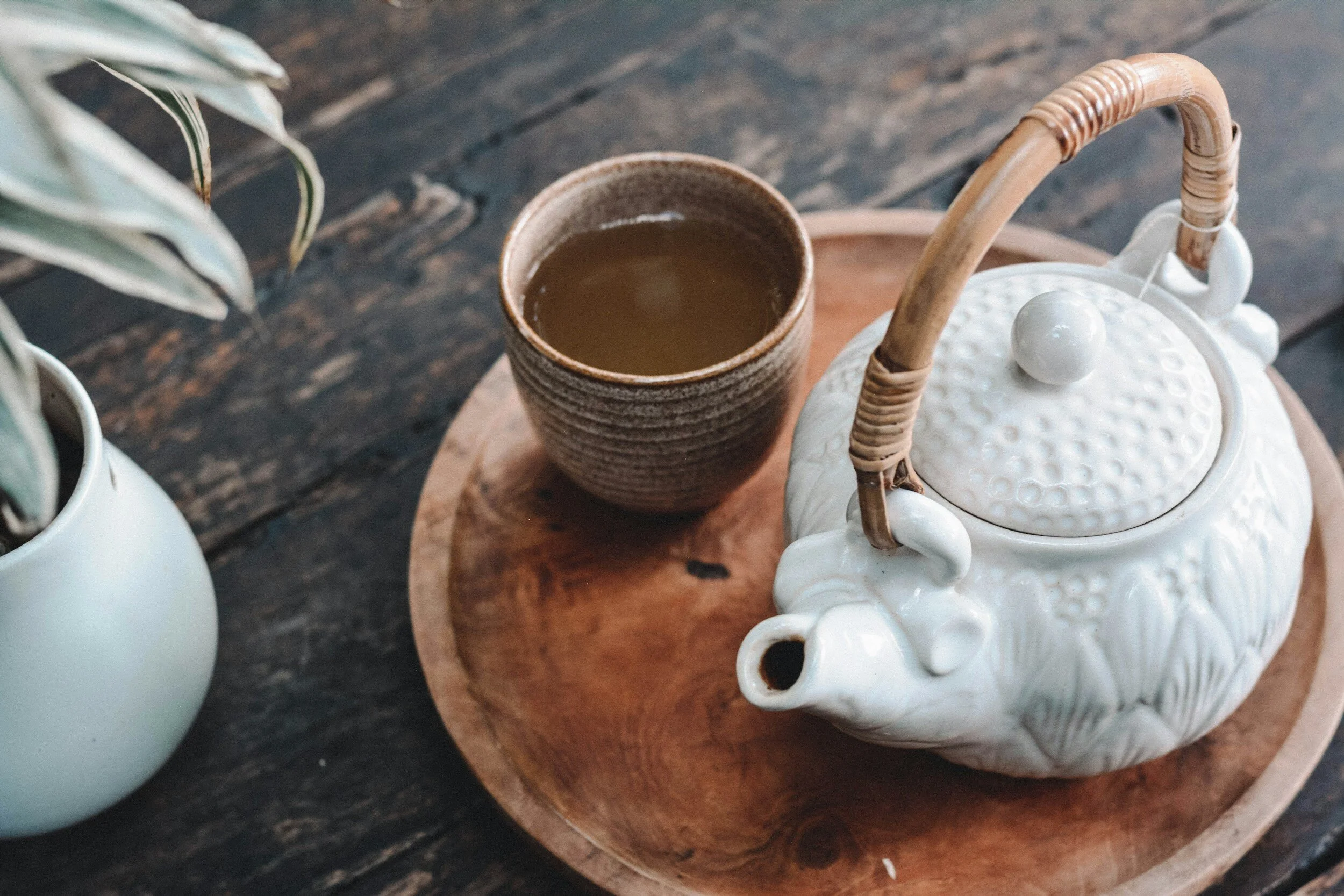
A Sunday Tea Ritual
A cup of tea can become a sacred ritual—all you need is intention.

A cup of tea can become a sacred ritual—all you need is intention.
I find Sunday evenings offer the perfect time to pause and reflect in sacred ritual before the new work week begins. Here’s a ritual for you to try this evening or anytime you want to quiet your mind and connect with spirit…
Begin by setting the intention to nourish your soul and calm your mind before the week begins.
Before you boil the water, place your hands over the hot water kettle and visualize calming nourishing energy flowing from your heart into the water.
Prepare the herbs and your cup with a grateful heart. Keep this feeling of gratitude—for these plants, for this moment in time, for your body, the aromas, the nourishment—flowing as you pour water over the tea.
As the tea steeps, you may like to light a candle and prepare your journal space.
Once ready, bring all your senses to your first few sips. Take your time and feel the warm cup in your hands. Inhale the aroma. Taste the nuances.
If this is all you have time or energy for, the ritual is complete. If you’d like to take this moment to journal, you might like to ask yourself:
How can I nourish myself in the coming week?
Where can I create more space in my schedule, perhaps by delegating or saying no?
What am I looking forward to? How can I make sure that I prioritize this?
May this ritual bring you peace and nourishment.

Share this article on your favorite platform!

A Guide to Perfume Types: Dilutions & Ratios in Natural Perfumes
EDP or EDT? Perfume or Parfum? The world of fragrance is full of various terms that can be a bit confusing when you first hear of them—which is why I’ve put together this helpful guide :)
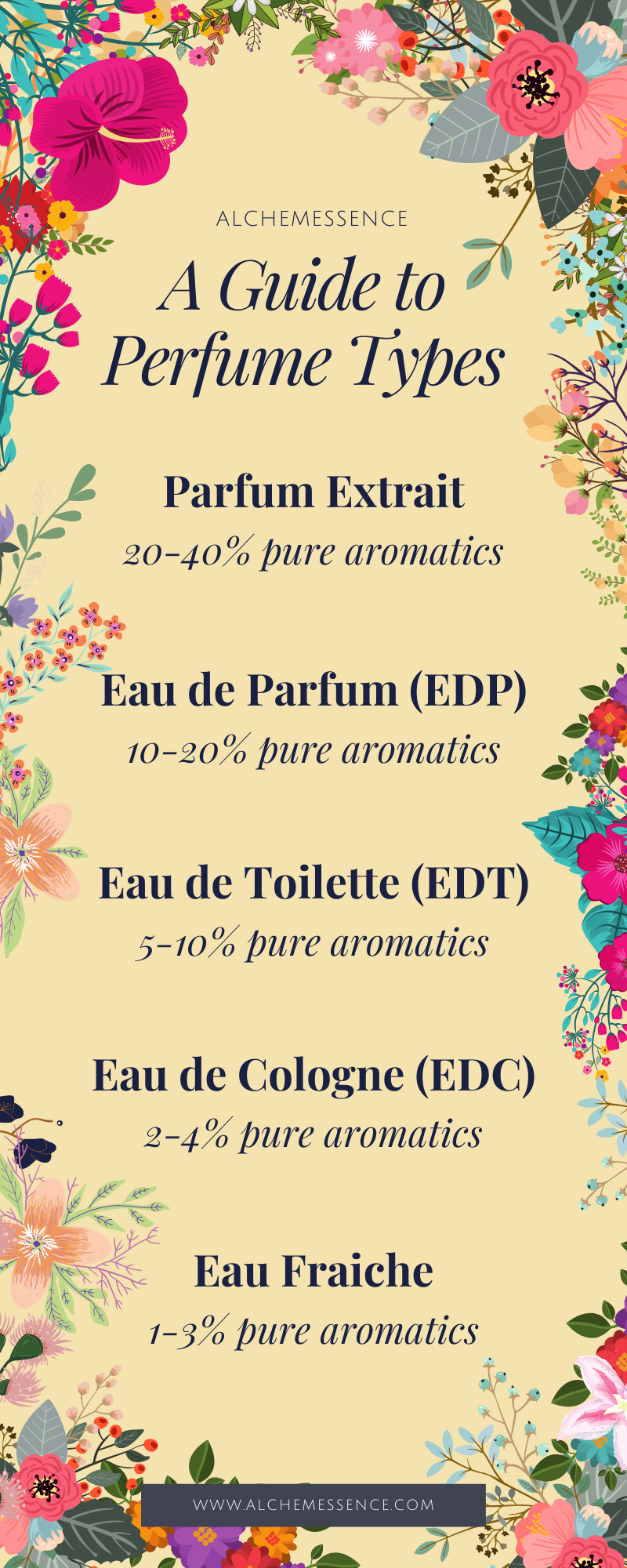
EDP or EDT? Perfume or Parfum?
The world of fragrance is full of various terms that can be a bit confusing when you first hear of them — which is why I’ve put together this helpful guide :) Let’s take a look at the most common ratios, dilutions, and terms used in perfumery — and how they’re just a bit different when it comes to natural perfumes.
Psst! If you’re looking for info on natural perfume families — aka, chypre vs floral vs gourmand — you’ll want to take a look at this fascinating article: A Guide to Natural Perfume Fragrance Families.
What are perfume types?
In short, different strengths of perfumes have different names — this is what I mean by “perfume type”.
For example, an “eau de toilette” is usually at about a 10% dilution. This means that your fragrance will contain 10% fragrant material (either natural essences like essential oils, or chemical compounds in mainstream perfumes) and 90% carrier (usually alcohol or oil, and occasionally water).
Why is perfume type important?
Because the strength of your perfume dictates how long it will last. As you might guess, the stronger the dilution, the longer the wear and sillage…
Sillage—the aromatic trail left as someone wearing a perfume walks by
The most common perfume type is probably “eau de parfume”, often shortened to EDP. When people in the United States say “perfume”, this is usually what they mean.
If you look up perfume strength meanings online, you’ll find many lists with ratios similar to what I have here. These charts usually estimate the sillage by hour…
This doesn’t work with natural perfumes.
Natural perfumes don’t last as long as chemical-based ones — yet, if you’re just dipping your toes into the world of natural perfumery, you might be surprised at how long Alchemessence Perfumes do last. Here’s why:
Many people confuse botanical perfumes with aromatherapy blends. This is understandable — both are made with essential oils, and both can smell really good. But the two are actually extremely different. So much so that I’ll have an entire blog post dedicated to the topic soon…
What’s important now, is to understand that I intentionally design my botanical perfumes to last longer than simple aromatherapy blends, bringing together top and mid notes with long-lasting bases and “fixatives”.
Fixative—a botanical ingredient that extends the silage of your fragrance in natural perfumery
In natural perfumery, a fixative is a completely natural essential oil, absolute, or CO2 that extends the sillage of your perfume in a few different ways—by slowing down the evaporative rate or fortifying the fragrance, for example.
This means that some of my strongest perfumes will actually last up to 6hrs on your skin—naturally!
Decoding Dilutions: A Guide to Perfume Types and Concentrations
Of course, the more concentrated the perfume, the longer it will last. Here are the common types of perfumes based on their dilutions:
Parfum Extrait
Concentration: 20-40% perfume oil
Longevity: Lasts the longest, often for more than 6 hours, though the aroma of natural perfumes will change more during this window
Intensity: Highly potent and rich in scent
Application: Typically only a small amount is needed due to its strength
Characteristics: Expensive due to the high concentration of natural perfume oils, often packaged in smaller bottles, common in perfume oils and solids
Eau de Parfum (EDP)
Concentration: 10-20% perfume oil
Longevity: Lasts for around 3-6 hours depending on the ingredients
Intensity: Strong and noticeable, but slightly less potent than pure perfume
Application: Spritzing a couple of times on pulse points is usually sufficient
Characteristics: EDPs strike a balance between longevity and potency, making them popular choices and the most common perfume types
Eau de Toilette (EDT)
Concentration: 5-10% perfume oil
Longevity: Lasts for about 2 hours
Intensity: Lighter than EDP, suitable for a subtle scent
Application: Requires more spritzing throughout the day
Characteristics: EDTs are commonly used for everyday wear and are less overpowering
Eau de Cologne (EDC)
Concentration: 2-4% perfume oil
Longevity: Lasts for about 1-2 hours or less
Intensity: Very light and refreshing
Application: Needs frequent reapplication due to its low concentration
Characteristics: Often used for a quick refreshment or in warmer weather due to its light nature
Eau Fraiche
Concentration: 1-3% perfume oil
Longevity: A brief aromatic experience
Intensity: Extremely light and subtle
Application: Requires frequent reapplication
Characteristics: Eau Fraiche has the lowest concentration of perfume oils and is mostly used for a quick mood boost
It's important to note that the longevity and intensity of a fragrance also depend on individual skin chemistry and the specific ingredients in the perfume. Additionally, the same fragrance may smell slightly different at various concentrations due to the interactions between the perfume oils and the other components of the fragrance.
When choosing a perfume, consider your personal preference for intensity, how long you want the scent to last, and the occasion for which you're wearing it. It's a good idea to test perfumes on your skin to see how they interact with your body chemistry and to experience how they develop over time. Natural perfumes especially tend to be shape shifters, dancing uniquely with each of our personal chemistries.
Find your personal, all-natural fragrance in the Alchemessence Perfumery.
Share this article on your favorite platform — and give it a heart to let me know you like it!

5 Essential Oils for Mercury Retrograde (and how to use them)
What are retrogrades and why are they important? And, how can we navigate them with the support of plant allies? Let’s take a brief look at retrogrades from the perspective of ancient and enlivened astrology and five essentials oils for support during these times.

Mercury Retrograde has a bit of a bad reputation…but there are ways you can make any retrograde season work for you! In this article, we’ll take a brief look at what retrogrades are and how they function. Then, drawing from my personal anointing practice, which is based on decades of spirit work and botanical alchemy, I’ll share my five favorite oils for support during Mercury Retrograde. And stick around to the end — I’ve included a magical practice to do with the oils!

Why Retrogrades Matter
I’m not one to let any sort of system dictate my life, and I have no interest in freaking out about this convergence of retrogrades. I do, however, believe that responding appropriately to the movements in our skies is important…
As humans, we’re part of a larger web not just of life, but of cosmic energy. And, the universe has been so kind as to give us literal maps of the energies at play in our lives — the maps found in the skies.
In the ancient astrology I practice, the planets are not just energies, nor are they simply archetypes — they are gods. Inspirited, wise, and powerful, these gods rule different areas of our lives.
When the planets appear to move backward during a retrograde, there is a significant shift in how their energies are received and perceived upon our Earth: forward momentum in their areas of rulership slows and old cycles and patterns come up for review.
Retrogrades in general are a time for all things “re”: remember, review, reflect, release, and relax.
These astrological periods offer us natural, healthy cycles to enter into throughout our lives —- yet modern life doesn’t typically allow for a lot of wiggle room during these retrogrades as we constantly push forward. And this is where we run into trouble.
When we resist the nature of reality, obstacles arise. When we push against the natural flow of energies, everything feels more challenging and frustrating.
When we do what we can to go with the flow, to give ourselves space, and to accept whatever arises with equanimity, then we can receive the gifts of the retrogrades.
Understanding Mercury Retrograde
Mercury is often best known as the planet of communication and the mind — travel, technology, contracts, speaking, writing, and our thinking all fall under his rulership.
Yet Mercury is also the planet of magic. Spellcasting, manifesting, and influencing the subtle realms around you also fall under Mercury’s rulership.
This is why during a Mercury Retrograde, so many things can appear to go wrong. Travel can see a bit more obstacles, launching new ideas or projects can have more hiccups, and miscommunications can abound.
But remember — difficulties during retrogrades are not set in stone. By working with the energy of Mercury Retrograde, gifts arise: You might discover important details on past projects you’d previously overlooked. You might glean new layers of insight about yourself during reflective activities. You might even enjoy a surprise detour if you buffer your travels with plenty of extra time.

Essential Oils for Mercury Retrograde
Just as we find helpful maps in the skies, we find supportive allies here on Earth — especially with the plants.
As both a shamanic practitioner and clinically certified aromatherapist, I love working with essential oils for support — every oil contains the alchemical distillation of a plant’s most potent gifts.
This includes the mental and emotional benefits many people associate with aromatherapy, as well as the physical benefits that arise when each oil’s chemistry meets our own. And these benefits include wisdom, blessings, and energetic healing from the plant spirit that overlights each oil.
Here are a just a few of my favorite oils for Mercury Retrograde:
1. Rosemary: Untangling Cosmic Confusion
Rosemary is my top pick for Mercury Retrograde. Invigorating and opening, rosemary has an affinity for our third eye chakra, helping us see the truth and organize our thoughts with greater clarity — very supportive at a time when thinking can feel scattered.
Rosemary is also the embodiment of graceful memory. Several studies have even shown promising results for using rosemary with Alzheimer's patients. Yet rosemary isn’t just about remembering our day-to-day tasks: It’s about recalling deep wisdom and memories hidden within our lineages and past lives.
You can use rosemary anytime you need to think clearly, increase insight, boost concentration, and improve memory during this retrograde.
2. Clary Sage: Bringing Balanced Wisdom
Clary sage is a beautifully harmonizing essential oil. Both relaxing and uplifting, it physically balances our hormones and promotes emotional balance — something we might need a bit of extra support with during Mercury Retrograde. Clary sage is also my favorite oil for activating insight and intuition by clearing the pathways to divine wisdom.
This Mercury Retrograde, let clary sage be a cosmic hug that helps you navigate uncertainties with calm and clarity.
3. Blue Tansy: Joyful Expression
Blue tansy has a playful energy that brings greater flow and ease to our lives. Sweet and nourishing, blue tansy tends our inner child so we can feel safe to play and trust in all life brings.
And, with its natural bright blue color, blue tansy also has an affinity for the throat chakra. At a time when communication mishaps might be common, blue tansy brings welcome relief.
Use blue tansy to encourage feelings of joy and trust, as well as to support communication, this Mercury Retrograde.
4. May Chang: Positivity Booster
If you find negativity creeping in during this time, casting shadows on your plans and aspirations, may chang is a lovely ally. With its uplifting and refreshing aroma, may chang acts as a natural mood enhancer.
May chang is especially helpful for those feel “tired and wired” during Mercury Retrograde — it uplifts our mood by calming our nervous systems, which in turn actually leads to more sustainable energy.
You can use May change to help maintain a positive outlook and embrace the cosmic twists and turns with optimism.
5. Vetiver: Grounding and Stability
Get grounded and stay present with the support of vetiver. A restorative oil, vetiver is perfect for those times when you’re feeling hypersensitive or distracted. With its deep, earthy, almost smokey scent, vetiver anchors us to both the Earth and the present moment, offering stability amidst the cosmic chaos. Its calming effects can help alleviate stress and encourage a sense of security.
Turn to vetiver when you need to calm down, get present, and come from a place of inner power during challenging times.

How to Use Essential Oils During Mercury Retrograde
There are two simple yet powerful ways you can use these oils to support your flow during this retrograde season.
First, you can diffuse the oils. If you already have an essential oil diffuser, this is a lovely way to receive the benefits of these oils while blessing your entire space.
Simply add 4-6 drops of any of these oils to your favorite diffuser. You can choose one oil, or combine a few different ones. R
Anointing with the oils is especially powerful. An anointing practice can be done as part of a daily meditation, before journaling, or in preparation of Mercury-related activities to harmonize the energy (for example, you might like to anoint yourself with rosemary before reading an important document or blue tansy before a big conversation).
Quick Tip – Make Your Own Anointing Oil
Anointing can be done neat* — meaning with the pure, undiluted essential oil — or with a dilution of about 10% essential oil in a carrier oil.
If you’re making your own anointing oil this way, use about 10 drops per teaspoon of oil. The olive oil in your kitchen is great and has been traditionally used for centuries. Jojoba is a good modern choice, as it has an especially long shelf life.
*Some oils can cause irritation when used neat, including many citrus and spice oils, so in general, it’s a good idea to use diluted oils for your anointing practices.
How to Apply Your Anointing Oil
To apply your anointing oil, place one drop on your finger and then gently rub into selected points on the body. Hold your finger on the point for one to three minutes — until you feel a soft energetic shift. Chakra points are a nice place to start your anointing practice.
I also like to hold two key acupuncture points, as taught by Tiffany Carole, to receive the blessings of the oils: DU-2, located at the sacrum, and DU-20, located at the top of the head. (You can find charts to help with exact locations online.) Simply place one drop of oil on your index fingers, and then hold one index finger on each acupuncture for 1 - 3 minutes.
As we navigate Mercury retrograde, remember that essential oils are more than just pleasant scents – they are alchemical allies that can support our journeys of self-discovery and growth. So choose your oil, take a deep breath, and let the plant spirit guide you through these cosmic waves.
Psst…buying high quality essential oils can feel like a landmine. I wrote this peice to help.

Be prepared every time Mercury turns around — Save this article on Pinterest!


Lion’s Gate Portal 8/8: Ancient Origins, Portal Openers, and the Key to Manifestation
During the Lion’s Gate Portal, the Earth, Sirius, the constellation Orion, and our Sun (in Leo the lion), all come into alignment. Though the energy lasts for around two weeks, it’s said to peak on 8/8, bringing in the numerological blessings of this day. Yet long before modern mystics named the Lion’s Gate Portal, ancient Egyptians were celebrating their new year right around the same time…

You’ll likely be hearing a lot about the Lion’s Gate Portal right around now — I even saw an article in Glamour about manifesting with the energy of this day (sometimes the changes I’ve witnessed in our collective consciousness just within my lifetime astound me).
These articles are helpful — but they are not the full story. Here’s what you might not know about the Lion’s Gate Portal…
Sirius — A Portal to Spiritual Wisdom
Sirius is the brightest star in our skies and has played an important role in spiritual traditions throughout the world…and Sirius is the key to opening the Lion’s Gate Portal.
Sirius is the brightest star visible in Earth's night sky and has been revered by various civilizations throughout history. Modern mystics will often refer to Sirius as “The Great Central Sun” — a luminous portal to divine wisdom.
The name "Sirius" is derived from the Greek word "Seirios," meaning "glowing" or "scorcher," which highlights its brilliance — it’s one of the closest stars to the Earth and its luminosity is about 25 times that of our own Sun.
Fun fact: Sirius is a binary star system, meaning that it consists of two stars — a brighter one and smaller white dwarf companion.
In ancient Egypt: Sirius was deified as the goddess Sopdet (Sothis in Greek) and appears as a woman with a five-pointed star upon her head. Sopdet is said to be a form of the goddess Isis, which emphasizes the importance of the stellar being.
Sopdet’s consort was the god Sah — who deified the constellation Orion. Just as Sopdet as associated with Isis, Sah was associated with her consort, Osiris.
Note: Osiris is a god of death and rebirth, transformation and regeneration — something that will become important to remember in the next bit…

The Lion’s Gate Portal 8/8
During the Lion’s Gate Portal, the Earth, Sirius, the constellation Orion, and our Sun (in the sign of Leo, the lion), all come into alignment.
In new thought spiritual communities, this cosmic event is said to activate a celestial portal that allows our manifestations to take form more quickly. It’s a time of collective evolution and an invitation to focus your intentions, connect with spirit, and bring your desires to life.
Though the energy of the Lion’s Gate lasts for around two weeks, it’s said to peak on August 8th (8/8, and next summer will be quite potent at 8/8/8 - 2+0+2+4), bringing in the numerological blessings of this day.
8 is a potent number associated with power, sex, and money, as well as death and rebirth.
(So both the constellation Orion and the number 8 add themes of death and rebirth to this sacred day!)
In astrology, the 8th house is ruled by Mars (in Hellenistic astrology) and Pluto (in modern astrology), and is home to Scorpio, making it our place of deep transformation — we delve into the depths of our psyches to let the old die and regenerate into greater versions of ourselves.
The 8th house is also where we access resources from outside ourselves, including gifts that arrive from others, the earth, and spirit.
With this 8th house energy of transformation and outside gifts, the Lion’s Gate Portal invites us to evolve into the person who is worthy and capable of receiving what we intend to manifest.
And guess what? The 8th card in the Tarot’s major arcana is Strength, a radiant, solar card which, in the traditional Rider-Waite Tarot, features a lion!

The True Mystical Origins of the Lion’s Gate Portal
But let’s be real here. The date 8/8 is a relatively modern invention — the current Gregorian calendar wasn’t established until the 16th century.
This calendar absolutely does add an important energetic signature, and our understanding of the numerological energy of 8 goes back thousands of years, but it’s important to understand that the true origins of the Lion’s Gate Portal are rooted much further in history.
Long before modern mystics named the Lion’s Gate Portal what it is today, ancient Egyptians were celebrating their new year right around the same time.
Sirius's heliacal rising — the first time it becomes visible in the morning sky before sunrise — was associated with the annual flooding of the Nile River, which was a critical event for the region's agriculture and marked the arrival of the Egyptian New Year. (I have an entire article on this celestial event and the Egyptian holy days it portends — if you missed it, you can still read it here.)
Though the celestial gods and their seasons have shifted over time, it’s generally thought that the heliacal rising of Sirius occurs in late July. Late July is of course the start of Leo season and opens the energetic portal of the Lion’s Gate.
So, while we might say this portal peaks on August 8th, the true origins of the Lion’s Gate Portal can be found in the ancient Egyptian New Year.
For me, this makes the Lion’s Gate Portal and powerful time for working with the gods of Egypt. (I’m actually finalizing a set of all-natural Egyptian perfumes, though they won’t be ready for release until the fall.)
Now is the perfect time to work with these rituals and connect with the gods of Egypt.
Portal Openers
I love partnering with plant allies — as herbs, flower essences, essential oils, and of course living plants. They provide us with food and medicine, wisdom and protection, and endless support on our human journeys.
One of my most personally sacred ways of working with the plants is through anointing oils. Spiritual traditions throughout the world have use anointing rituals for blessing, initiation, and protection.
In my own spiritual practice, I work with sacred oils as portal openers.
When I create an alchemical oil or anointing balm, both the energetic signature of the oils used and the ritual transmission of energy I infuse into the oil synergize into a uniquely potent blend.
This unique synergy speaks the language of energy and spirit, opening the way for deeper communication with the spirit world. I often anoint my heart when doing ritual work, as this attunes my own vibration with that of my intentions, opening a portal for greater healing and manifestation.
Whether you feel called to engage with the ritual guide above, or plan on doing your own manifestation practices, I highly recommend working with sacred oils for added potency.
The oils you choose will depend on your intentions. A few of my favorites:
Rose — for love
Basil — for wealth
Helichrysum — for healing
Clove — for protection
Neroli — for spiritual connection
If you make your own oil, be sure to dilute any pure essential oils in a carrier oil — olive oil works wonderfully (aim for about a 5% dilution — this is an energetic blend, so stronger isn’t better).
I’ve created a wealth of potent oils available in the Alchemessence Apothecary. Here are two that are especially potent for Egyptian magick:

a sacred anointing oil to receive the transformational gifts of the Scarab
This ceremonial grade oil was created to awaken within you the sacred gifts of the scarab — creation and rebirth, luck and solar wisdom, the afterlife and immortality. For anyone engaged in Egyptian rituals or magick, this is an invaluable gift.
Drawing from decades as a natural perfumer and spiritual wisdom-keeper, as well as my studies with Egyptologist Dora Goldsmith, I’ve intentionally selected a potent array of rare and divine plant essences for this limited edition blend—galbanum, frankincense, white lotus, blue tansy, mastic, and more. Read more about scarab medicine here.
Magical Highlights:
A lapiz accord — Deep blue and golden oils, including blue tansy and wild turmeric, create a fragrant version of lapiz lazuli, one of Egypt’s most sacred stones
An Egyptian accord — Inspired by the perfume recipes archeologists are uncovering from Egyptian temples, this contains mastic, calamus, myrrh, olibanum, and more
Blue lotus — The true absolute of the precious and fragrant sacred lily of the Nile elevates this magical blend
Solar accord — For the solar blessings of the scarab, with frankincense, bright citruses, and subtle spices
Underworld accord — For the death needed before rebirth and resurrection occur, with oakmoss, cedarwood, oud, vetiver, styrax, and more
To Use: This is a ceremonial grade oil for ritual and fragrance. Apply to wrists, neck, and heart for fragrance, or follow the ritual ideas below.
Rituals:
Keep your oil on an altar.
Bless objects by rubbing a bit of the oil on them (if can be done without damaging the object).
Anoint yourself for protection and luck.
Anoint your clients if you offer healing work to others.
Place a few drops in a diffuser before engaging in a magic, ritual, or ceremony.
Inhale anytime you need to remember the sacred cycles of life.
This blend contains a complex blend of essential oils and absolutes in jojoba, including but not limited to white lotus, blue lotus, patchouli, sandalwood, agarwood, frankincense sacra, ylang ylang, nagarmotha, cedarwood, jasmine, rose, nutmeg, blue tansy, turmeric, clove, pink pepper, blood orange, amyris, opoponax, mastic, vetiver, oakmoss, benzoin, vanilla, and elemi.
Scarab Anointing Oil
I created my new Scarab Anointing Oil specifically for working with Egyptian magic — with true blue lotus absolute, sacred myrrh resin, and many more precious essences to connect you with ancient Egypt. Anointing oils are potent portal activators, and Scarab will help open sacred pathways of communication with the Egyptian deities.
Psst: I have an entire article on the magic of Scarabs here!
You might also like:

Share this article on your favorite platform — and give it a heart to let me know you like it!
How to Use Flower Essences: A Complete Guide
Flower essences are vibrational remedies that can be used to heal mind, body, and spirit. As gentle, safe, and accessible remedies, they are wonderful allies for anyone wishing to make changes in their lives. Using flower essences is simple and allows you to harness the healing properties of flowers to support your own well-being. Here's a step-by-step guide on how to use flower essences for transformation and healing.

Using flower essences is simple and allows you to harness the healing properties of flowers to support your own well-being. In this article, you’ll learn how to use flower essences for personal transformation and healing — including how to choose the right flower essence for you, different ways to take your flower essences, and how to know if they’re actually working!
Psst: If you want to know more about what flower essences are and how they work, take a look at this complete guide to flower essences!
Here's a step-by-step guide on how to use flower essences for transformation and healing:
1. Choose the Right Flower Essence
Select a flower essence that aligns with your specific emotional or mental needs. For example, if you are experiencing general anxiety, you might consider using a flower essence like aspen. For healing past relationships or a broken heart, twinberry honeysuckle could help.
You can select flower essences by researching your intentions and reading descriptions, through kinesthetic testing, intuitively, or with a personal consultation.
Looking for more in-depth guidance on choosing your essences? This free guide will walk you through a fun process!
2. Set Your Intention
Before using your flower essences, take a moment to set your intention or the purpose for using it. Be clear about what emotional, mental, or spiritual aspects you want to address or what positive qualities you wish to cultivate within yourself. This intention will infuse your experience with more healing and prepare you to receive the benefits of your essences.
3. Take the Flower Essence
The most common way to take flower essences is orally — directly under the tongue or in water:
Direct Ingestion: Place a few drops (usually 2-4) of the flower essence under your tongue. Hold the drops in your mouth for about 30 seconds before swallowing. This allows the essence to be absorbed through the mucous membranes and enter your system.
In Water: Add a few drops of the flower essence to a glass of water and sip it slowly. This method is especially useful if you find the taste of the essence too strong for direct ingestion.
Either way, you’ll want to take your dose of essences 2 to 4 times a day for at least two weeks. After two weeks, most people notice at least subtle changes. You should continue taking your essences either until the dosage bottle is gone, or until you naturally feel complete — you’ll notice that you just aren’t drawn to keep taking them.
While taking essences internally and consistently is the most common way to heal and transform with them there are many wonderful and creative ways to use flower essences! You can apply them topically, use them in rituals, share them with pets…the list goes on :)
For a complete list of creative uses for flower essences, make sure to grab your free guide, Flowering Soul.
4. Observe and Reflect
As you use your flower essences, pay attention to any shifts or changes in your emotions, thought patterns, or overall well-being. Keep a journal if possible, noting any insights or observations. Sometimes the effects of flower essences may be subtle and gradual, while other times, you might notice immediate changes. You can read more about signs to look for here.
5. Combine Flower Essences (Optional)
You can create personalized blends by combining different flower essences to address multiple aspects of your emotional or mental well-being. If you choose to mix essences, do so in a separate bottle and label it with the intention or emotions you are targeting. An experienced practitioner can also help you create a custom blend for your particular needs.
6. Be Patient and Gentle with Yourself
Flower essences work in harmony with your natural healing process, but they are not a quick fix. Be patient and compassionate with yourself as you embark on this journey of self-discovery and healing.
Sometimes, what has been buried or hidden within our psyches emerges when we use flower essences — and this isn’t always easy to confront or integrate. Find support for your journey, whether through a trusted friend, therapist, spiritual healer, or someone else with the skills to hold you during your transformation.
Remember that while flower essences can be a valuable tool for emotional support, they are not a substitute for professional medical or psychological help when needed. If you are dealing with significant emotional challenges or mental health issues, consider seeking guidance from a qualified healthcare practitioner or therapist.

Using flower essences can be a beautiful and transformative experience, allowing you to connect with the healing power of nature and nurture your emotional and spiritual growth.
If you’d like to go deeper with your exploration, you’ll want to get my free guide to flower essences here:
Ready to start using essences yourself? I offer a selection of handmade essences in the Alchemessence Apothecary. I created each one myself, in sacred partnership with the plants. A few to get started with are:





You might also like:

Share this article on your favorite platform — and give it a heart to let me know you like it!
All About Flower Essences: How to Partner with Plants for Whole-Self Healing
Flower essences are liquid infusions of blossoms and light that shift the vibrational state of anyone who uses them. And they’re becoming more popular all the time — because they are one of the most gentle, accessible, and still potently transformational healing remedies available. If you’ve been wondering just what flower essences are, how they work, and how you can use them yourself — this article is for you :)

Flower power is back! Flower essences are liquid infusions of blossoms and light that shift the vibrational state of anyone who uses them. And they’re becoming more popular all the time — because they are one of the most gentle, accessible, and still potently transformational healing remedies available. The plants are here to support us, and in this article you’ll learn exactly what flower essences are, how they work, and how you can start using them for your own healing journey.

As the child of nature-loving hippies, I’ve been using flower essences for just about my entire life. I love them.
For the past decade, I’ve also been making my own flower essences in sacred ceremony out in the wilds — I spend miles and hours wandering through mountains, forests, and fields, allowing the spirits of nature to guide me to the perfect plants.
The result is an ever growing collection of powerful elixirs made from a wide variety of botanical allies — some of which are quite rare and true gifts from the earth.
Flower essences have been part of my life for so long that I sometimes forget that not everyone lives and breathes spiritual botany the way I do. And, from the outside looking in, they almost seem like a snake oil type of medicine…how does infusing a blossom in spring water actually make a difference for your own health and wellness?
Read on to discover the magical, vibrational, and natural power of the flowers!
What Are Flower Essences?
Flower essences are natural remedies made from the energetic imprint of flowers. They are created by infusing the blossoms of specific plants in water, and then preserving with alcohol, to capture their unique vibrational signature.
By working on an energetic level, flower essences affect the subtle energy systems of the body to promote emotional, spiritual, and, as a result, physical healing.
Unlike essential oils or herbal extracts, flower essences don't contain physical substances — and therefore have no scent — but instead carry the vibrational imprint of a flower’s unique healing qualities.
The term “flower essence” is often used as an umbrella term for vibrational essences of all types, as well, including:
Trees and mushrooms — even if not technically flowers, these make wonderful essences
Environmental essences — these capture the energy of a place, such as a body of water or sacred site
Gemstone essences — these essences carry the vibrational imprints of crystals and stones
The History And Origins Of Flower Essences
The history of flower essences can be traced back to ancient civilizations, when healers and spiritual practitioners recognized the healing potential of vibrational remedies. The modern-day foundation of flower essences, however, is attributed to the pioneering work of Dr. Edward Bach.
Dr. Bach was a British physician and homeopath. In the 1920s, he developed a set of 38 individual flower essences — known as the Bach Flower Remedies — each corresponding to a specific emotional state. His belief was that imbalances in our emotional and mental states led to physical illnesses, and by addressing these emotional imbalances, true healing could occur.
Dr. Bach created the first flower essences based on his intuitive realization that the healing properties of flowers could be transferred to water, which captured the energetic imprint of the plant — something Dr. Masaru Emoto later demonstrated with his famous water experiments.
A strong proponent of accessibility in healing, these essences allowed Bach to share healing remedies that could be easily administered and understood by people without specialized medical knowledge. To this day, Dr. Bach’s work with homeopathy and flower essences continues to influence alternative and holistic healing methodologies.


How Are Flower Essences Made?
Creating flower essences involves a gentle and sacred process that honors the essence of the flowers.
The most common method is the sun-infusion technique, where freshly picked flowers are floated on the surface of spring water and left to be infused by the sun's energy, which helps transfer the vibrational healing qualities of the flowers to the water. (I use a moonlight infusion for mushroom essences, though, as the moon and mushrooms have a unique relationship.)
Essences from hardier plants, such as trees, are often made with a boiling method instead of the sun infusion, as Bach felt that simmering tougher plant material in water for 20 minutes more effectively brought out the vibrational imprints.
Either way, the resulting infusions are then preserved with alcohol to create the “mother” essence. Brandy is traditionally used, though many people today use vodka. (I have a 100% Demeter Certified organic grape alcohol I like to use.) For those avoiding alcohol, apple cider vinegar is a good alternative.
From the mother essence, you will dilute just a few drops into each stock or dosage bottle. (I share more about this in the free guide!) Each vibrationally attuned drop imprints the water if your dosage bottle, allowing you to receive full benefits of the elixir in amazingly sustainable ways.
Why Flower Essences Work
The philosophy behind flower essences is based on the belief that emotional and spiritual imbalances can manifest as physical ailments. By addressing the root cause of these imbalances on an energetic level, flower essences facilitate healing and personal growth.
They can assist in alleviating stress, anxiety, fear, grief, and other emotional states, promoting a greater sense of harmony and connection with oneself and the environment.
As a subtle healing remedy, flower essences probably won’t give you an immediate, noticable difference with a one-time use. However, used consistently over time, they do make a difference.
You’ll likely wake up one day and realize that your thoughts have become more positive, and you didn’t notice it happening. Or your back pain just isn’t bothering you as much, and you’re not sure why. Or you have an inspired idea, seemingly out of nowhere. These are the essences at work!

Here are a few signs your flower essences are working:
Your dreams — look for shifting patterns in recurrent dreams, insights, and healing
Your habits and daily patterns — notice subtle shifts that arise naturally and will make a bigger difference over time
Your thoughts — again, notice subtle shifts in old thinking patterns, as well as new insights and inspiration
Your intuition — you’ll begin to come into clearer connection with your inner knowing and meditation may feel easier
Synchronicities — seemingly ransom blessings are actually the result of your own shifting energy
Relationship changes — as you change, your relationships with those around will change too
Physical wellness — you’ll start to just feel better, whether that means having more energy, peace, or joy
How to Use Flower Essences
Flower essences are best used consistently over time. The most common way to use them is to drink a few drops in water four times a day — but you can get creative :)
For a complete guide on using flower essences, take a look at this article!
Why to Use Flower Essences
Flower essences can support a wide range of intentions. Here are a few common ones:
Alleviating anxiety — aspen is one of my favorites for this
Healthy boundaries, energetically and emotionally — try a combination of yarrow and rose
Embodying your worth — I absolutely love queen’s crown as an ally
Enhancing psychic abilities, intuition, shamanic journeying, and lucid dreaming — mugwort and amanita are favorites
Shadow work — the poison plant essences are potent allies, and you can get a full set of them here
Support for times of change — bistort helps us with internal scaffolding, and fireweed helps us re-emerge after having the ground pulled from under us
Sleep and relaxation — elephant’s head is my absolute favorite for this
Tending the mother wound — mariposa lily is a beautiful essence
Deepening your relationship with the Earth — you have to read my article on gnome flower essence!
Plus healthy relationships, healing depression, motivation for life changes, physical changes, and so much more.

Safety Considerations And Potential Side Effects
One of the wonderful things about flower essences is that they are so safe and easy to use, with no known side effects or interactions. They usually can be used with animals, children, and the elderly without any problems.
That said, the emotional transformation that may arise with use of flower essences may be intense — you’ll want to have proper support, such as a trusted therapist or holistic healer, for any emotional or mental issues that arise.
Remember: While flower essences can be a valuable tool, they are not a substitute for professional medical or psychological help when needed. If you are dealing with significant emotional challenges, mental health issues, or physical ailments, consider seeking guidance from a qualified healthcare practitioner or therapist.
Flower essences offer a profound and accessible path to holistic healing and personal growth, bridging the gap between nature's wisdom and our own well-being. If you’d like to go deeper with your exploration, grab my free guide to flower essences here:
Ready to start incorporating flower essences into your own healing journey? Explore the wild, sacred essences I’ve created in partnership with the plants in the Alchemessence Apothecary.
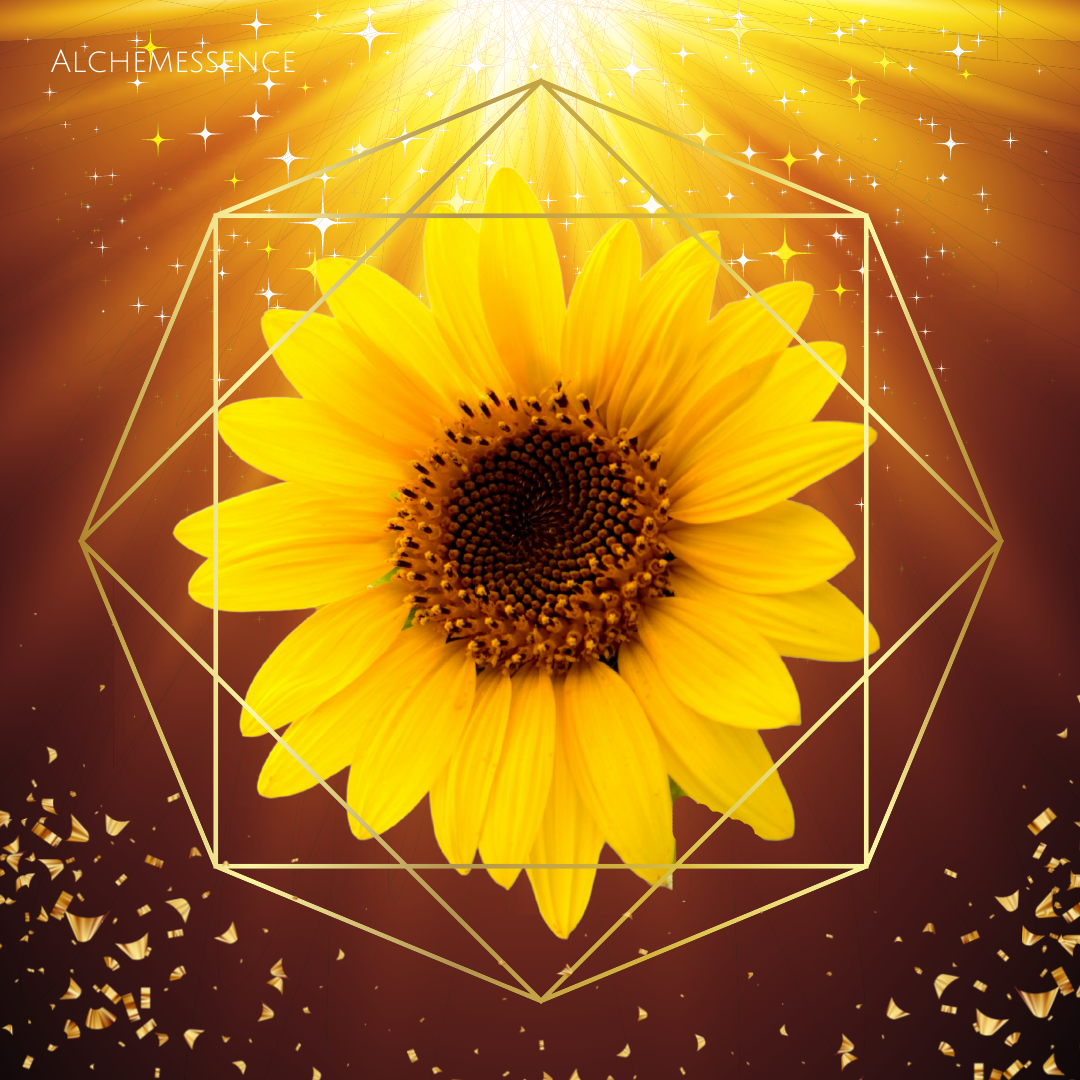
helianthus annuus
Wild sunflowers bring the warm, joyful essence of the sunshine into our being. They ignite a healthy, happy sense of confidence and self worth. For anyone who could use a bit more sunshine and self esteem, this is your flower essence.
15ml glass dropper bottle
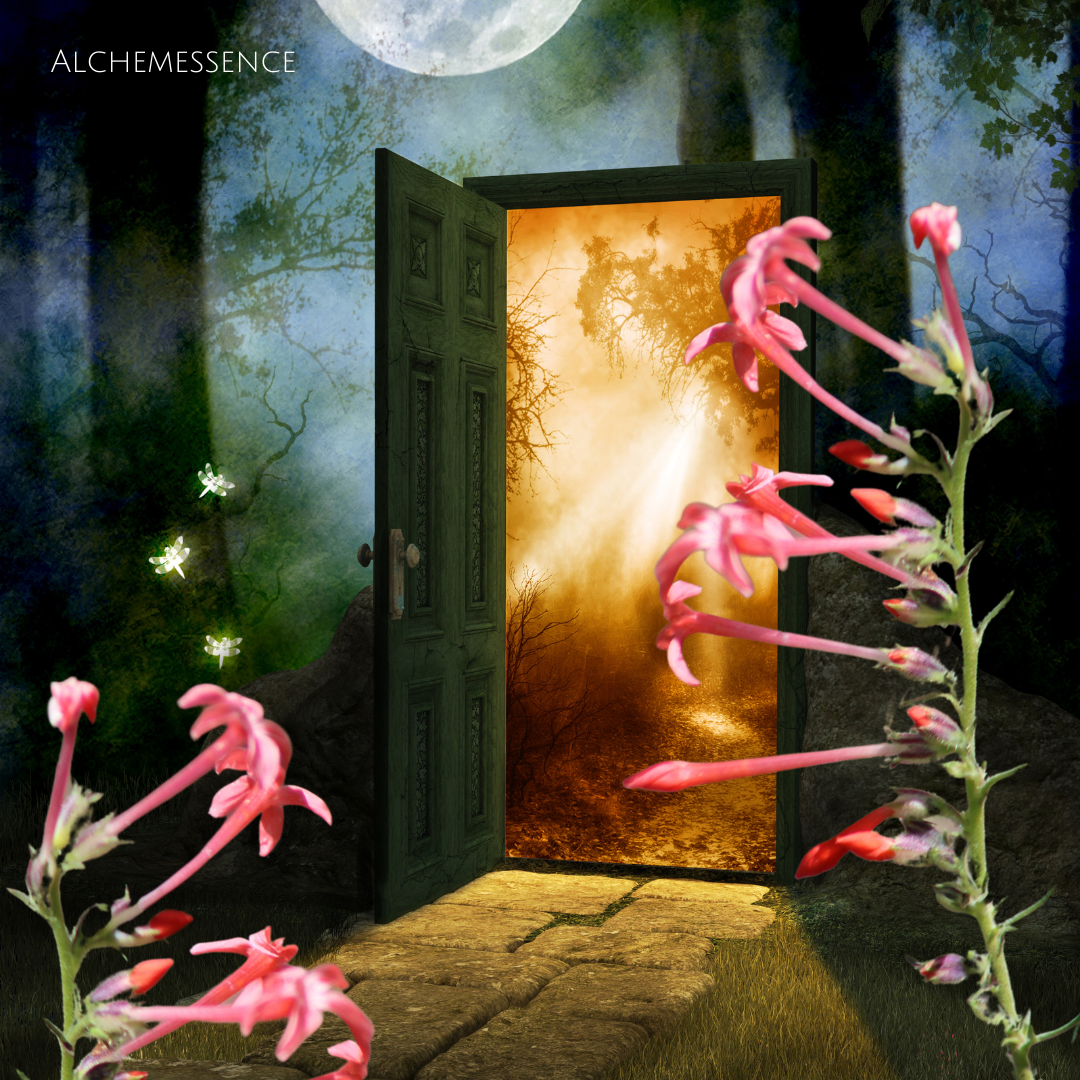
ipomopsis aggregata
As the name suggests, fairy trumpet helps us communicate with the fae and elemental realms, while also providing us with protection as we do. For anyone who would like to partner with the spirits of nature, access their own ancestral connection with the fae, or simply open up to the spirits of nature in safe and joyful way, fairy trumpet is a powerful ally.
15ml glass dropper bottle
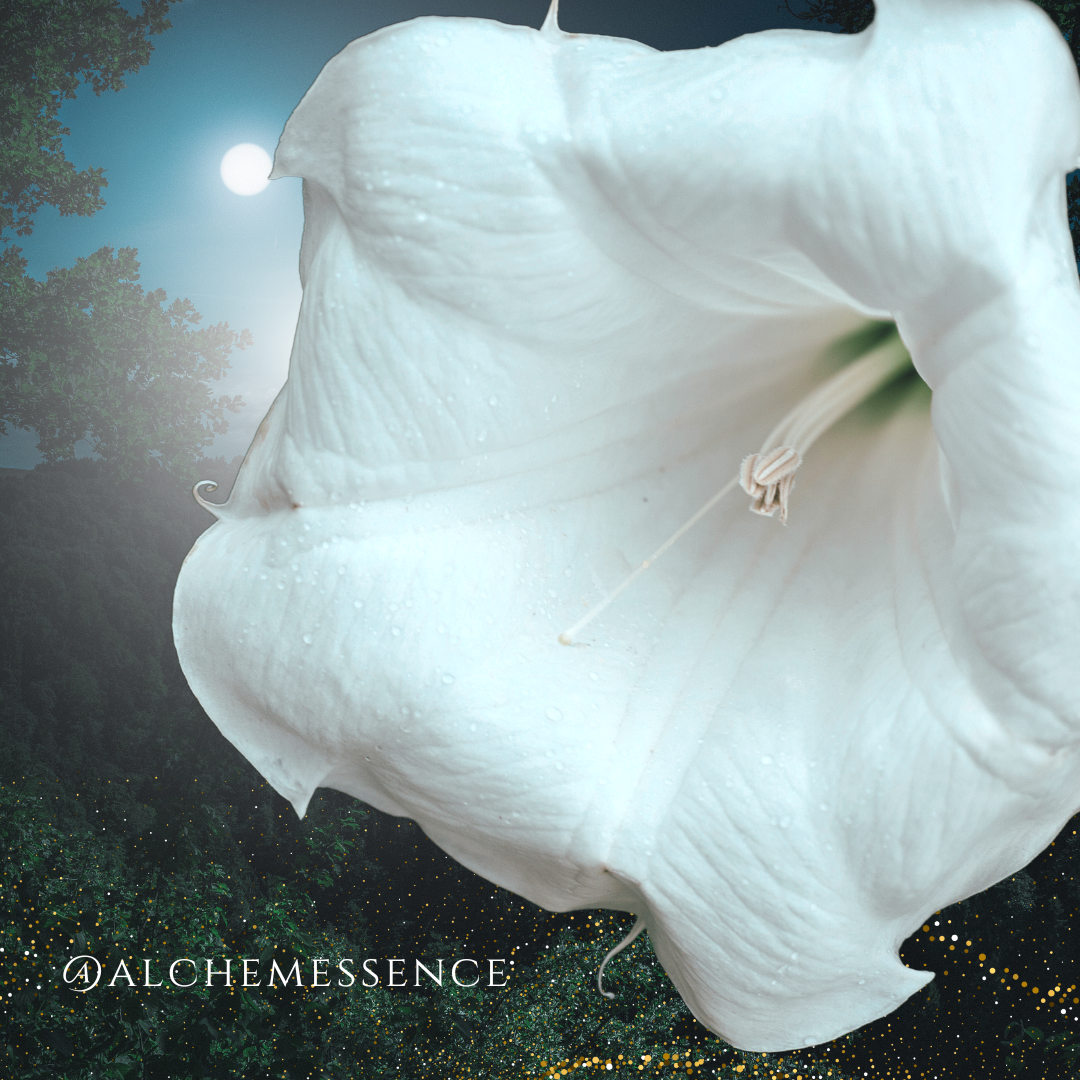
datura wrightii
A beautiful flower full of lunar energy, Datura is an ally for anyone who wants to deepen and expand their intuitive gifts. By helping us cleanse any toxicity in the way of facing our inner truths—including collective toxic patterns that may be influencing us—Datura teaches us how to remember our cosmic nature. Excellent for dreamwork.
Quantum Healing: letting go
stock essence in 15ml glass dropper bottle
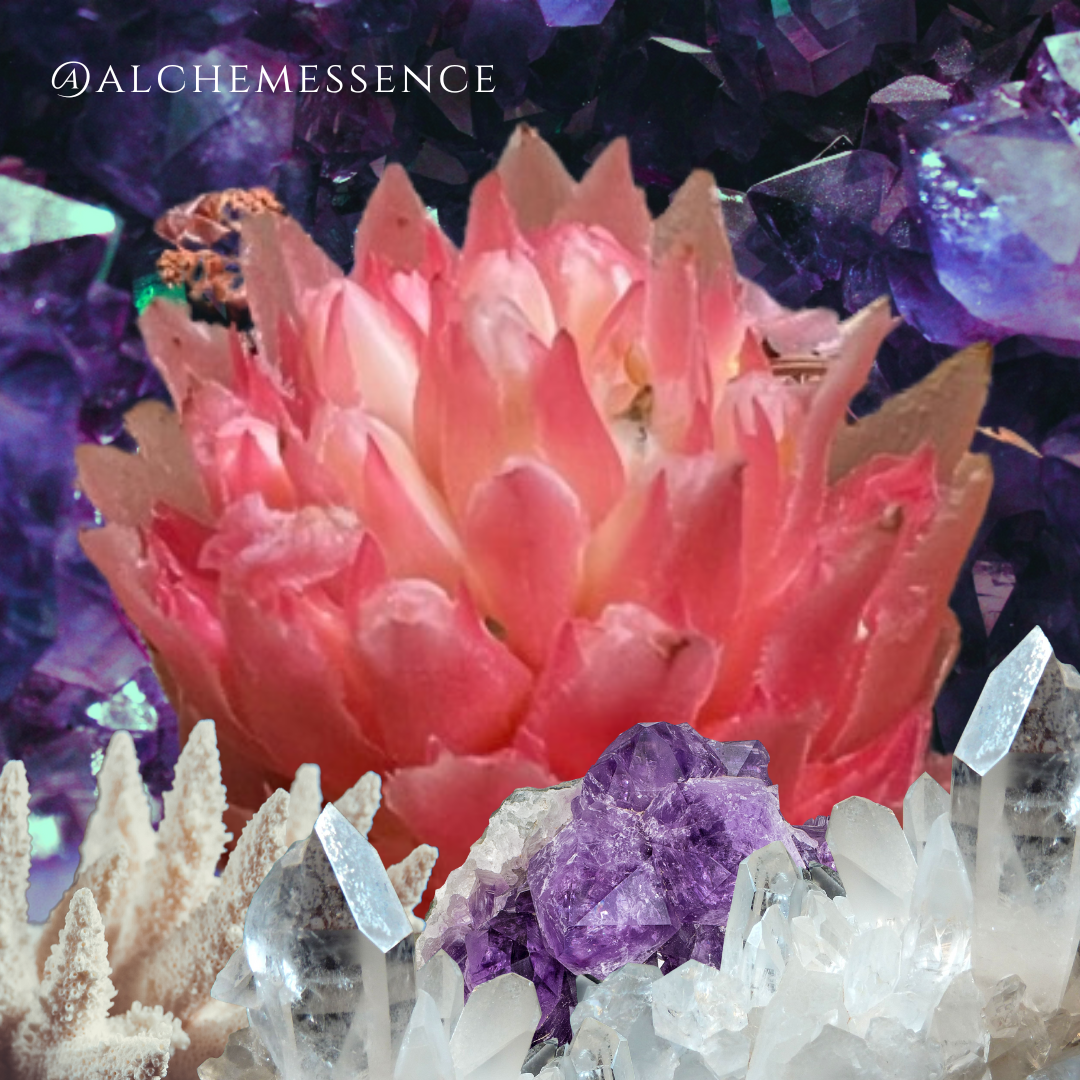
hemitomes congestum
Queen of the Underworld
Indications: for those called to apprentice with the Queen of the Underworld in order to restore harmony to the Earth
Gnome Flower is a rare and beautiful creature. If you’re considering purchasing this precious essence, please read about her first here.
Gnome flower is an essence for those who are true Earth allies. For anyone called to work with the Earth’s crystalline grids, who wishes to experience greater abundance as a natural outcome of partnering with the spirits of the Earth, and who could use support in embracing their soul’s uniqueness.
15ml glass dropper
Note: You can purchase the replay of our magical gnome flower workshop here.

Gnome Plant & Meeting the Queen of the Underworld
On finding an exquisitely rare plant and meeting the gnome queen deep in the earth.

On a beautiful, sunny July morning in the mountains of Oregon, I made a discovery that would expand my understanding of reality.
I had quit my full time job of six years just the month before. Tortured by a pompous prick of a manager and tired of suffering physically as well as emotionally, I finally leapt off the ledge of so-called security and into the void of the unknown.
I gave myself the summer to heal (which turned into a year). As much as my mind told me that I would lose everything if I didn’t start making money again right away, my body was forcing me to slow down.
And so, on a random Tuesday, free from the responsibilities I was used to, I took myself on a solo hike through a most beautiful forest, hoping that the spirits of nature could help heal my weary soul.
The hike began in the usual way — a crowded parking lot gave way to quiet trails as I traveled deeper into the woods.
I allowed the trees to bathe me in healing terpenes, brushing my hands on lush ferns as I passed. I waded into icy river shores, praying for the healing waters to cleanse away my pain. I greeted every plant and stone and animal and bird, as is my way in the world.
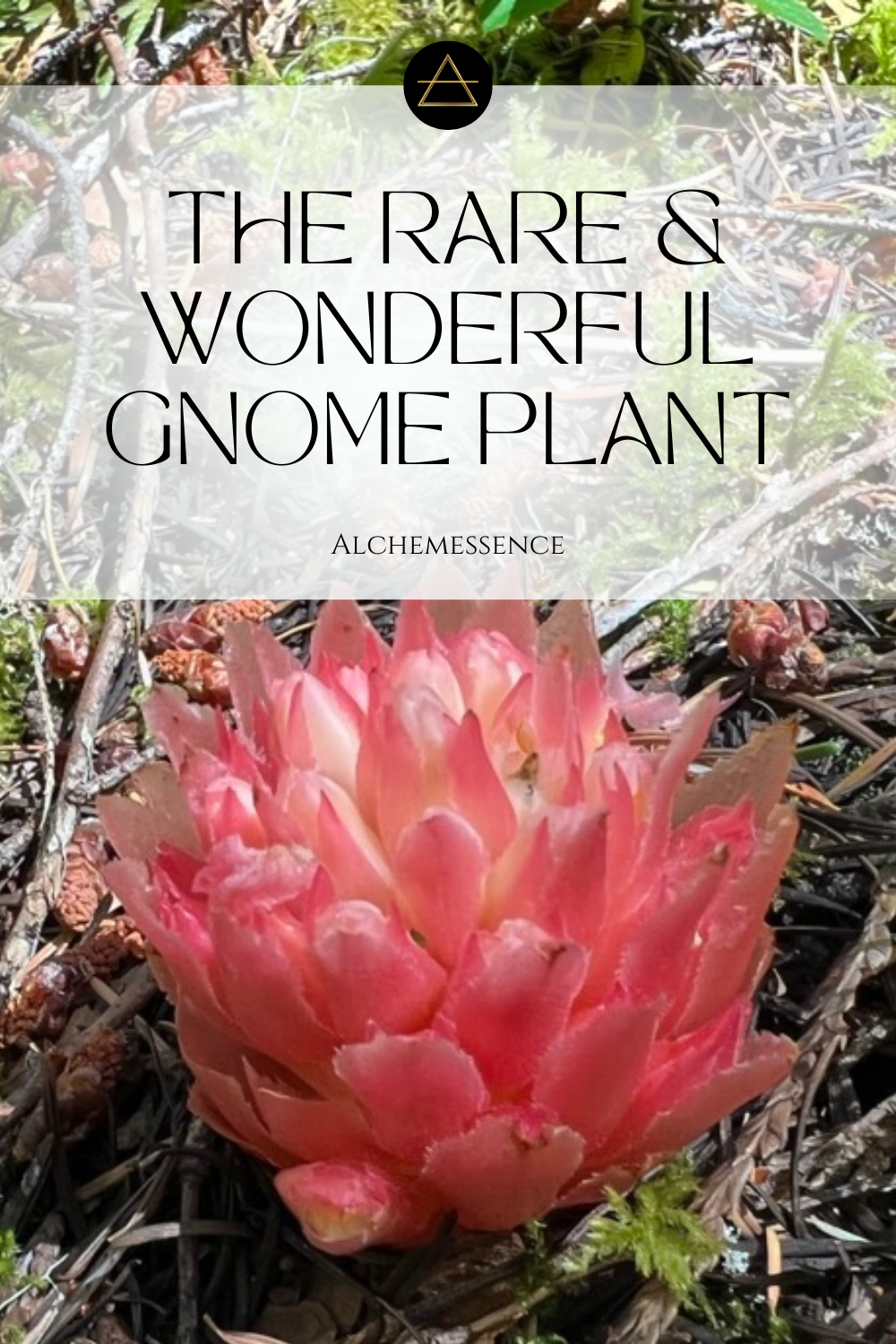
And then, I looked down and saw a being I’ve never seen before — a gnome plant.
The Rare and Wonderful Gnome Plant
This beautiful and strange plant is extremely rare, and any encounter with her is a true gift. I believe she remains hidden by choice, revealing her beauty only to those who have demonstrated their heartfelt appreciation and love for the earth.
So rare is the gnome plant, hemitomes congestum, that very little is even known about her.
"The Gnome Plant is so secretive and illusive one is as likely to encounter a forest gnome as see one of these deep forest dwellers." — Reny Parker in Wildflowers of California's North Coast Range (originally cited by Jeanne Jackson)
She is the only member in her entire plant family, hemitomes, and she exists only on the West Coast of the United States, from California to British Columbia.
Little is known about the life cycle of this mysterious plant, but we do know that it doesn’t contain chlorophyll, likely feeds on parasitic fungi, and is probably pollinated by a moth of some sort.
When I encountered this marvelous and mysterious plant, her petals were closed, giving her a distinctly succulent look. Delighted and awed, I snapped a few pictures, offered gratitude, and continued on my way.
I had thought that this was the end of my gnome plant encounter. It turns out it was only the beginning.
The Invitation Deepens
A few nights later, I found myself wide awake in the middle of the night. Sleep eluded me, so I decided to use the time to journey and take a shamanic trip into the otherworlds.
As someone who has been practicing shamanic arts for over two decades, I have usual protocols for my journeywork — set an intention, go through a portal, meet my guides, explore…
For some reason though, this time I abandoned my usual process and simply set the intention to travel wherever spirit took me.
As soon as my request was sent, a mole appeared.
Now, I have dozens of spirit animals I work with, but I had never met mole spirit before! All felt divine and safe, so went with the flow and followed the mole deep into the earth.
Deeper and deeper. Darker and darker. We were traveling somewhere entirely new for me.
Finally, the pressure of the earth around me shifted, and I dropped into a vast underground cavern. As my eyes adjusted, I saw that the walls around me were sparkling—precious minerals and crystals of all sorts glimmered from some source of unseen light.
Then I saw her. The Queen of the Underworld. The Queen of the Gnomes.
Meeting the Gnome Queen
Now, I should clarify that this is the language she gave me to describe herself. I’m well aware that many deities bear the title of Queen of the Underworld. And, while the term “gnome” is often used for adorable garden figures with pointed hats—that is not the kind of gnome I encountered.
The queen sat upon a crystalline throne, her pale skin luminescent and shimmering with an ethereal splendor.
Honored to be in her presence, I was told that encountering the gnome plant had been an invitation to her realm, an invitation to work with the magic and medicine of the earth kingdom in a new way. The plant was a portal.
I was shown that this particular realm of gnomes (I believe there are actually many kinds of beings who bear this name) operated much like a bee hive: The queen was the only female, hidden from most in our world, protected and served by the male gnomes.
A World within Our World
The realm of the gnomes exists deep within our earth in a slightly different reality than we’re familiar with — perhaps another dimension, perhaps a different frequency.
Though most are unaware of its existence, this realm is of vital importance to our own world.
The gnomes tend the harmonic balance of the earth’s minerals. They build, move, and attune Gaia’s crystalline structure — and heal her from the extraction that happens in our dimension. The queen is a channel for the life force of the mineral-beings within the earth, infusing them with power and source energy.
The queen told me that those who are called to work with this realm have the ability to channel and harmonize earth grids for Gaia. And, by working directly with the gnomes, they just might receive Gaia’s abundance in surprising ways.
I was being invited to apprentice with the gnome realm.
The queen then shared that I could return to the forest to make a flower essence of the gnome plant — a gift to support my apprenticeship energetically.
Creating a Most Rare Essence
Though encountering even one gnome plant seemed like a miracle the first time, I decided to respond to the queen’s generous invitation and see if I could find this plant once more.
Unsure of whether the gnome plant would still be blooming or whether I could even find it again, I decided to make a date out of my next attempt. I invited my partner, Mike, on an after work hike and dinner picnic to the mountains.
After nearly an hour and a half of driving, we arrived at the trailhead and set out. About five minutes into our hike, Mike said, “Whoa—is this one?”
It was. The queen, true to her promise, had recognized an earth ally in Mike, too (which doesn’t surprise me at all…there’s a reason I’m with this man!).
This time, the gnome flower had opened up into beautiful little blossoms — the divine timing of our encounters perfectly orchestrated. I gratefully and reverently gathered just a few blossoms, placed them in a glass jar, and we continued. Soon, we encountered a second gnome flower…and then a third!
Such a gift to have met so many of these magical and strange beings. Such confirmation for deepening our relationship.
I brought the blossoms home and infused them into local spring water to create a flower essence under the moonlight—a moon infusion seemed appropriate for the queen of the gnomes, somehow.
When I asked if I could share this flower essence and my discoveries with others — the gnome plant, the world of the gnomes, the portal to abundance they offered — I was told to wait. Integration was needed first.
And so, for nearly a year now, I’ve been sitting with this essence, meeting with the queen of the gnomes, waiting for further instruction.
Psst — Want to learn more about flower essences? I’ve created a free starter guide that you will love :)
A Sacred Circle of 13
Now, I’ve finally been granted permission to share this precious essence. But only with 13 people. I trust that the exact people who are meant to work with the queen will feel called to purchase their essences at the perfect time.
It seems possible that I’ll be able to release more later, but for now, I’m following instructions. There may even be a special circle offered, live and online, once all the 13 spots have been claimed. We’ll see.
Are you one of the queen’s apprentices? Find your magical gnome flower essence here:
hemitomes congestum
Queen of the Underworld
Indications: for those called to apprentice with the Queen of the Underworld in order to restore harmony to the Earth
Gnome Flower is a rare and beautiful creature. If you’re considering purchasing this precious essence, please read about her first here.
Gnome flower is an essence for those who are true Earth allies. For anyone called to work with the Earth’s crystalline grids, who wishes to experience greater abundance as a natural outcome of partnering with the spirits of the Earth, and who could use support in embracing their soul’s uniqueness.
15ml glass dropper
Note: You can purchase the replay of our magical gnome flower workshop here.

Severed from Scent
At the end of last year, I woke up on Christmas morning and my sense of smell was gone.
This is awful for anyone…but for a perfumer? Absolutely devastating. It’s been a slow recovery (that bout of covid was especially rough). Though my smell had mostly come back by mid February, I could tell that I wasn’t picking up on the subtle nuances I used to. The loss of smell has been such a strange piece of this pandemic era…A strong sense of smell has always been a mark of a healer — the ability to sniff out both the diseases and the cures.

At the end of last year, I woke up on Christmas morning and my sense of smell was gone.
This is awful for anyone…but for a perfumer? Absolutely devastating.
It’s been a slow recovery (that bout of covid was especially rough). Though my smell had mostly come back by mid February, I could tell that I wasn’t picking up on the subtle nuances I used to.
The loss of smell has been such a strange piece of this pandemic era…
A strong sense of smell has always been a mark of a healer — the ability to sniff out both the diseases and the cures.
It’s also closely associated with our intuition. We can smell when something — or someone — is off.
This probably has something to do with the unique ability of aroma to bypass our conscious minds, eliciting unbidden feelings and memories before our thinking brains can process what’s happening… or get in the way.
Our sense of smell also brings us into our bodies. While transcendence may certainly be part of our soul paths, we also come into bodies here on Earth to experience being fully human. Our five senses are the gateways to embodiment. And embodiment is a gateway to both pleasure and presence.
And, fragrance is a gateway to the gods.
In Egyptian mythology, the fragrance of the sacred lotus birthed the universe. Statues of deities in ancient cultures were anointed with fragrant oils to wake up the gods they housed. The deceased were anointed with aromatic plant material to help carry their souls along their journeys. The aroma of flowers is said to announce the presence of the gods or angels. Temples around the world are filled with fragrant smoke.
Healing, inner knowing, pleasure, presence, and spiritual connection…all rooted in our ability to trust our own noses.
Perhaps it shouldn’t be surprising that our connection with smell as been under attack for some time.
Even before the pandemic, humanity had been slowly led away from our sense of smell and the myriad gifts it offers, effectively cutting us off from a profound gateway to healing, intuition, memory, pleasure, and spiritual connections.
One long-standing culprit is the fragrance and flavoring industry.
I’ve long been skeptical of a fragrance and flavoring industry that trains humans to prefer the smell of artificial ingredients in their cosmetics. While the synthetic compounds added to our foods and body products have physically detrimental properties, my concern also lies in effects this has on our psyches and souls.
The fallout of the rampant scent-washing in our culture are twofold:
First, artificial fragrances have distanced humans from the natural world.
The idea that ingredients from a factory are somehow cleaner or potent than those from a forest pervades our collective consciousness.
That the fragrance of an air freshener, filled with known cancer-causing compounds, smells “fresh” is a sign of this insanity. That a “peach blossom” lotion smells like no peach nor blossom ever found in nature is a sign of how far removed from the natural world we’ve become.
These fragrances train our noses — and our knowing — to deny what we know is true and believe the lies sold to us.
The fragrances found in whole plant materials contain myriad compounds perfectly designed to harmonize with each other. We humans evolved in relationship with these plants, and our bodies readily receive their gifts. Our sense of smell brings these complexities into our psyches, where we intuitively receive our plant allies’ wisdom.
As humans learn to prefer synthetic flavors and aromas, they are cut off from their relationship with their own ability to sniff out what’s true. To sniff out their own cures for what ails them. They are subtly disconnected from their innate powerful, intuition-supporting sense of smell.
The second outcome is found in those humans who loudly proclaim that they can tolerate no fragrances of any kind.
I get it. These people’s bodies told them that synthetics were harming them, and they listened. The problem comes when this makes people afraid of all smells — even the ones with profound healing benefits.
Of course, toxic overload from synthetics can lead to the body’s inability to process naturals. And, many smells marketed as “natural” actually contain plenty of synthetics, so I can understand the fear. Yet, this fear cuts off important pathways for healing and delight.
Our sense of smell is a gift from the gods, part of the wonder of being embodied in the human forms. Not only does it help us survive, it helps us enjoy life and find pleasure in our physical experience. And pleasure is part of why we’re here.
My heart breaks when I hear that someone cannot tolerate any fragrance (if you’ve ever worked in an office building, you’ve met many of these folks). As a natural perfumer and clinically certified aromatherapist, I know that simply smelling precious oils from plants (let alone the benefits of topical applications) can help us focus, give us energy, regulate our hormones and nervous systems, alleviate depression and anxiety, soothe us in times of grief, ignite aphrodisiac qualities, relieve insomnia, and so much more.
Anyone who’s ever worn a perfume, or had a signature fragrance of any kind, knows the feelings that arise with that first spritz. You somehow feel more like yourself — the best version of yourself. You might feel more beautiful, sexy, powerful, calm, fulfilled, peaceful, hopeful, abundant, or creative depending on the perfume of the day.
Those over-the-top perfume commercials? They may be ridiculous, but they’re also a pretty good representation of what perfume does for the psyche. While synthetic perfumes legitimately give many people headaches and worse, perfumes made with true naturals bestow even more transformational energy and pleasure to those who wear them.
If you love beauty, pleasure, and Venusian delights as much I do, you might enjoy taking a peek at my perfumer’s artist statement.
The next severance from our sense of smell comes from our online lives.
The pandemic no doubt accelerated this phenomena, yet the seeds have been in place for decades. Our online communities and interactions, social networks and getting lost in the “scroll hole” (This is my partner Mike’s and my term for not just doomscrolling but getting lost in an endless mind-numbing feed of information. I’m surprised it hasn’t taken off yet, to be honest…). And then came the Metaverse and increasing capabilities of virtual reality.
Any life lived online is removed from our embodied experience. Yes, we use our eyes and take in the visuals, we connect with audio and can converse or enjoy a melody, and we can even engage in some sensory experiences with haptics and the rare VR bodysuit.
To my knowledge, however, smell — and its sister sense taste — are not yet available in the online realms. Smell keeps us in our bodies, in the present, and connected to what is true and real for us in the moment.
By the time the pandemic arrived, humanity had been well prepped for relinquishing our sense of smell.
To be clear, I’m not saying that losing our sense of smell as part of the pandemic was some orchestrated event. Rather, I can’t help but wonder if this particular effect is a reflection, showing us what we’ve already lost in no uncertain terms.
If we look at our collective pandemic experience, we can see the separation of us from each other, from our own healing capabilities, and from our intuitive knowing of what is and isn’t true. Yet these questions extend far beyond the pandemic too.
Where have you doubted your own knowing? Your ability to heal yourself? Where have you lost touch with pleasure, embodiment, and the ability to be present in each moment? Where have you forgotten what’s actually true, or allowed yourself to be led by lies? Where has the reverent ritual of bringing spirit into daily life been set aside in favor of more “urgent” matters?
Smell is a gift from the gods and fragrance is the perfume of spirit. May we can heal our broken relationship with olfaction, realign with the true nature of reality, and reawaken reverence and wonder in our hearts.

Returning to the Perfumery
It’s now been a bit over four months since I lost my sense of smell, and it’s just about returned. Though it’s hard to tell if my nose is really as strong as it was before, I at least feel confident to work in the perfumery again. And this fills my heart with joy.
I have several new perfumes I’d designed last year, before the loss of smell, in my studio. I didn’t want to share them until I could be sure they were up to my standards, and now that I can work again, I’m finally putting the finishing touches on them.
A few that will be coming soon…
Odin
The all father of Northern lands, Odin is the newest addition to the masculine Gods series. His perfume is as strong and complex as he is. Imagine walking into a mysterious hall, almost an elevated and member-only speakeasy filled with aromas of tobacco, cognac, and cacao. A hint of spice, a touch of musk. Decadent and dark.
Yuzu Yoru
One of my conceptual pieces, is inspired by my years living, eating, and inhaling the fragrances of Tokyo. A citrus forward fragrance, fresh yuzu and Asian kumquats meet with robust citrón and cedrat, gently harmonized with rare strawberry gum (a type of eucalyptus, not the artificial chews!), Japanese hinoki, and precious osmanthus blossoms. A rare delight for summer days and Toyko nights.
There’s also a magical Chinese Goddess, a watery Greek elemental, and more to come :)
While you wait, be sure to explore the new Scents of Summer Discovery Set, filled with the perfect botanical allies for celebrating this season.
You might also like:


Angel Magick for Protection: An Alchemical Meditation
Angels offer us protection, healing, and guidance. Discover six powerful angels from the Western Magick tradition, along with an alchemical ritual for personal transformation.

Angels are divine beings who offer us healing, protection, guidance, and blessings.
Though I’ve always loved and felt connected to the angelic realms, it wasn’t until a few years ago, when I encountered Damien Echols’s teachings on Western Angel Magick that I discovered how profound ritualized practice with specific archangels can be…
Many cultures throughout the world use wheels or circles to impart teachings on the nature of reality—the cycles of nature and seasons, the directions, and the elements appear on Native American medicine wheels and the Celtic Wheel of the year.
In Western Magick, the image of a circle is used. For each direction, there is a color (these change a bit depending on who you ask), an element, and a guardian archangel:
Guardian of the East: Archangel Raphael
Raphael is traditionally called in the east. His color is green, his element is air, and his symbol is a caduceus.
Guardian of the South: Archangel Michael
Michael is traditionally called in the south. His color is blue, his element is fire, and his symbol is a sword.
Guardian of the West: Archangel Gabriel
Gabriel is traditionally called in the west. His color is white, his element is water, and his symbol is a chalice.
Guardian of the North: Archangel Uriel
Uriel is traditionally called in the north. His color is red, his element is eart, and his symbol is a pentagram.
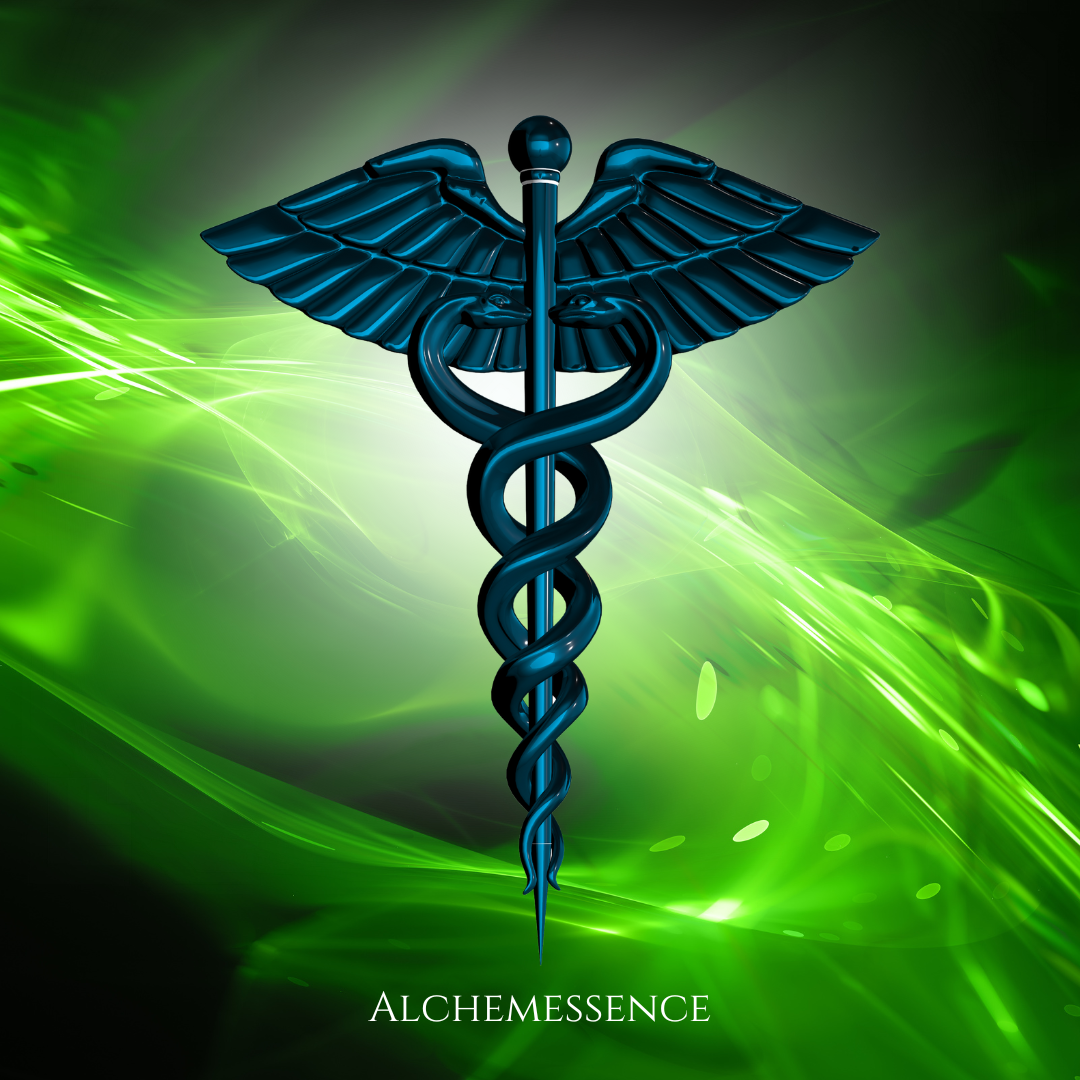
Raphael’s caduceus
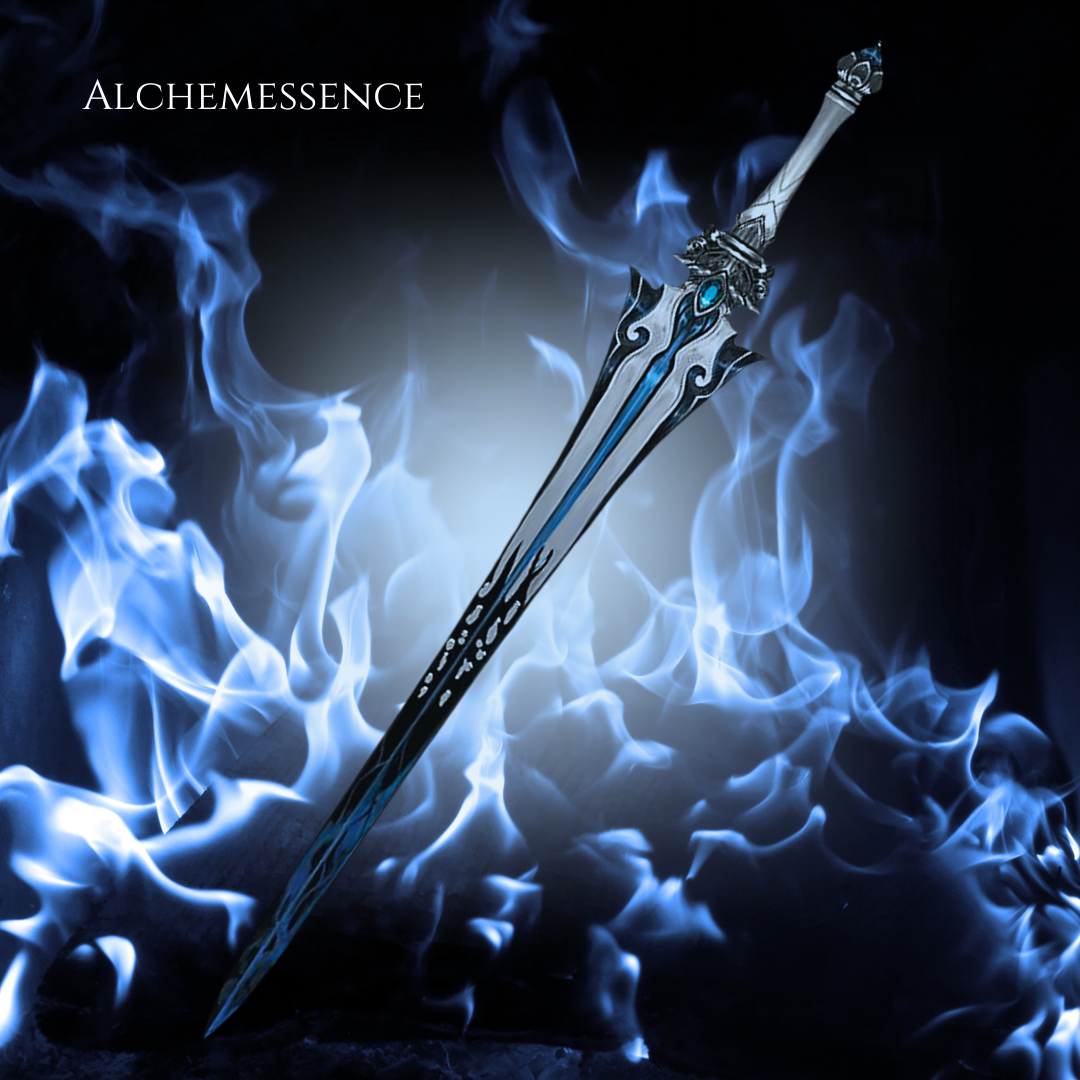
Michael’s flaming blue sword
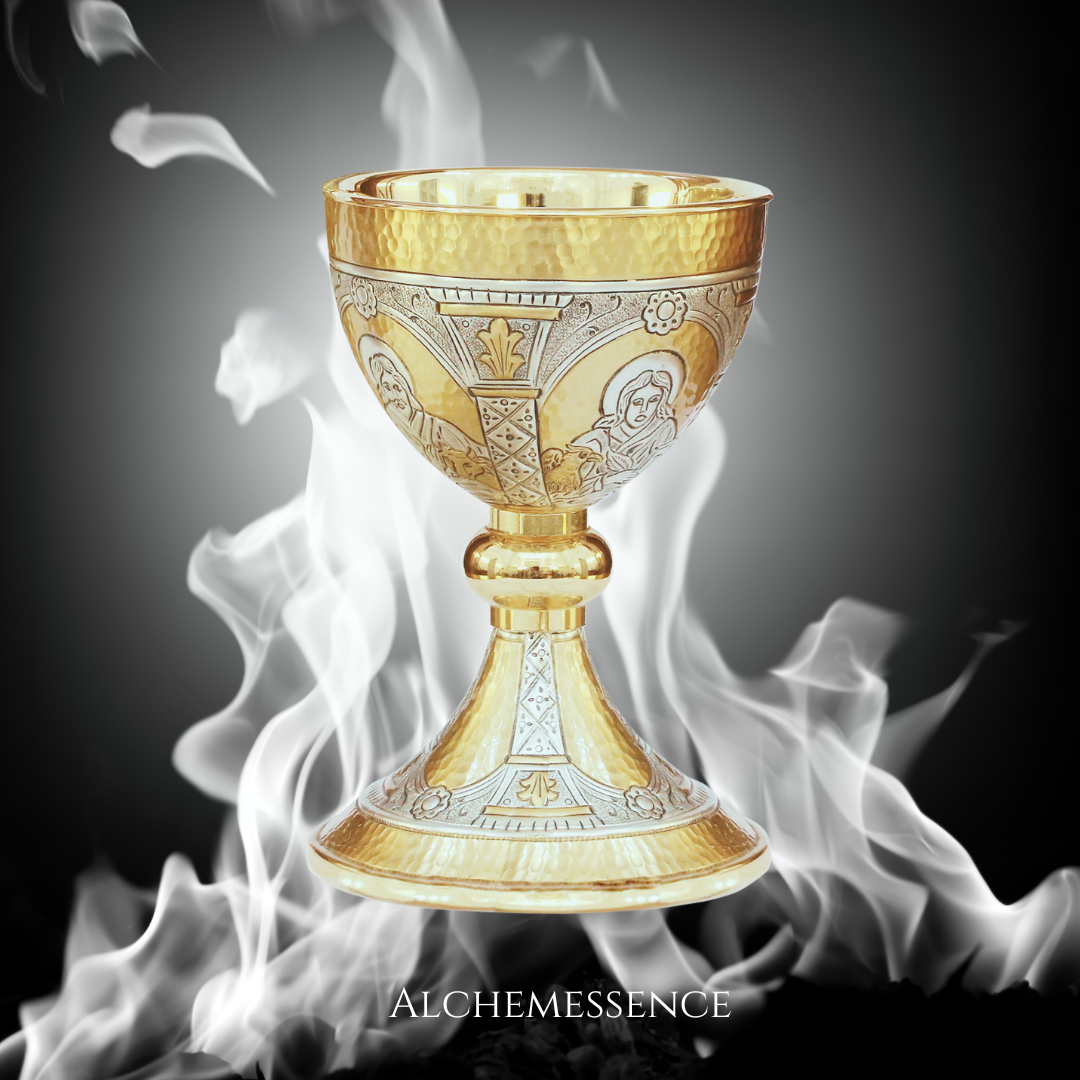
Gabriel’s chalice
Uriel’s pentagram
In addition to these four cardinal angels of the vertical plane, Echols brings in guardian angels for above and below, as well:
Guardian of the Below: Sandalphon
Sandalphon both guards the space below and attunes our frequency to the crystalline grid of the earth. His colors are earth tones, turquoise, and metallics. I often see brown, gold, or even crystalline white in my third eye when Sandalphon is present. He sometimes appears with a musical instrument…something I interpret as a sign of his ability to work with frequency.
Guardian of Above: Metatron
Metatron both guards the space above and attunes our frequency to divine wisdom. His colors are purple, gold, silver, and white. His symbol is Metatron’s Cube, a form of sacred geometry that contains all the building blocks of matter itself.

Sandalphon’s earth grid

Metatron’s cube
In my personal practice, I’ve long invoked these six powerful angels for protection—especially before engaging in any kind of spiritual practice.
After years of simply calling in the angels and feeling their guardian presences, however, a new more advanced ritual with them was revealed to me during a channeled session—one for both healing as well as protection.
I’ve shared this ritual with small groups before, and everyone has had powerful experiences. Now, with the release of pure angel anointing oils, it’s time to share this ritual with anyone called to partner with these divine beings for protection, healing, guidance, and blessings.
The following practice can be done anytime you’d like to connect with the energy of the angels.
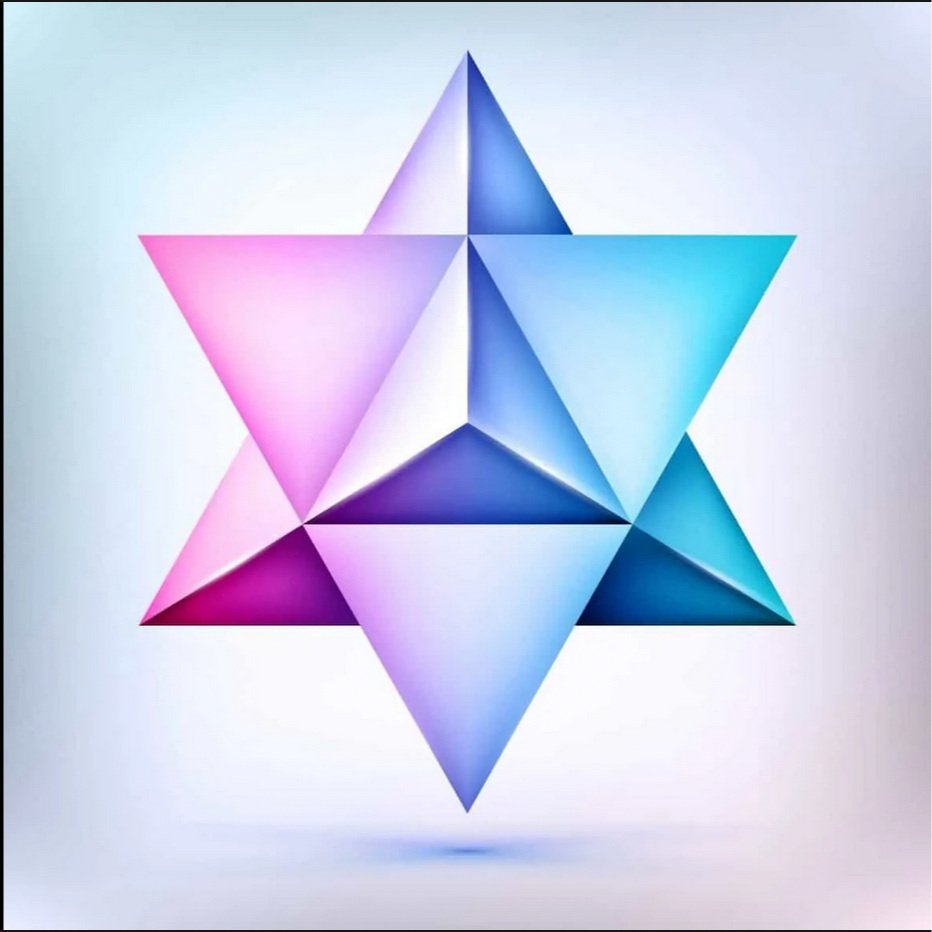
Note: This practice involves visualizing a merkaba—a powerful symbol for protection, healing, and insight, all the things we’re calling in here :) If you’re not familiar with this symbol, here’s an image:
An Alchemical Ritual for Angelic Protection, Wisdom, and Healing
Begin by setting your space for sacred arts. Light a candle, burn some incense or sage, and prepare your mind, body, and spirit for mediation. If you can, play some soothing music—theta music, binaural beats, or solfeggio tones are wonderful.
If you have anointing oils for these angels, place them nearby for use during the ritual. If you don’t have angel oils, simply skip the anointing steps.
I recommend calling upon the angels out loud and visualizing their colors and symbols as you move through this practice.
To begin, visualize yourself in the center of an etheric pyramid of light.
Make sure that this pyramid is large enough to contain your entire physical body and energetic aura.
Anoint your heart with Raphael’s angel oil.
Then speak aloud: “To the east, I call upon the great Archangel Raphael with his emerald green rays.”
Visualize the pyramid being filled with an emerald green fire. Feel this sacred fire cleanse any imprints of disease or illness from your energetic field. Feel healing and harmony restored to your physical and energetic bodies.
Allow as much time for this process as you’d like. You might get psychic hits of the work being done—specific imprints or illnesses being healed—or you may just sense that healing is happening. All experiences are welcome, so try to experience yours without judgment.
When the process feels complete, see the green flames recede into the eastern wall of the pyramid, which retains a green glow to anchor the healing energy of Rapheal.
Next, anoint the back of your neck with Michael’s angel oil.
Speak aloud: “To the south, I call upon the great Archangel Michael with his fiery blue rays.”
Visualize the pyramid being filled with Michael’s blue fire. Feel this sacred fire cleanse any foreign energy from your field. Once again, allow as much time as you’d like for the process.
When this feels complete, see the blue flames recede into the southern wall of the pyramid, ensuring that you continue to receive Michael's energetic protection.
Next, anoint the back of your wrists with Gabriel’s angel oil.
Speak aloud: “To the west, I call upon the great Archangel Gabriel with his pure white rays.”
Visualize the pyramid being filled with Gabriel’s white fire. Feel this sacred, watery fire cleanse your emotional body and thought patterns. This protective white light is like a soothing balm for any emotional challenges you’ve been experiencing.
Once again, allow as much time as you’d like for this process.
When this feels complete, see the white flames recede into the west wall of the pyramid, ensuring that Gabriel’s energy remains anchored to your sacred space.
Next, anoint your solar plexus with Uriel’s angel oil.
Speak aloud: “To the north, I call upon the great Archangel Uriel with his ruby red rays.”
Visualize the pyramid being filled with Uriel’s red fire. Feel these sacred flames removing lower density vibrations and thought forms from your field, creating space for higher vibration outcomes to manifest in the physical world.
As before, you may receive specific insights here, or you may simply experience energetic shifts. Once again, allow as much time as you’d like for this process.
When this feels complete, see the ruby red flames recede into the north wall of the pyramid, ensuring that Uriel’s energy continues to stabilize your energy field.
Next, anoint the soles of your feet (or ankles if easier) with Sandalphon’s angel oil.
Speak aloud: “To the space below, I call upon the great angel Sandalphon.”
See a crystalline grid appear at the base of the pyramid. Sandalphon uses this grid to help attune your energy with the energy of the earth. Feel your vibratory shift as the light grid reaches into your energy field. See how the grid of the pyramid is connected to both your energy system and the earth’s crystalline grid.
When this feels complete, let go of tracking larger grid movements. Simply see a crystalline grid of light at the base of the pyramid.
Next, anoint your third eye and crown with Metatron’s angel oil.
Speak aloud: “To the space above, I call upon the great angel Metatron.”
Visualize a golden-purple merkaba at the top of the pyramid. See this cube begin to spin, creating an active portal for divine wisdom to come through. Allow yourself to attune to this wisdom, feeling it flow into your being through your crown chakra.
Again, you might get specific insights, but that isn’t the point here. You are becoming a stronger, more aligned vessel for a continual stream of wisdom to flow into and unfold in divine timing.
When this process feels complete, return your awareness to the entire pyramid.
Revisit each of the walls—green to the east, blue to the south, white to the west, red to the north. Revisit the grid below and cube above. Feel the protective, loving energy of this space. Notice if you can feel any shifts in your own body and energy.
To close, thank the angels for their presence, healing, and protection.
Speak aloud: “I gratefully acknowledge the great angels Raphael, Michalel, Gabriel, Uriel, Sandalphon, and Metatron for their blessings and presence in this practice. I ask that I continue to receive angelic protection as I go throughout my days.
For now, this practice is done. Our parts are done. And we may rest.”

Let go of your visualizations and return awareness to your body and the present moment. You may like to ground a bit after this, as it’s quite powerful. Going for a walk outside or eating a few nuts and drinking water can be supportive.
Enhance Your Practice with Angel Oils
I created Angel Oils to enhance our connections with these divine beings.
These oils are filled with sacred, rare, and very precious botanicals—white lotus, sandalwood, tuberose, angelica, and more—that align our frequencies with those of the angels.
When applied directly to your skin, these oils become portals for divine angelic transmissions and greatly impact the potency of angel magick and ritual.
If you’d like to purchase a set of anointing oils to enhance your practice…and simply to smell divine because they are truly elevated perfumes, you can find discovery sets here:
Save this on Pinterest:

The Mystical and Magical Emergence of Angel Oils
Angel anointing oils are aromatic and vibrational blends created in sacred ceremony. Direct transmissions from the angels themselves, the imbue divine light codes into anyone who works with these oils. Discover who the angels are, why you would call on them, and the aligned plant essences for each archangel.
Several months ago, I woke up with the most beautiful, ethereal aroma in my field.
I have clairolfactory gifts—which means that I perceive spiritual smells as a form of intuitive guidance. So awareness of an aroma from beyond our 3D reality isn’t out of the ordinary for me.
Yet there was something truly magical, something calling me into deeper exploration with this aroma. I decided to
I entered my perfumery and prepared for sacred alchemical practice.
I lit my candles, cleansed my energy body with a precious feather, and tended my creative altar.
Then I sat down to channel the mystical aroma I was perceiving into physical form.
To my surprise, what unfolded wasn’t a single oil at all—it was a divine dance of angelic blessings. The great archangels, who I've been working with for decades now, wanted to share their unique gifts and blessings with the world through sacred plant alchemy.
In other words, the angels told me very clearly to make them ceremonial perfume oils—and to share these oils with as many people as possible!
I’ve never channeled such harmonious recipes for fragrant oils so seamlessly before. I wonder if this is because I’ve cultivated a natural resonance with these beings over years of practice, or if humans in general have a karmic affinity for the angels. Maybe both. (If this resonates, stay in touch! I’ll be teaching angelic mediumship classes next year.)
My first instruction was clear—every oil would have the same 4 aromatics as the base:
Angelica—a plant named for the angels, angelica invites and anchors angelic blessings to earth
Rose—the angels all encompass unconditional compassion, and rose attunes our heart to this vibration
Sandalwood—a sacred oil with an affinity for the crown chakra, sandalwood opens us to divine messages
Frankincense Sacra—another oil sacred to the angels themselves, frankincense sacra, sacred frankincense) carries our prayers to spirit while quieting our egoic minds
From here, the unique “personality” of each angel came forward to guide the rest of their aromatic oils. Over the course of a single week, nine angels in total (for now at least) came forward to transmit their essences into oils through me.
Meet the Aromatic Archangels
Archangel Raphael
Raphael blesses us with the green ray of healing light, and his oil transmits this healing energy to us through verdant aromatics. High altitude lavender carries an expansive all-healing energy, while evergreens, citruses, and Greenland moss layer green rays of light upon the soul.
Archangel Michael
Michael comes bearing the blue flaming sword of divine protection. Purifying and protective oils—blue juniper berries, fragrant mastic, bay laurel and more—fill this complex blend.
Archangel Gabriel
Gabriel brings us messages from spirit carried upon divine waters. Precious, white florals hold the high vibration of this celestial being—white lotus, white jasmine, white angelica, and more.
Archangel Uriel
Uriel helps us ground spiritual wisdom into our earthly existence. Grounding oils—cedarwood, patchouli, vetiver, liquidambar, and more—form the heart of this sacred blend, while a trio of potent frankincense provide an infusion of pure spirit. Nourishing sweet aromas of peru balsam, myrrh, and rose soothe the spirit.
Archangel Sandalphon
Sandalphon connects us to the crystalline energy grid of the highest vibration of Gaia, attuning our frequency to that of the Earth’s ascension. Golden, high vibe oils create a potent transmission in this blend—Italian neroli, amyris, silver fir, ancient amber, and more.
Archangel Metatron
Metatron connects us to the cosmic and timeless wisdom of the divine. High vibration oils that open our intuitive centers fill this oil, including true white lotus, galbanum, and high altitude lavender.
The above archangels are the 6 primary beings called upon in Western Angel Magick: The four archangels Raphael, Michael, Gabriel, and Uriel represent the four elements and guard the four directions of the horizontal plane, while Sandalphone and Metatron support our ascension and guard the vertical plane.
Archangel Haniel
Haniel uplifts our spirits and brings joy to our souls with lunar turquoise rays. Botanicals of clary sage and lavender help us harmonize with moon cycles, and uplifting notes of bergamot, geranium, and juniper raise our spirits. Precious florals—tuberose, osmanthus, jasmine, and more—delight our senses and raise our vibrations in this magical angel oil.
Archangel Chamuel
Chamuel carries the pure vibration of unconditional love, healing our hearts and helping us experience what true, divine love really is. Heart-opening oils fill this sacred blend, including rare pink lotus absolute, pink grapefruit, rose, violet, a rare and irreplaceable raspberry leaf absolute, and more.
Archangel Azrael
Azrael holds the pure vibrational essence of divine neutrality, a psychopomp who loving guiding souls through transitions into other realms. Azrael’s oil contains dark essences of mystery, such as black frankincense and star anise, and harmonious essences of pure love. Cypress assists in the crossing over of souls, clove cleanses foreign energy, and vanilla provides loving nourishment in this potent blend.
The Seraphim
Seraphim are a particular class of angels—six-winged celestial beings who appear as flames of purifying divine light. The Seraphim remind us that all is holy. I originally designed the Seraphim’s fragrance as a perfume, but my guidance now is to bring this aromatic elixir into the fold of my angelic anointing oils.
Seraphim is a true ceremonial-grade perfume oil containing several high vibe essences—rose, orris, benzoin, and pink pepper, to name a few. The result is a layered fragrance with notes of white florals, precious woods, and a powdery finish.
I’ll be releasing one of these magical oils per day, with details about their botanicals, to the public throughout the 2022 Angel Portal, which runs from 11/11/22 - 11/22/22. Follow me over on Instagram for these angelic transmissions.
You might also like:
Save this on Pinterest:


8 Tips for Buying High Quality Essential Oils
As a botanical perfumer who is committed to creating the most luxurious, alchemical, and potent natural perfumes possible, I’ve spent years learning how to discern high quality, real essential oils from the fraudulent ones. Learn 8 key tips for buying high quality essential oils here!

As a botanical perfumer who is committed to creating the most luxurious, alchemical, and potent natural perfumes possible, I’ve spent years learning how to discern high quality, real essential oils from the fraudulent ones.
4 Ways Essential Oils and Natural Products are Adulterated
Far too often, essential oil suppliers will adulterate their oils by:
Cutting more expensive oils with less expensive ones
Adding synthetic aroma molecules to supposedly pure essential oils
Replacing the named oil with a totally different oil than what’s listed in the description
Selling purely synthetic, fake versions and true botanicals
8 Tips for Sourcing Authentic and Pure Essential Oils & Natural Products
Luckily, it’s actually pretty easy to avoid buying fake oils once you know what you’re doing! Here are the top 8 things I look for when sourcing quality oils:
1. The Price
Every essential oil is extracted from a different amount of raw plant material, and the more material it takes to make a drop of oil, the more expensive the oil will be.
Tips:
Every oil should have a different price—in other words, neroli and pine should not cost the same amount.
Oil prices should generally fall within a certain price range. Compare prices at several different companies—if anything is way less than average, it’s likely fake.
Knowing general pricing for aromatic groups can be helpful, too. A few guidelines here:
Citruses and fragrant trees tend to be on the lower end of prices
Flowers tend to be on the higher end of prices
Rarer plants (often those that are only grown in certain areas) tend to be on the higher side
Common fragrant plants (such as mint, cinnamon, clove, and lavender) tend to be more affordable as well
2. Botanical Names
Always look for the botanical name of the plant in question—the one written in latin. It should match the plant name on the bottle. This probably seems obvious, but I’ve seen plenty of mismatched common and botanical names on websites.
Tips:
Make sure the latin name matches the common plant name on the listing or bottle.
Make sure the latin name is the variety you’re looking for—lavandula angustifolia is quite different from lavandula latifolia cineolifera or lavandula x intermedia grosso.
If an oil doesn’t have a latin name, don’t buy it.
3. Extraction Method & Part Distilled
Most reputable suppliers will include the part of the plant the oil is extracted from, as well as how it was extracted in their product description. If this is missing, take it as a warning. After all, juniper berry essential oils is quite different from a juniper oil extracted from leaves and twigs!
Tips:
Look for “Extraction Method”—Most oils are steam distilled, but not all. Citruses are often cold pressed, absolutes are solvent extracted, and CO2s are done with a regular or supercritical CO2 extraction.
Look for the “Plant Part”—Does the oil come from wood, fruit, flower, etc?
4. Country of Origin
Different countries produce different varieties and qualities of essential oils, so seeing the country of origin can give you a clue as to the quality of the oil.
Tips:
Make sure there is a single country of origin listed. Blends from multiple countries tend to be of lesser quality (though not always).
No listed country signals likely synthetic origins.
5. Cultivation
Cultivation refers to how a plant was grown—is it wildcrafted, organic, or conventional? Seeing this listed is a good sign in general.
Tips:
Make sure the cultivation method is likely to be accurate. For example, have you ever seen basil in the wild? Nope, wildcrafted basil isn’t likely.
Some plants are rarely, if ever, organically cultivated, whether because it’s unnecessary (as with many trees) or financially difficult (as with many precious flowers).
Organic cultivation tends to be more expensive than conventional, so you can double check your pricing here, as well.
6. Company Transparency
Good oils come from good businesses. Do you know who owns the company? Where they’re located? They’re return policies?
Tips:
Find the company’s about page. Look for specifics—like who founded the company, why they started, and their philosophy about the oils. Avoid generalized pages that might never say more than “We specialize in high quality essential oils.”
Look for clear shipping and return policies, as well as contact information.
Do they offer 3rd party testing reports? Look for “GC/MS batch-tested” and the ability to request these reports.
7. Non-Existent Oils
Some plants, fragrant though they may seem to us, simply don’t produce enough essential oils to be extracted. Other plants don’t actually have strong scents, but companies use their names to describe synthetic aromas (think “cucumber-melon” for example). Make sure the oils you’re searching for actually exist!
Tips:
Many “food” smells cannot be botanically extracted, so they are almost always synthetic—cucumber, melon, apple, cherry, apricot, plum, and raspberry, to name a few.
Many flowers are almost impossible to extract aroma from. The following are almost always synthetic—gardenia, lilac, wisteria, any lily, honeysuckle, freesia, hyacinth, and “white florals”.
Plant names are often given to synthetic scents when the plant in question doesn’t actually have much of a fragrance—bamboo, papyrus, or willow for example.
8. Company Ethics
The way a company operates can say a lot about whether or not you want to support them, even beyond the quality of their oils.
Here are a few things to consider:
Does the company sell both “natural” and synthetic oils? I’ve found that companies who are truly committed to naturals have better quality oils. Plus, if they sell both, there is likely adulteration behind the scenes.
Does the company sell animal products? Many perfume suppliers still sell things like civet oil, which is obtained from a small wildcat through an extremely cruel and painful process. I try not to support any companies that perpetuate animal cruelty.
Does the company sell endangered oils? Many plants are at risk because of the demand for their precious oils. I try to find companies offering sustainable alternatives to the most threatened species. For example, while Indian sandalwood is endangered, Australian sandalwood can be a more sustainable alternative.
Does the company support safe use of essential oils? An ethical company will name warnings clearly—not for use with children or while pregnant, or with certain medications, for example. Watch out for companies that tell you to take essential oils internally (you can with some, but it’s a delicate dose), or that encourage you to use a ton of the oil at a time (the oils are precious, and a little goes a long way!).
There you go! 8 helpful tips for buying high quality essential oils. Happy shopping!
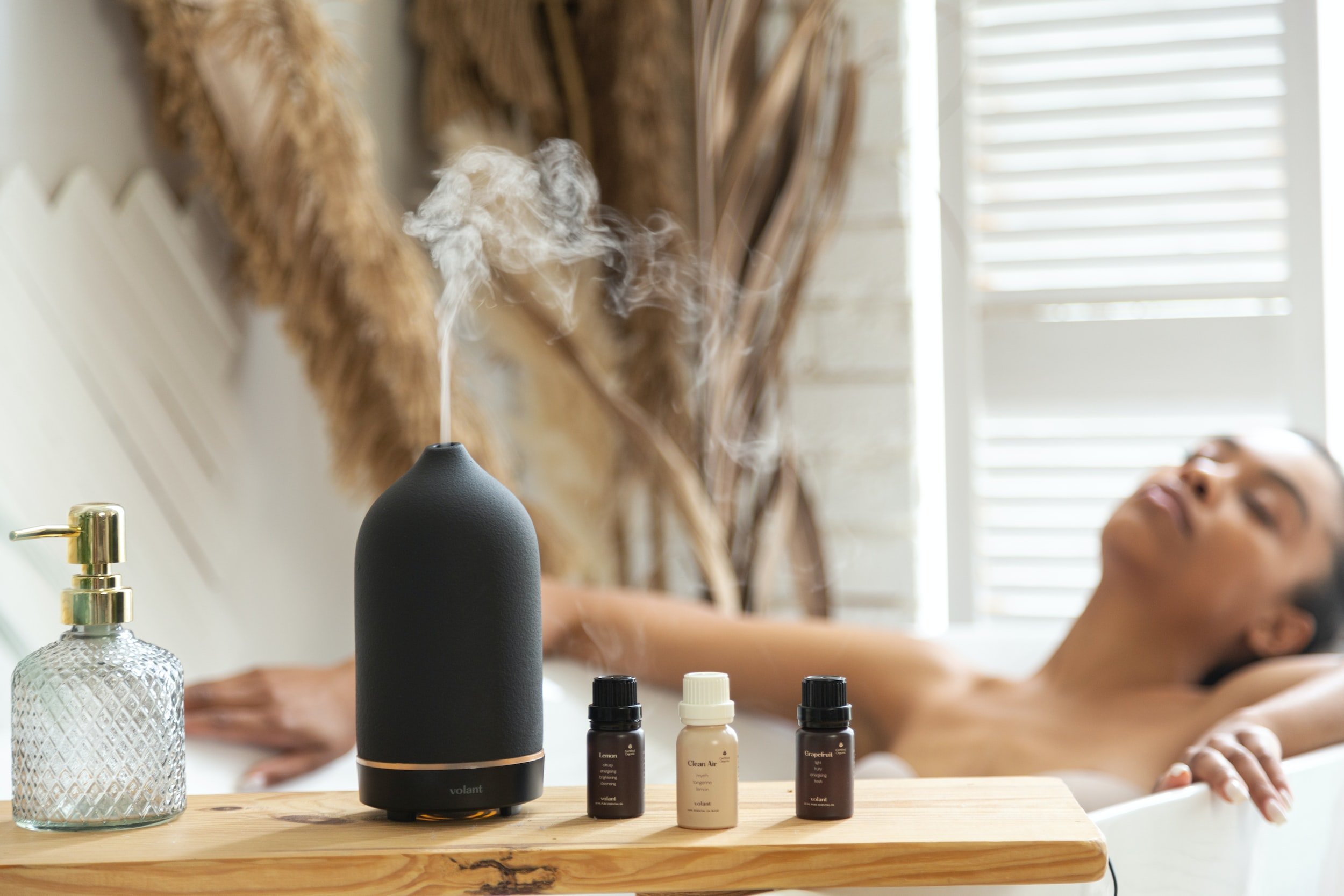


The Complete Guide to Magical & Ritual Anointing Oils
What are anointing oils and how do you use them? Discover how to use magical and ritual oils, explore the myrrhophore tradition, and claim your own lineage with sacred oils. From Egypt to modern day witches, oils are a powerful part of any spiritual practice.
Did your ancestors practice the sacred art of anointing?
Does your soul remember lifetimes as an oil-bearing priestess?
Do you experience a full-body resonance when you simply hear the word, anointing?
If so, you just might carry the signature of one who is destined to work with these sacred oils in this lifetime.
Read on to discover what anointing oils are, how they’re made, and why you should use anointing oils in your own spiritual and magical practices.
What are anointing oils?
Anointing oils are sacred infusions of plant materials and oils created to channel divine transmission into physical reality.
Traditionally, anointing oils were made by macerating whole plant material into pressed oils—the spikenard in olive oil of the Bible and myrrh infused in safflower of ancient Egypt are just a few well-known examples.
Today, fragrant essential oils join the ingredient list, inviting rare and precious botanicals from throughout the world into our sacred oil repertoire.
Anointing oils open our connection to both spiritual wisdom and divine healing. Perhaps this is because oils infused with botanicals are not only fragrant—they are medicinal.
Every plant carries both physical and energetic gifts, and a true alchemist knows how to harmonize these layered intricacies, creating sacred oils that provoke divine bliss, carry unique vibrational signatures, and contain chemical properties that promote healing on all levels. —Juniper Stokes
A note of caution: Many anointing oils sold today contain synthetic fragrances. This is partly because these ingredients are much cheaper than true plant oils, and partly because there are many suppliers who sell fraudulent oils to well-intentioned makers. These oils do not carry the vibrational gifts and resonance of true, botanical anointing oils. Check out my free guide to avoiding fakes here.
The History of Anointing with Oil
From the beginning of time, in every culture and on every continent, humans have used fragrance to connect with the divine—and the use of sacred anointing oils has been one of the most important expressions of our aromatic practices.
By turning to the past, we discover the ancestral connections with plants held in our bodies and souls. And by living in the present, we can discover profound ways to create and make use of sacred oils today.

Ancient Egypt
The ancient Egyptians held that the world was created from the fragrance of the blue lotus, and scent was an integral part of all Egyptian life.
Precious oils were used to anoint and activate statues of the gods. Other blends—including the famous Kyphi—were used as both personal perfumes and as medicine.
Egyptologist Dora Goldsmith (a PhD candidate and one of my personal teachers in this area), notes how inscriptions on temple walls point to the ritual and intention that went into creating anointing oils and unguents. While some perfumes and oils were made for daily use, others had very strict ritual instructions: These precious oils and perfumes could only be made by priests and priestesses—surrogates for royalty—and precise ingredients, steps, timelines, and even incantations were required during their creation.
(After studying with Dora for over a year—and reading over a dozen books on the fragrances and rituals of ancient Egypt—I have much more to share on this topic. Be sure to subscribe to stay in the loop!)

Vaso alchemico, unknown artist
It’s also likely that our modern practices of anointing royalty (yes, in England a new monarch is anointed in a private ceremony, with a secret blend of oils, to this day) began in ancient Egypt as well. In her groundbreaking work, Egypt’s Anointing Mysteries, Egyptologist Dr. Alison Roberts explores rituals in which the queen would take on goddess-like powers and attributes in order to empower the king through anointing practices.*
*As an aside, in Celtic traditions, kings would receive their power from a sovereignty goddess—without her blessing, he could not be sovereign of the land. A theme to be explored in further articles… ;)
The fragrant traditions of Egypt spread throughout Europe and the Middle East, where they were influenced by expanding trade routes and changing cultures. From Greek Olympians empowering themselves with olive oil and Hippocrates’s instructions to anoint the sick with oil, to the Arabic healing traditions of Avicenna and Hebrew consecrations of priests and kings, to the Biblical anointing practices still used in churches today and much more, Western antiquity was bathed in fragrant oils.
Myrrophores
Myrrophores, or “myrrh-bearers” were sacred priestesses who would channel the celestial power of the divine through sacred oils for soul-level healing—a tradition that likely originated in ancient Egypt and spread throughout the Greco-Roman empire, as well.
Perhaps one of the most well-known acts of anointing in the West is when Mary Magdalene anointed Jesus’s feet with the oil of nard (spikenard). Here, as much as patriarchal retellings have tried to erase Mary Magdalene’s healing gifts, they have not been able to fully obscure the power of her anointing practice or her connection to the myrrhophores.
Some mystical scholars even suggest that her transmission of prayer and protection, carried forth through sacred oil, empowered the resurrection that followed.

Featured Workshop
The Path of the Myrrhophore
A Magdalene Feast Day Ritual & Teaching
How do anointing oils work?
Anointing oils work by transmitting divine empowerments into our physical reality.
This happens through the ingredients used, the approach to creating the oil, the art of transmission, and the rituals involved when using the oil.
Plants have been our allies, teachers, healers, and guides since the dawn of humanity, and every plant used in an anointing oil carries a unique set of empowerment codes that synergistically act to empower the oil.
When these plants are alchemized in sacred ceremony, they harmonize with the intentions of the alchemist to create a powerful unguent.
When we place these oils on our body, or anywhere in our fields, we receive the oil’s alchemical codes and ignite our own transformation.
Shamanic Transmission in Anointing Practices: The Key to Potency
The most powerful oils contain a transmission that they pass onto the anointed.
When I create either an anointing oil or a botanical perfume, I always include a transmission ceremony for the finished product. My process is rooted in shamanic practice, though certainly not limited to those who identify with shamanism.
After setting sacred space and preparing my mind, body, and spirit for the work, I enter into a mediumship state. If I’m channeling a particular deity, I invite them to merge with me. If I’m working with an intention, I call forth that energy to be present. Then, I pour the energetic signature of the being or intention involved directly into the final bottle.
This way, not only does each bottle of perfume or oil contain the vibrational signatures of every botanical involved, it contains a direct healing transmission from spirit. This transmission is then activated with every use. Even if all you have time for is quick application on your wrist, the blessings will flow.

How to Use Anointing Oils
Throughout history, anointing was used for both healing and spiritual purposes—and as mentioned before, the two were often one and the same.
Traditional aromatic rituals include:
Awakening and honoring the gods: The anointing of deities’ statues to awaken and empower the gods was a common practice in Egypt and likely used in ancient Greece, as well.
Blessings: Blessing visitors and guests with sacred oils was a common Hebrew practice in antiquity, and to this day babies might be anointed with sacred oils for blessing and protection at birth.
Anointing the sick: Throughout the world, anointing the sick was a common practice. In Greece and the Arabic world, oils were infused with medicinal plants. In Christianity, priests would anoint the sick in what is known as an unction.
Consecration: Kings and priests were anointed by sacred oils, usually by priests standing in for God to symbolize the divine rights of the anointed.
Exorcism: The Oil of Catechumens, aka the Oil of Exorcism, is used by some churches to expel evil during baptisms—but the Christian church isn’t the only group to use oils for exorcism. In Taoist anointing traditions, oils are placed on key acupuncture points to expel ghosts and possessions.
Modern Anointing Practices
Today, magical practices and new spiritual practices have reinvigorated the use of anointing oils—and who can use them.
I believe that it is our birthright to access the magical, spiritual, and healing gifts of sacred anointing oils. A few of my favorite ways to use oils include…
Spiritual & Energy Healing—We can use the subtle vibrations of oils to shift our own energetic health.
Taoist Anointing Practices—Apprenticing with a rare master in the Jade Purity tradition has opened my eyes to the magic that happens when we apply oils to specific meridians.
Empowering Objects—Rubbing an oil on a sacred object imbues it with spiritual power. (Crystals love anointing oils!)
Rituals and ceremonies—Anointing oils can enhance rituals and ceremonies of all types, including blessings, transitions, seasonal celebrations, and other intentions.
Connecting with the Divine—Whether you want to align with the energy of a specific deity, connect with the angels, or simply open yourself to spiritual wisdom, anointing oils can support you.
Chakras—Blessing each energy can bring about balance and health.
Spellwork and Manifestation—Whatever your intentions, be they prosperity, health, protection, or love, magical anointing oils can help.
A Personal Anointing Ritual
While anointing oils can be used in infinitely complex rituals, they can also be used for simple daily empowerment.
Here’s a short practice for anytime you want to connect with an intention or deity:
Upon receiving your oil (spiritual perfumes will also work here), hold it to your heart and visualize your intention. See your intention flowing from you into the bottle and from the bottle into you. This will activate your personal connection with the oil.
Next, inhale the oil’s fragrance deeply and several times. You can inhale directly from the bottle, or you can apply a bit to your wrist first. This activates your neural response to the oil, so you’ll more easily remember your intention every time you smell it in the future.
Then, apply the oil to your body on a daily basis for 30 days. Depending on your intention, you may rub a few drops into your heart or third eye. Or, you might simply wear a bit on your wrists as a perfume you can smell repeatedly until the natural fragrance fades. Either way, focus on your intention while you apply the oil.

Common Questions: How to Distinguish Anointing Oils from other Aromatic Practices

What’s the difference between an anointing oil and other botanical oils?
The main difference lies in the intention with which the oil was created. Anointing oils must be created through ritual. This involves setting sacred space, blessing your materials, and infusing the resulting oil with a transmission of your intention. Some oils are made following specific instructions and recipes, while others are created by allowing the divine to work through you intuitively.
Are anointing oils the same as aromatherapy?
Anointing oils can fall within the realm of aromatherapy, but they don’t always do so.
There are two main approaches to modern aromatherapy: clinical aromatherapy, and subtle aromatherapy.*
Subtle aromatherapy blends are based on the energetic and spiritual qualities of oils, and anointing oils certainly fall in this category.
Clinical aromatherapy relies on the psycho-emotional and physical effects of oils. While anointing oils may certainly have psycho-emotional and physical effects, their primary purpose is spiritual in nature. So, your typical aromatherapy blends for stress relief or headaches probably aren’t anointing oils.
*As a note, I feel that the best aromatherapy products integrate both subtle and clinical dimensions into their formulas.
What’s the difference between anointing oils and perfumes?
Broadly speaking, the word perfume can refer to anything used for aromatic purposes—incense, aromatic waters, oils, and unguents of all types all fall under this fragrant umbrella.
Today, the word perfume most often refers to scents worn for pleasure, while the term anointing oil refers to sacred oils used for ritual and spiritual purposes.
However, I think it’s worth noting that throughout most of human history, fragrance, medicine, and spiritual practice were one and the same.
In ancient Greece, the single word arómata was used to describe incense, perfume, spices, and aromatic medicine, showing us how little differentiation was given to aroma for pleasure, spirit, and health. Interestingly, the unguentarii, those who sold perfumes, were held in the same esteem as doctors.
Are anointing oils the same as ritual oils?
The way I create and use them, yes.
Some folks will likely disagree here—especially if you’re focused on Christian anointing traditions or have specific guidelines around your magical practice. For me, anointing is sacred and it is magical, so I use the terms interchangeably.

Angel Magic & Anointing
Enhance angelic connections for protection and healing with sacred aromatics.
If you’re ready to receive powerful light codes for healing and spiritual connection, be sure to explore my alchemical collection of pure, botanical anointing oils.
Save this article on Pinterest with the image below!


You might also like:

Here’s What You Need to Know about Buying Natural Perfumes and Essential Oils (aka how to avoid the frauds!)
The world of aromatics is fraught with artificial and adulterated oils that are sold as “pure” and “natural”. So how can you protect yourself? How can you make sure that the oils and products you’re purchasing are truly natural and high quality? Check out this complete guide on how to avoid adulterated, fraudulent, and synthetic essential oils and natural fragrances.

Those of us who love natural aromas and essential oils do so because we know they are gifts from nature.
Every single plant on our earth carries both chemical and energetic signatures. When our own physical and energetic bodies receive the gifts of these plants, true healing and transformation can take place on every level of our being.
The same cannot be said for synthetic fragrances.
Not only do lab-created fragrances lack the vital life force and energetic resonance of true plant materials, they’re often harmful to our health and planet.
Unfortunately, the world of aromatics is fraught with artificial and adulterated oils that are sold as “pure” and “natural”.
Why? Because of the cost. True natural plant material is simply more expensive than synthetic ingredients across the board.
While I hope that someday we stop prioritizing greed over life, as a collective, we’re just not there yet.
So how can you protect yourself? How can you make sure that the oils and products you’re purchasing are truly natural?
I’ll be honest. I’ve learned to be very discerning with my ingredients the hard way…
Yes, despite my years of training and research I’ve been fooled—I’ve probably lost thousands of dollars to fraudulent suppliers and ignorant resellers over the years.
But I’ve learned some key lessons along the way. The following are my top tips for navigating the wild world of natural fragrances.

1. If the price of an essential oil is too good to be true…it probably is.
This is probably the number one easiest and most important thing to look for. True plant material will always be more expensive than its synthetic counterparts.
Pro tip: There tend to be average price ranges for most essential oils. If in doubt, compare several companies’ pricing. Let’s look at a few examples…
How much does lavender essential oil cost?
Lavender essential oil tends to be one of the most affordable and available essential oils.
Based on a few of my trusted companies, one ounce of lavender EO tends to cost between $17 and $50—country of origin, variety, and organic certification affect the price.
The lavender EO from a popular oil supplier known to be fraudulent costs $30 for nine ounces!!! No, no, no.
How much does rose essential oil cost?

Along with lavender, rose essential oil is extremely popular—but it tends to be quite expensive. While true rose essential oil is available (and totally divine), the absolute* of rose is what most people purchase.
From my trusted companies, one ounce of rose absolute from Bulgaria (generally the most affordable rose) costs between $150 and $300 ($200 is the most common pricing).
Guess how much 1.69oz of Bulgarian rose absolute it from the popular fraudulent company? $36. Again, no, no, no.
(*Absolutes are extracted differently than true essential oils, though within the field of aromatherapy, the term “essential oil” is used as an umbrella to refer to all types of extractions.)
True plant extractions are expensive. And they’re worth it. Do your research and don’t become a sucker for a good price.
2. The same pricing rules go for “natural” perfumes, oils, sprays, candles, and fragrances of all kinds, as well.
Why is it that some natural perfumers sell a 30ml perfume for $20, and some for $300? Why is it that you can find natural perfume oils on Etsy for as low as $6 and as high as the sky?
Of course, many factors play into how a maker prices their products—experience, artistry, complexity, quality and variety of ingredients, time spent, market recognition, and much more.
But at a certain point, there is no way someone can be charging so little for a fragrance without using synthetics.
And here’s the tricky part…these makers usually aren’t intentionally being fraudulent. Instead, they’ve likely been fooled themselves and have sourced impossibly cheap ingredients. Or, they’re using a somewhat “expanded” definition of natural fragrance (more on that below).
If you want to protect yourself from synthetic aromas, trust your intuition and apply everything you learn in this article when making any purchase.
3. If a company sells both synthetics (aka “fragrance” oils) and essential oils, be very wary.
I’ve yet to find a company that sells both synthetic fragrances and good quality essential oils. And sadly, I’ve tried quite a few over the years. Maybe one exists, but in general, I take this as a major warning sign. (Not to mention, I personally don’t want to support the artificial fragrance industry.)
4. Watch out for fragrant flowers.
Rare and precious flowers delight our senses and form the heart of most natural perfumes. And, they’re very expensive. And, actually extracting essential oils (including absolutes and CO2s) is nearly impossible for many precious scents.
True rose, jasmine, ylang ylang, boronia, orange blossom, geranium, osthmanthus, tuberose, jonquil, lotus, chrysanthemum, and frangipani are a few florals that are perfectly possible to obtain naturally (though some will cost you well over $1000/oz).
Listed as ingredients, the following flowers are almost* always synthetic: lily of the valley, gardenia, lilac, daphne, any lily, honeysuckle, freesia, and hyacinth, to name a few. Anything described as “white florals” tends to point to synthetics, as well.
*The exceptions being labor-intensive enfleurage and tinctures—but you’ll pretty much never find these in commercially produced fragrances.

Any lily fragrance is most likely synthetic.

No natural honeysuckle essential oil exists.
5. Learn to identify the common synthetic descriptors.
While creative combinations of natural oils can produce a wide range of aromas, there are a few descriptors that are most often found with synthetics.
Two main categories to watch out for are one, anything described as “oceanic” or “aquatic”, and two, most fruity and food aromas.
This tip is definitely more of a general guideline than a rule. A talented alchemist can create marine notes, fun fruits, and sugary sweetness using naturals. I certainly do, and I even use these descriptors.
Overall though, these fragrance families are commonly synthetic. With oceanic and aquatic fragrances, this is because these descriptors were used to describe the aldehyde-based fragrances that became popular in the 1990s.
As for the foods, the frequency of synthetics is partly because there simply aren’t natural oils that smell like fresh peaches or plums, and partly because even food flavorings found in essential oils are often synthetic for cost reasons. Cinnamon and vanilla are a few of the most commonly adulterated essential oils (scientists are even piloting a vanilla flavoring made from plastic).
6. Beware of “clean fragrance” and natural isolates
“Clean” Perfume Houses
With growing awareness of the harmful effects of synthetic fragrances, many perfume houses market their perfumes as “clean”. These companies have a lovely list of EWG-approved ingredients, as well as a promise to be free from cruelty, phthalates, and all sorts of other known carcinogens.
This might be exactly what you’re looking for—in which case, shop away!
Just be aware that clean does not mean natural. These companies use what are called “safe synthetics” in their perfumes. So, if you’re looking for truly natural perfume and all the benefits it offers, be sure to look beyond greenwashing.
Natural Perfume Brands
Many perfumers call themselves “natural perfumers” because they know this is what people are looking for. These perfumers will use mostly natural perfume ingredients, but they rely on synthetics to make their perfumes. If you’re avoiding synthetics for any reason—especially health ones—this defeats the purpose. When in doubt, reach out to the perfumer and ask nicely, but very directly.
Isolates?
If you read the natural perfume ingredient lists of the most popular perfume brands today, you’ll often find words like cedrat, benzaldehyde, and alpha-isomethyl ionone.
Wait—you might as yourself-–how can something natural sound like it comes from a laboratory?
Because it does. Isolates are molecular extractions from plant origin, and the Natural Perfumers Guild includes them in its list of acceptable natural ingredients.
Since these chemical components come from plants, you might feel totally fine with using them. They certainly expand the perfumer’s palette!
Unfortunately, we have no way of knowing how these isolates were extracted (i.e. what process or chemicals were used), or what plant material they originated from. GMO origin is extremely common here, as well.
I personally do not use isolates, as I blend energetically as well as fragrantly. This means that bringing the whole, energetic presence of a plant into my blends is just as important as how it smells. Isolates contain none of the life force and spiritual blueprints for healing that whole plant materials do.
7. Parfum, perfume, and fragrance: A tip for purchasing natural products.
As with many of the words in this list, these terms are used for both synthetic and natural fragrances, meaning that there are no hard and fast rules here. However, if you see any of these terms on a natural product—think shampoos, body lotions, candles, etc—there is a 99.9% chance that synthetics are involved.
(FYI, I’ve found “Clean at Sephora” to be one of the worst offenders here. Bath and Bodyworks aromatherapy products might have some essential oils, but they most definitely have synthetics, as well.)
8. Be careful when sourcing from various countries.
First, there are plenty of unscrupulous companies in the US, where I live, as well as throughout the world. And, my worst experiences personally have been from when I tried to buy oils directly from suppliers in India and Egypt.
While I don’t like calling out specific countries or companies publicly, I’ve seen enough harm that I feel the need to specifically address these two places in particular.
First, India is home to many of the world’s most precious raw aromatics. Beautiful oils and true natural perfumes come out of India and I’m eternally grateful for all the amazing pure oils I have sourced from this country.
India is also home to a disproportionate number of online oil suppliers that sell blatantly synthetic oils as pure and natural. Too often, I see people think that costs are lower because they’re buying directly from the supplier.
This isn’t true. First, the prices are far too low even for a direct supply (yet just high enough to make you sorry if you buy too much…speaking from experience). Second, any experienced nose will be able to tell how fraudulent these oils are from a mile away.
Next, Egypt. I’ve seen many magical makers of anointing oil claiming to source their oils directly from Egypt. Maybe they have a good connection there…but I have my doubts.
I remember visiting perfumeries and oil houses during my own travels to Egypt. Time and again, I sat down to smell all these wonderful pure, natural oils. And time and again, my nose was disappointed.
Sure, if you like synthetic aromas (and many people do—our noses are trained to at this point), you’ll like what you smell. But these oils are not natural. While some, especially the florals, do smell close to the natural versions, any trained nose will pick up on far too many synthetic aromas in the mix.
So please, just be careful if you’re either sourcing directly from these countries or purchasing sacred oils from someone who claims to have gotten their oils from these locations.
9. Trust your nose.
Finally, trust your nose.
This is easier said than done for most folks. Modern life is filled with so many synthetic aromas and fragrances that most people have lost touch with what “natural” really smells like. But you can learn. The more you smell natural fragrances, the more you’ll be able to identify their synthetic counterparts.

Making the Shift to Natural Perfumes
If you’re worried that letting go of synthetics will leave you smelling like a patchouli-drenched hippie—think again. (Although, I do love a patchouli-drenched hippy myself.)
Elevated natural perfumes and anointing oils are far more than the aromatherapy blends you might be imagining. Give true natural fragrance a try and see what you think ;)
You might also like:
Did you find this article helpful? Share these graphics on Pinterest!


Which Should I Choose? Sprays, Oils, and Solid Perfumes
What are the benefits of perfume sprays versus oils or solids? Compare and contrast so you can find the best perfume for you.

In natural perfumery, you'll find three main types of perfumes: sprays, oils, and solids. All are wonderful, but each will give you a slightly different experience.
Perfume Sprays
Unless otherwise mentioned, most perfume sprays come in EDP (eau de parfum) strength, which is about 15-20% aromatics. This is true of Alchemessence perfumes, which contain a base of 100% pure organic alcohol.
Perfume sprays allow you to enjoy an all-over aroma--you can spray your hair, your clothes, a scarf, an undergarment...sprays are incredibly versatile.
Sprays also tend to be a bit lighter and slightly more fleeting in scent than oil and solid perfumes.
Perhaps the main advantage of perfume sprays is that they have a long-lasting shelf life. The pure alcohol preserves these perfumes almost indefinitely.
Perfume Oils
Perfume oils are typically made at a slightly higher concentration that sprays, and their cost usually reflects this. It's not uncommon for an oil to be a pure perfume extrait, which can contain from 25% aromatics all the way up to 40%!
These sensual, strong oils meld deeply into your own body chemistry, creating a fragrance that truly is a bit different on everyone.
The only real drawback to oils is that they'll have a shorter shelf life than sprays. Oils naturally degrade overtime, so these are best used within a year or two of purchase.
Perfume Solids
Perfume solids typically contain oils and waxes. Beeswax is traditional, though there are vegan alternatives available.
These perfumes are quite similar to perfume oils: they're usually perfume extraits, they seep into your skin and alchemize with your body chemistry, and they're best used within a two to four years of purchase, depending on how you store them.
As solids, these perfumes are portable and easy to use on the go.

Which kind of perfumes are your favorites? Let me know in the comments!

How I Make Natural Perfumes: Art, Aroma, and Alchemy in a Bottle
A peek into the secrets of botanical perfume making. Discover the role of meditation, symbolism, traditional perfumery, and more as you follow my process of creating spiritual and natural perfumes.

Each Alchemessence™ perfume is art, aroma, and alchemy in a bottle. They contain magical essences, transmission of spirit, and masterfully composed symphonies of fragrance.
My formal training (and lifelong practice) in perfumery, aromatherapy, energy medicine, and shamanism provides a foundation for perfumes that not only delight the senses but act as catalysts for healing and awakening.
These perfumes are primarily dedicated to deities, animals, and plant spirits. Before I begin, I journey to the spirit of the being I’m working with for guidance—sometimes this will come in the form of specific ingredients, and other times it will be more general aroma notes. I’m highly clairolfactory (psychic through smell), so I will also smell the perfume in my journey before it exists in ordinary reality.

My collection of over 400 different botanical essences includes essential oils, absolutes, CO2s, floral waxes, resins, and handcrafted tinctures and infused oils. Unlike many natural perfumers, I do not use any isolates or animal ingredients (with the few exceptions of burnt seashell essence, honey absolute, and beeswax) in my perfumes.
I select ingredients for each perfume based on several factors, including…
The Journey—what the deity specifically requested:
Aphrodite wanted her perfume’s ingredients to come only from the place of her birth—and the birth of perfume—Cyprus
Magpie insisted on juniper berry and jasmine (which I have since learned is a powerful and common combo in Toaist aromatherapy)
Horse requested fresh hay or course, which I complemented with fields of lavender
Geography—essences to honor the primary location of a deity:
Kuan Yin has notes of green tea and ginger
Pele is honored with rare frangipani absolute
White Buffalo Calf Woman contains true white sagebrush
Symbolism—symbolic plants and essences associated with each deity:
Diana, also known as Artemis, contains the artemisia that is her namesake
Freya contains true fossilized amber, her favorite stone
Oshun is blessed with honey absolute for the honeypot she wears
Energetic Qualities—the way an essence’s energetic properties support the gifts of the deity:
Persephone contains cypress, which helps with transitioning between life and death, just as she so gracefully moves between Hades and Earth
Many moon goddesses contain a touch of clary sage, which enhances women’s natural cycles
Aroma—what truly makes each blend a perfume in the purest sense:
I carefully balance base, middle, and top notes, adding accents and fixatives so each perfume reveals surprises as it unfolds and lasts
I match the perfume family requested by each deity as well, be it floral, spicy, chypre, or woody, among others
All of these factors come together to create rare, alchemical botanical perfumes.
Explore the Perfumes


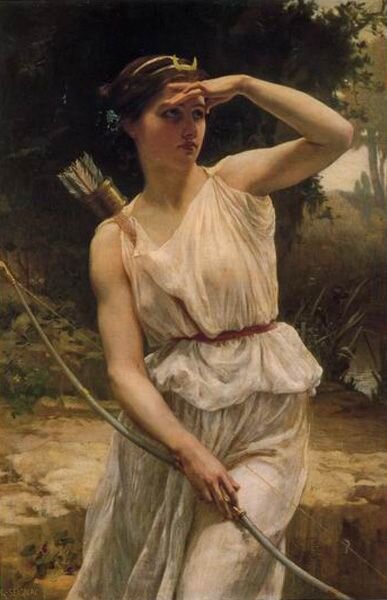
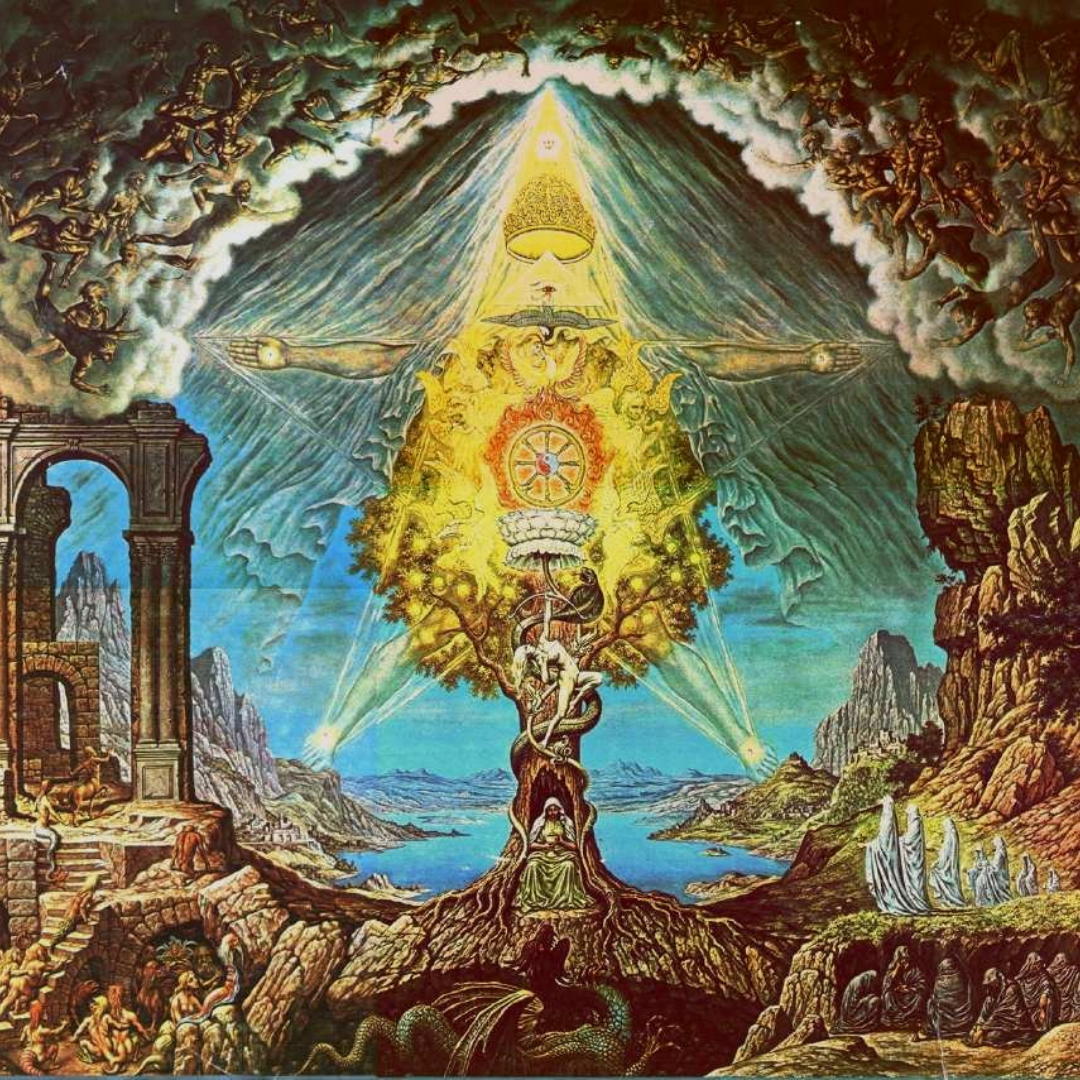

A Guide to Natural Perfume Fragrance Families
Fragrance families are scent classifications used in perfumery, and each family has its signature ingredients and overall aroma. In this article, we’ll cover the main classifications of fragrances—though to be fair, there are several different versions of fragrance categories out there and no one seems to agree on a definitive version.
Chypre…Fougère…Aromatic…the olfactory families of fragrance may sound somewhat exotic at first, but dive in and they become welcome allies on the path to perfume creation and selection.
Fragrance families are scent classifications used in perfumery, and each family has its signature ingredients and overall aroma. In this article, we’ll cover the main classifications of fragrances—though to be fair, there are several different versions of fragrance categories out there and no one seems to agree on a definitive version.
A Brief History of Fragrance Families
At the turn of the 20th century, when most perfumes were still made with pure botanical ingredients (though synthetics had been introduced with Guerlain’s Jicky), there were seven main families: single floral, floral bouquet, oriental, woody, chypre, fougère, and leather.
In general, these pure botanical perfumes contained resins, woods, flowers, spice, and citrus notes—we’ll go into more detail below.
Modern chemistry and access to new aromatics led to what we might think of as more green, fresh and aquatic notes in perfumes, primarily created through synthetic aldehydes. In the mid 1900s, new fragrance families emerged on the scene as a result:
Bright floral—combined the single and bouquet floral families
Citrus—citrus doesn’t last long on its own, so synthetics made this family have staying power
Green—like a bright, fresh chypre
Gourmand—edible notes of vanilla, cinnamon, and fruits
Ozone/Aquatic—this actually didn’t come around until the 90s…think clean and unisex
In 1983, popular perfume consultant Micheal Edwards decided to simplify the traditional and growing perfume families into a perfume wheel. The wheel has four main families and their sub-families around its circumference—woody, floral, oriental, and fresh.
In recent years, there’s been a movement to rename the traditional “oriental” family to “amber” or “ambrée”—as it’s become clear the former term is outdated and can be offensive. The updated Micheal Edwards perfume wheel reflects this:

Given the varied and changing history of fragrance families, it comes as no surprise that modern perfumery resources all use slightly different terms and organizations.

In general, several families appear regularly: fresh, floral, floriental, ambrée, fougère, woody, chypre, fruity, aromatic, citrus, green, aquatic, leather, and gourmand.
The Perfume Society has a fun interactive site that features eight of these families, each clickable to continue exploring subfamilies.
An important note on synthetic vs. natural fragrances:
Unless specified otherwise, most modern perfumes contain synthetic ingredients. Even “natural” perfumes commonly contain isolates, which are somewhat controversial in the world of natural perfumery.
For those switching to pure botanical perfumes, a few popular families will be off the table—perfumes considered aquatic/ozone, fresh, or green are almost always dominated by synthetic aldehydes, so these family classifications just aren’t useful in natural perfumery.
Botanical/Natural Perfume Classifications
Given the history of fragrance and the ingredients available, I use nine main families in my own perfume classifications. No guarantees these won’t continue to evolve, but for now, they wonderfully describe the main classifications of natural perfumes available:

Chypre Perfumes
One of my personal favorites, chypre (pronounced shee-pra) is named for Cyprus, the island of Aphrodite’s birth and home to the world’s oldest large-scale perfumery. The name in perfumery comes from François Coty’s 1917 perfume Chypre, which had notes of bergamot and citrus on top, a full floral middle with jasmine and rose, and an earthy base of oakmoss, patchouli, incense, musk, and styrax.
Chypre perfumes are characterized by a mossy accord of bergamot, oakmoss, patchouli, and labdanum. Some may be more floral, with strong notes of jasmine or ylang ylang, while others might be more citrusy, woody, or herbaceous. Both traditionally masculine and feminine fragrances have fallen in the chypre category.

Fougère Perfumes
A fougère is what is known as a fantasy scent, originating with Fougère Royale from Houbigant in 1882. Named for the French word for fern, these perfumes tend to have green and aromatic notes.
Lavender, geranium, vetiver, bergamot, oakmoss, and coumarin are commonly found in these perfumes, and while they were created for women, today masculine perfumes are dominated by the fougère family.
Floral Perfumes
The name speaks for itself with these perfumes—fragrant jasmine, carnation, rose, orange blossom, ylang ylang, magnolia, and more take the center in a floral perfume. While many beloved flowers simply aren’t available as naturals except through the laborious process of enfleurage (lily of the valley, helitrop, and lilac for example), many precious flowers are found naturally—they just cost a pretty penny ($1000 USD per ounce is not uncommon!). Lotus, narcissus, boronia, osmanthus, jonquille, cassie, broom, kewda, frangipani, champaca, and tuberose fall into this realm.
Within the many floral sub-families, two are worth mentioning here: soliflore, or single note perfumes that focus on celebrating and enhancing a single flower, and floral bouquets, which present well-balanced floral arrangements that make it difficult to single out any one flower among the many,
Today, floral fragrances are most popular among women, though in cultures throughout the world this isn’t necessarily the case—you’ll find kewda and rose among other florals throughout men’s fragrances in India and the Middle East!

Ambrée Perfumes
Also called amber—the post-oriental name is still settling in—these fragrances are characterized by rich, resins, vanilla, musk, and occasional spice. In perfumery, “amber” doesn’t refer to the stone but to ambergris, the precious and strangely fragrant bile of whales.
Today, ambrée perfumes tend to be rich, long-lasting, and have an exotic flavor about them. At least half of the botanical perfumes I’ve designed have been ambrée, as they smell divine and last forever, even as all-natural creations.
Sandalwood, coumarin, orris, vanilla, labdanum, and resins give ambrée perfume its signature notes, and the floral amber sub-family is one of the most rapidly growing fragrance families today. I’m not surprised, as the synergy of exotic florals, precious woods, and rich ambery notes truly nourishes the soul.
Aromatic Perfumes
The aromatic family is characterized by herbaceous notes—rosemary, basil, and tarragon are popular here. Though mainly found in men’s fragrances, I find aromatics work beautifully to create green and fresh notes in natural perfumes. Fresh florals like lavender and geranium, along with citruses, often overlay aromatic perfumes. Traditional colognes would found in this family.

Citrus Perfumes
While citrus notes are found in nearly all perfumes, pure citrus fragrances are light and bright. In mainstream citrus perfumes the tenacity will come from synthetics, but citrus scents in botanical and natural perfumes are perfectly possible. Some citrus perfumes will be lighter and a bit more fleeting, while sub-families like floral citrus, spicy citrus, and woody citrus will delight the wearer as citrus top notes give way to various lasting undertones.
A wide variety of citruses can be found in the citrus family. Bergamot and bitter orange are probably the most common, but yuzu, lime, mandarine, sweet orange, lemon, grapefruit, citron, and cedrat can all be found. I have blood orange, tangerine, mandarine, and kumquat in my collection, and use other lemony plants for citrus notes, such as lemongrass, lemon myrtle, and lemon verbena.
As a note, you may find the citrus family also referred to as the “hesperides” family. Legend has it that the Hesperis were three Greek nymphs who watched over “golden apples”—citrus fruits–giving immortality to any who tasted them.

Woody Perfumes
As with florals, the woody family name speaks for itself. Precious woods such as oud and sandalwood, dry notes like cedar and juniper, and woody herbs like patchouli and vetiver can be found in just about all woody perfumes. Some are warm and spicy with sweet resins, while others can be more aromatic, citrusy, and crisp.
My personal favorite woody perfume is Daikoku—with notes of buddhawood, sandalwood, and Japanese cedar and cypress, it smells like Japanese mountain temples laced with fragrant incense.

Leather Perfumes
Leather became a fragrance family thanks to the many aromas tanners would use to disguise the off-putting scents created during their processes (think ammonia, yuck). The smoke, resins, and woods used to mask the leather tanning process ended up mixing with the leather itself, creating a much-desired fragrance that spread to the world of perfumery.
Over time, this family has evolved to include many traditionally masculine notes—tobacco, cognac, smoke, woods, tar, and resins are common, with the leather notes being either forefront or nearly undetectable. In natural perfumery, which uses animal products, the leather notes might not be cruelty free. In botanical perfumery, however, there are many great alternatives—styrax, birch tar, and choya nakh are a few options.

Gourmand Perfumes
Relatively new on the perfume scene are the gourmands—those perfumes with a somewhat edible flavor profile, typically warm and spicy. The vast majority of gourmand perfumes contain synthetic ingredients and dessert-like scents—caramel, cotton candy, toffee, and bubblegum to name a few.
However the world of botanical perfumery has plenty to offer here if you’re willing to splurge on the pure, natural versions—chocolate, coffee, cognac, almond, vanilla, and even spices and amber notes can create lovely gourmand perfumes.

Within all the perfume families above, subfamilies are used to further delineate each perfume’s aroma. Here are a few of the terms you’ll see attached to each family:
Spicy—coriander, cinnamon, clove, pepper and more
Fruity—may contain citrus, berry, or other sweet notes
Soft—typically contains a powdery, musky element
Musky—similar to soft but heavier on the musk
Green—fresh herbs, bright florals
Fresh—similar to green, may also have more citrus
Aquatic—typically synthetic aldehydes, in natural perfumery can signify more animalic, seaweed-based notes
What do you think? Which aromas are your favorites? Let me know in the comments!
You might also like:

The Venusian Mysteries: Awakening the Sacred Feminine
The only planet named for a female deity, Venus is a loving and bright ally in restoring the sacred feminine to cosmic balance.

I awoke before dawn, set the kettle for tea, and gazed out my windows into the still dark sky, just a soft glow on the horizon suggested the light was returning.
As I peered between the giant evergreen bows that reach across my yard, I was greeted by the most beautiful sight—Venus. Rising in her morning star phase, Venus lit up like a beacon in the lapiz sky, calling my soul to recognize her presence.

my morning view of Venus
Venus is a planet but also a celestial deity, and her gifts for humanity lie in helping us come into cosmic balance with the sacred feminine qualities of beauty, love, relationships, sensuality, and pleasure.
Venus is a planet of beauty—symbolically and literally. Her presence shines brightest from our vantage upon the earth, and her trajectory creates a magnificent, symmetrical pattern.
The only planet named for a female deity, Venus is a loving and bright ally in restoring the sacred feminine to cosmic balance.
Ready to claim your mantle as a scent priestess & myrrhophore?
Join the Nectar & Alchemy mystery school devoted to the feminine, aromatic arts.
Restoring the Feminine to Cosmic Balance with Beauty and Astrology
Anyone who’s gazed at Venus in her bright morning star phase can understand why the ancients associated this planet with beauty. I wonder if they also knew her trajectory through our skies is the most symmetrical of all the planets: Over an 8-year period, Venus makes 13 orbits around the sun and has 5 conjunctions with the earth. Visually, this creates a beautiful mandala based on the golden ratio—a pentagram of petals—which you can see in the image below.
The 13 orbits that bring Venus back to her place of origin in our skies tie this planet to the feminine—13 has long been associated with women because of how we cycle and bleed with the 13 moons of the year.
Even the symbol for the planet Venus is the same as that which commonly represents the feminine—a circle sitting upon a cross: ♀ If we see the circle as the infinite cycle and wholeness, and the cross as representing the four elements and four directions—that which makes our material reality—we can see this symbol as also calling forth the intersection of spirit and earth.

In this symbol, we can see how Venus helps us bring spirit into manifest form—just as women bring spirit into form through the birthing process.
In astrology, Venus rules both Taurus and its home, the 2nd house, along with Libra and its home, the 7th house. Together, these elements celebrate the many qualities of Venus — the earthy, sensuality of Taurus, the values and emotions and sexiness of the 2nd house, the high culture and beauty of Libra, and the love and partnership of the 7th house.
Here, not only are the sacred qualities of the feminine celebrated, but they once again symbolize the harmonization of earth and spirit. Anytime we’re able to ground into the beauty of nature and the present moment, we experience Venusian blessings.
The Venusian Deities
Though Venus is represented through a few male deities in different cultures (see below!), the vast majority of Venusian deities are female, especially within the cultures that have most influenced my own Western heritage.
The Greek goddess Aphrodite is perhaps the most well-known Venusian deity for many of us, as she even carried the name Venus to the Romans. Yet if we trace the evolution of Aphrodite through time, we find that she may well have been born from earlier goddesses—Isis, or Auset, in Egypt, and Inanna, also known as Ishtar and Astarte, in Sumeria. All three goddesses carry the mantle of being Venusian goddesses of the ancient world.
Psst: You can get a free booklet filled with rituals to connect with Isis and other Egyptian deities here.
In the Norse worlds, we see both Freya and Frigg associated with Venus. Both goddesses embody qualities of love, romance, fertility, and sacred sexuality, though Freya is more independent in her expression and Frigg, as the wife of Odin, is more matrimonial (many sources also conflate the goddesses into one). Interestingly, Friday is named for Frigg, and guess which planet rules Friday? Venus.

“Freyja and the Necklace” by James Doyle Penrose (1890)
Now, let’s get a bit heretical…Do you know what the Roman word for Venus was? Lucifera. Yup. The very same word co-opted by Christans to describe the devil. Lucifera was used almost as suffix to many goddesses and sacred women’s names—Diana Lucifera most famously, but also Mary Magdalene, who was sometimes referred to as Mary Lucifera.
Sex & Resurrection

Saint Mary Magdalene by Bernardino Luini
From what we know of Mary Magdalene, it’s likely she was not only a consort of Jesus but also a priestess in her own right. At the time, the art of sacred sexuality was practiced in the temples for communion and healing. And sex, in this sacred sense, is as Venusian as it gets—the sensuality, the romance, and harmony between masculine and feminine, and the fertile outcomes once again bringing spirit into material form.
And while we’re looking at sacred sexuality in this Venusian context, it’s interesting to note the parallels between Isis bringing Osiris back to life and immediately consummating with him (which led to not only the birth of Horus but brought fertility to the land), and Mary Magdalene being the first to witness the resurrection of Jesus. I wonder if the way in which she anointed him before death, loved him beyond life, and cried tears of power into the earth, contributed to the magic that brought him back to life like Osiris.

The Path of the Myrrhophore
a workshop on Mary Magdalene’s sacred anointing tradition
As a note on the theme of resurrection, we also see another Venusian goddess Aphrodite bring Adonis back to life through her pleas after he was killed by a wild boar.
It seems the Venusian power so naturally held by women—the power to commune with spirit, enjoy sensual pursuits, and bring life into being through the force of love—was a bit too threatening for the Church…
These tales of resurrection are also reflected in Venus’s orbit, as the planet cycles towards and away from the sun, symbolizing a natural cycle of birth and death.
The tale of the Venusian goddesses Inanna offers us a good reflection of how women can embody this cycle within themselves. Unlike the goddesses who resurrect their lovers to bring fertility to themselves and the land, Inanna is the one resurrected in her tale, modeling the feminine drive to face our shadows and integrate into wholeness. (Interestingly, she is hung on a cross before becomming resurrected…sound familiar?)

The Venusian Masculine
Back to the male Venusian dieties…by far the most well-known masculine Venusian deity in modern days is Quetzalcoatl, a meso-American god. Quetzalcoatl was known as a feathered-serpent deity who brought fertile growth to the land. Again, we see the liminal meeting of spirit and earth in bird and snake, as well as sacred sexuality and fertility. In many ways, Quetzalcoatl offers us a model for how those in men’s bodies can embody the much-needed gifts of Venusian blessings, reminding us that we all have sacred masculine and feminine qualities within.
It’s time to allow Venus to upgrade our hearts.
As a planet that reminds us of the power of love, Venus could not be more important for us to connect with right now.
I am, like I’m sure many of you are, an empath.
Being an empath is not only a gift but is also the natural state of all humans, the state we are born into before culture and trauma cuts our hearts away from our innate ways of knowing.
But being a really strong empath during times of mass hysteria, conflict, and trauma can be rough, even with the knowledge and skills to navigate these times.
I find the vitriol, judgment, and especially righteousness I see online and in social media pressure cookers to be acutely painful. Just about all news—from left to right and mainstream to alt—has become a web of incendiary propaganda. When I turn into certain locations, I can energetically sense oppressive webs of fear hijacking people’s sovereignty.
In all of these examples, I think what I find most heartbreaking is that people are being pulled off their path of spiritual evolution and heart-centered living. They are losing touch with what will actually help humanity survive the changes upon us: love and connection, with each other and the earth.
Venus is a powerful ally in coming back into our hearts and allowing the wisdom of love to lead the way.
Right now, Venus is in her heliacal rise toward the sun, allowing her divine beauty to be strengthened with solar blessings. Now it’s time to let the light of Venus and the Sun illuminate and strengthen the love within all of us.
A PRACTICE
If possible, locate Venus in the sky — depending on her movements, dawn or dusk will be the best time.
Anoint your heart center with a sacred oil, preferably one containing rose — one of Venus’s favorite flowers. (The perfumes below are perfect for this practice.)
See the fragrant oil or perfume open a portal into your heart, a protected one that can only be entered by Venus herself.
Inhale, and feel Venusian blessings flow into your heart center.
When this practice feels complete, see the portal in your heart seal safely and give thanks to Venus.
As you go about your day, notice feelings of love and being loved fill your being. Practice seeing the world through a gaze of appreciation and gratitude for the beauty of life. Delight in the sensual experience of being embodied. Remember your true value and worth.

The Sensual Delight of Venusian Perfume
What could be more Venusian than a perfume dedicated to the goddess?
As a triple Libra, Venus is my ruling planet — meaning she’s especially influential in my life. It’s no wonder beauty is my core life code (you can read my artist statement here, just scroll down a bit). While I’ve always been an artist and experiment with many mediums, when I create perfumes I know they come straight from my soul.
Many of the perfumes I’ve designed are dedicated to Venusian goddesses — so many, in fact, that I’ve decided to offer them all in a single discovery set.
The Venusians Discovery Set includes six 1ml samples in glass vials, each perfume is all-natural (I’ve studied with the preeminent natural perfumers of today) and infused with the Venusian energy of goddesses from around the world.

Wildcrafting with Fireweed
Every late July and through August, the mountain meadows are dotted with neon pink blossoms. It's fireweed season ❤️ Both medicinal and edible, fireweed is one of the first plants to come back after wildfires. I've heard that the young shoots can be eaten like asparagus, though I've never tried. I do decorate summer salads with the blossoms, though…

Every late July and through August, the mountain meadows are dotted with neon pink blossoms. It's fireweed season.
Both medicinal and edible, fireweed is one of the first plants to come back after wildfires. I've heard that the young shoots can be eaten like asparagus, though I've never tried. I do decorate summer salads with the blossoms, however.
Fireweed is also an excellent tonic for the digestive system and has massive amounts of Vitamin C. When the blossoms are peaking, I like to either tincture or make a vinegar infusion with all the aerial parts to create a natural dose of Vitamin C throughout the year.
Fireweed also has anti-inflammatory and antibacterial properties, which make it wonderful to infuse in oils for healing salves (I made a limited amount of fireweed oil to use in my newest batch of healing salves this year—be sure to grab them while they’re in stock!)
One of my personal favorite ways to work with fireweed is with fireweed flower essence. The flower essence is one of my favorites for encouraging resilience, energy, and passion.
Fireweed is also a fairly common smoking herb, often used in herbal blends. Personally, I enjoy adding it to my wild smoke bundles for joyful wishes, to help carry our enthusiasm for all we wish to create up to spirit.
Fireweed grows abundantly almost all over North America, so it’s a great flower for foraging. Go out and see if you can find some!


Great Northern Bedstraw: A Beloved and Underrated Wild Plant
One of my favorite fragrances as I hike through the mountains is that of Great Northern Bedstraw. It smells of honey and fresh hay, and was often used as bedding because of of it's sweet scent.

One of my favorite fragrances as I hike through the mountains is that of Great Northern Bedstraw (Galium boreale). It smells of honey and fresh hay, and was often used as bedding because of of it's sweet scent. Some native tribes would even add it to perfumes.
Though it's not commonly used in modern day herbalism, northern bedstraw has a few important internal uses. It was traditionally made into a tea for intestinal issues and internal bleeding. It's also very mineral rich, so I like to infuse it into wild greens vinegar so I can have a wild nutrient boost throughout the year.
But before you consume―some literature suggests that great northern bedstraw was taken by indigenous people to prevent pregnancy. Though I haven't found much evidence on this, if you're trying to conceive, it's probably best to be safer than sorry!
Externally, great northern bedstraw can be used to soothe a variety of skin conditions—rashes, burns, cuts, eczema, and more. And, its roots make a beautiful red dye!
Energetically, great northern bedstraw helps bring about sweet dreams and deep rest. It can help cultivate feelings of love between partners, as well, and I recommend misting your bed with the flower essence before sleeping…or participating in other bedroom activities ;)

Carefully separating the delicate flowers of great northern bedstraw for perfuming tinctures.
During my most recent foraging adventures, great northern bedstraw gifted me with much medicine to share.
First, I carefully removed the delicate white blossoms from the green stems to make a tincture in organic alcohol. The scent is of fresh hay and delicate florals, a beautiful sweet green note that I can’t wait to share through new perfumes. Combining my own wildcrafted aromas with rare oils from around the world allows to me to create fragrances that you just can’t find anywhere else. They are beautiful and love making them and wearing them.
I also infused the entire areal plant into organic sunflower oil. Sunflower oil is a long-lasting carrier oil with a lovely texture, and infusing it with bedstraw gives the oil the same lovely scent as the tincture―with benefits! The potent nutrients fill this oil with healing benefits for your skin, joints, and muscles, so I’ve included it in this year’s healing salves.
You can also find this year’s harvest of great northern bedstraw in the psychic dreams smoke bundles, as well as in a flower essence.
Have you ever worked with this lovely plant? Send me note and let me know. :)
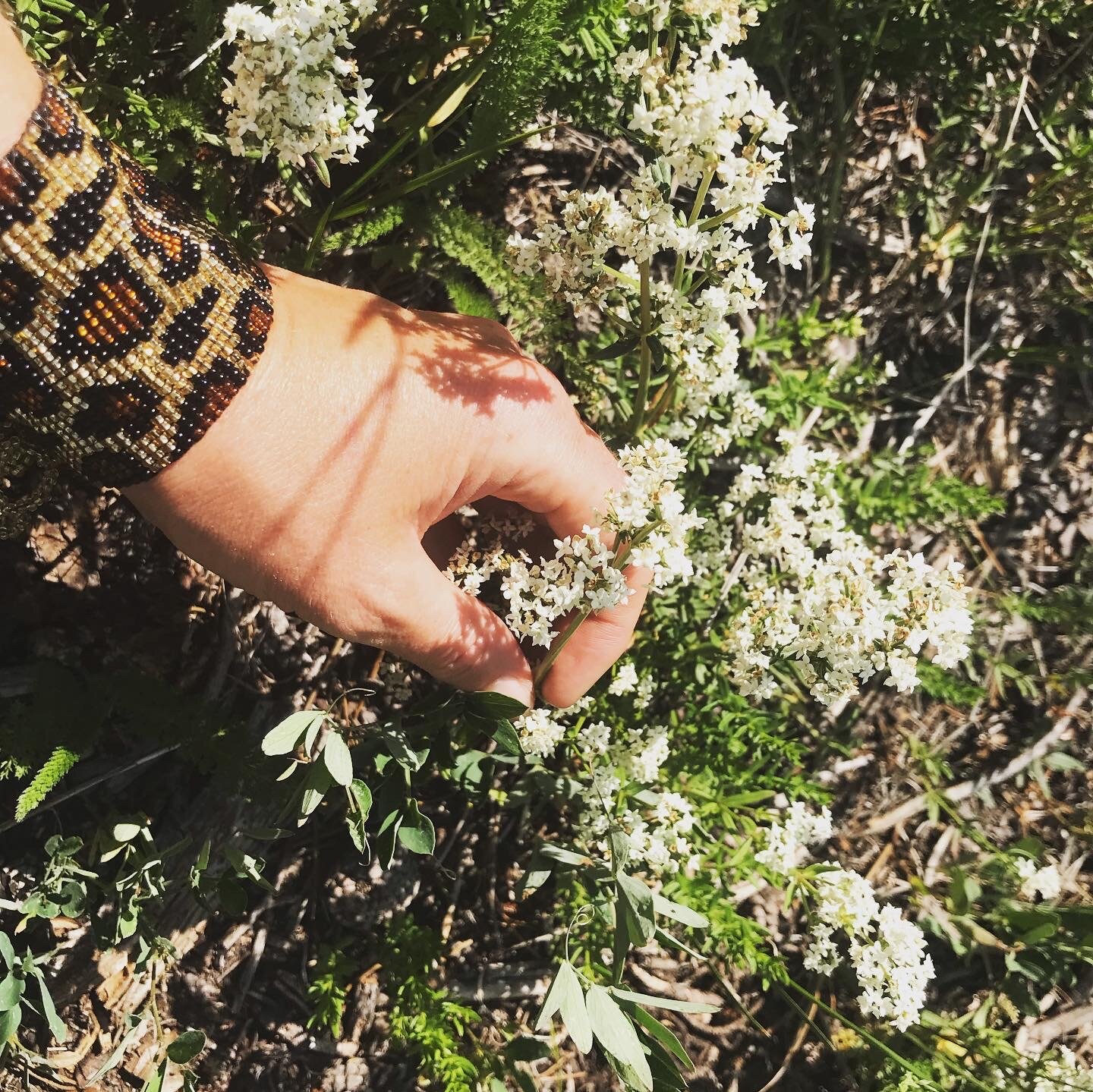
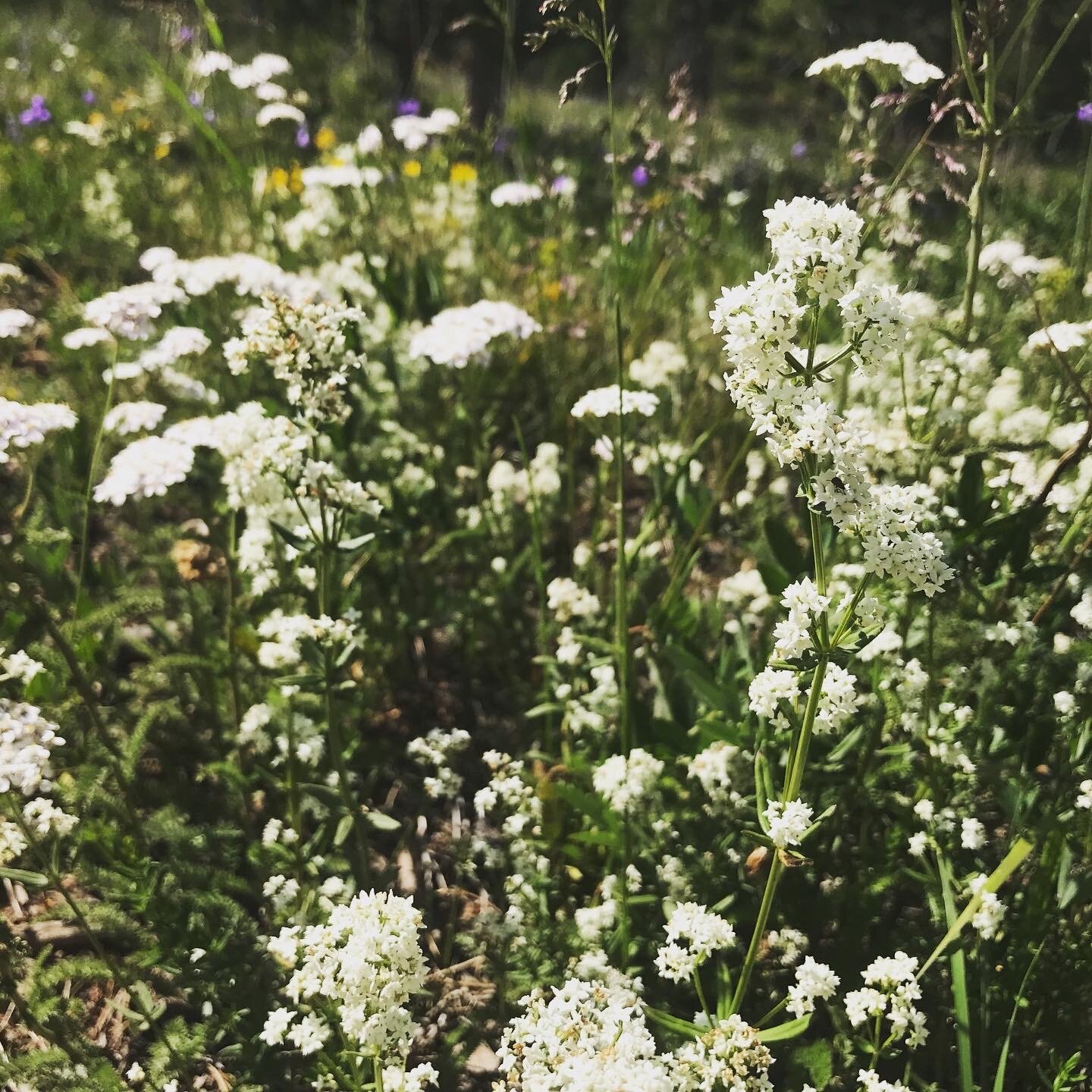

Ethical Wildcrafting and Making Mountain Medicine
Every summer, I head to the mountains at about 10,000ft for my annual botanical medicine making retreat. I hike for hours each day, communing with the plants and making wild medicines. This medicine making trip is by far my favorite time of the year, in my favorite place in the world.

Every summer, I head to the mountains at about 10,000ft for my annual botanical medicine making retreat. I hike for hours each day, communing with the plants and making wild medicines. This medicine making trip is by far my favorite time of the year, in my favorite place in the world.
I've been cultivating my relationship with the plants and nature spirits at this sacred spot for nearly a decade now. My understanding of the unique gifts each plant offers, my ability to discern what is actually being offered and what wishes to remain untouched, has grown deep with time and intention.
There’s something about being at such a high elevation when I collect and commune with these plants. I know it’s silly, as spirit is within and around us always, but I do feel just a bit closer, as if the veils thin with the atmosphere. Plus, the resilience in these high-altitude plants is astounding―to survive the alpine winds and winters and then the scorching summer sun...they have so much to teach us.
As I've nurtured my relationship with the plant spirits over the years, I've refined the “mountain medicines” I'm able to share, as I call them. This year, I'll be adding new flower essences, teas, smoke bundles, elixirs, healing salves, and maybe a few tinctures to the apothecary, all full of wild botanicals.
All geared up and on the trail for some legit mountain foraging!
In order to gather the plants I work with, I hike for miles and miles everyday. This is in part because the plants I work with are spread throughout various micro-climates. But it’s also to support sustainability: When I make my smoke bundles, I clip only one or two sprigs from each Great Western Sagebrush. When I gather my resins, I take only what falls from a tree easily, so as not to hurt its defenses. Gathering this way might be a slow, laborious process, but it’s an enjoyable one. And the sustainability of the forest always comes first.
As interest in wildcrafting and foraging grows, attention to the sustainability of our wild places becomes ever more important. During my most recent stay in the mountains, I encountered another woman gathering rose petals. I must have come at the end of her harvest, because when I arrived almost no roses were left at all.
Part of me wants to give her the benefit of the doubt―it was the end of a bumper rose season and many hips had formed already, so perhaps there weren't many blossoms left to begin with.
Still…I have an especially protective instinct when it comes to wild roses. When I harvest rose petals, I do so very judiciously. The bees and pollinators need the flowers more than I do, so I want to make sure they have plenty to enjoy during the rose's short season. Plus, roses also turn into rose hips―one of the most important food sources for many animals during the winter months.
This is why when I harvest rose petals, I ask myself, "Could 10 people come to this same spot and harvest the same amount without making a visible dent in the blossoms?" The answer must be yes.
These sacred offerings are true gifts from the spirits of nature and provide us with a deeply wild healing—a healing so many of us could use these days. In a world where we’ve become overly domesticated, it’s critical that we remember to rewild a bit. When we touch into our innate wild natures, we tap into a well of resilience, sovereignty, and inner knowing.

Preparing a basket of mountain medicine ❤️
Whether or not you have the desire or the ability to escape into the natural world, I hope the wild offerings in my apothecary will bring the healing wisdom of nature to you. Each carries the energetic imprint of the wilderness, an imprint which is passed onto you when you use the products. Plus, wild plants are especially potent healers on the physical level. I really can’t say enough about how much these products have changed my own life.
As for those roses…
I have a longstanding love of rose medicine, which you can read about here. But what did I make with the petals I carefully gathered?
Wild rose elixirs! They are my favorites. Sweet and floral, these elixirs open and protect our hearts. To make the elixirs, I use wild rose honey with organic wild rose-infused grape vodka and wild rose flower essence. If you happen to grab one before they sell out, take one dropper full three times a day to bring more love and sweetness into your body and energy field. (Rose elixir is also delicious added to sparkling water!)

A strawberry cupcake? Nope! Wild rose-infused honey in the making :)
And, if this looks like way too many petals for such a small jar of honey…it is! I hike with only a small jar, cover the petals to preserve them, and transfer this to bigger batch of honey when I return home. But it is quite the image :)
